
Overcoming Stiction in Semiconductor Manufacturing
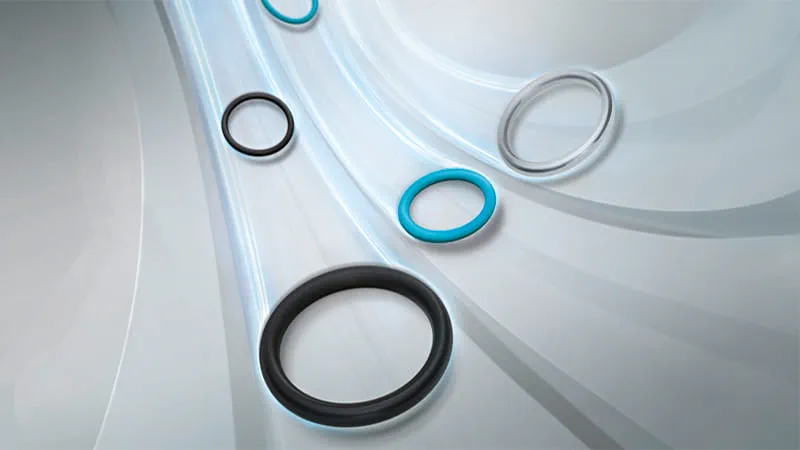
Elastomers are essential for preventing leaks and maintaining vacuum integrity in semiconductor manufacturing. However, a common challenge called "stiction"—where seals stick to countersurfaces—can disrupt production and increase costs.
To solve this, Trelleborg developed Seal-Glide®, a proprietary surface treatment designed to reduce friction without compromising seal performance.
How Seal-Glide® Works
Seal-Glide® is a nanoscale surface treatment that improves the friction performance of conventional coatings. The treatment is incredibly thin, typically less than 450 nanometers, meaning it won't alter the seal's core properties. This makes it ideal for complex components where traditional coatings fall short.
Proven Results
In rigorous testing, Trelleborg applied Seal-Glide® to its Isolast® PureFab® perfluorocarbon rubber (FFKM) materials. The results were clear: the treatment reduced stiction by up to 80 percent.
For semiconductor manufacturers, this translates to:
- Reduced maintenance: Less downtime for cleaning and replacing stuck seals.
- Lower costs: A significant decrease in total cost of ownership.
- Enhanced efficiency: Smoother operations in both static and dynamic applications.
Click here to learn more about Seal-Glide®.
Frequently Asked Questions
What is stiction in semiconductor equipment?
As elastomers inherently stick to countersurfaces they are prone to stiction, the friction which prevents stationary surfaces from setting in motion especially after periods of rest, both in static and in particular dynamic applications. This can cause seal wear and inefficiency in energy use, as equipment requires more power to move components.
How does Seal-Glide® reduce stiction?
Seal-Glide® modifies the surface of the seal at a microscopic level to lower friction.
Will the treatment affect the seal's properties?
No, the thickness of the modified surface is typically less than 450 nanometers, which is around 50 times thinner than conventional coatings. This means the treatment can provide major benefits without negatively affecting the properties of a seal.