
Engineering out compatibility chaos to optimize LNG operations
Date: 28.11.25
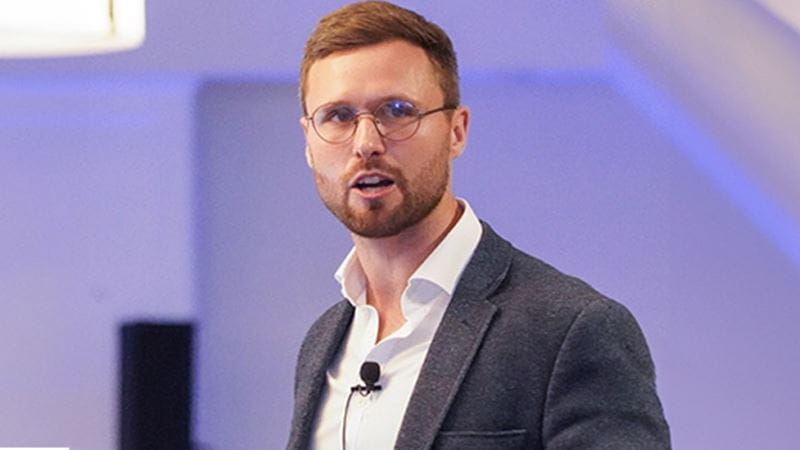
Written by Matt Richardson, Sales Director at Trelleborg Marine & Infrastructure
LNG has firmly established its place as a viable marine fuel, providing the maritime industry with a pragmatic route to decarbonization. Compared with traditional fuel oil, according to industry organisation SEA-LNG, LNG reduces CO2 by around 23%. It also virtually eliminates sulphur oxides (SOx) and Particulate Matter (PM) and depending on the technology used, can emit up to 95% of few nitrogen oxides. Combined with its strong safety record and the potential to transition toward bio-LNG and e-methane, it remains the most mature, scalable low-carbon option available today.
With more than 1,360 dual-fuel LNG vessels in operation or on order, bunker volumes continue to rise across Singapore, Rotterdam, and Shanghai, as shipyards, class societies and energy suppliers refine bunkering infrastructure and standards. After six decades of cryogenic-gas-handling experience, the sector benefits from frameworks such as the IMO IGF Code and SGMF guidelines, which define equipment, training and safety requirements. Yet as activity increases, a subtle but significant challenge is emerging: a web of technical compatibility issues between bunker vessels, receiving ships and terminals that, if unaddressed, can undermine efficiency, profitability and even market access.
The hidden fault line: operational incompatibility
While the fundamentals of gas transfer are universal, bunkering LNG as a marine fuel differs markedly from transferring it as cargo. Cargo operations occur between purpose-built carriers and standardized terminals with consistent equipment, dedicated crews and established procedures. Bunkering, by contrast, involves a diverse mix of vessel types, manifold configurations, mooring systems and other transfer interface systems that are often from different manufacturers and not always designed to work together.
Small deviations between equipment or control systems can introduce major inefficiencies. For example, in Japan, several LNG carriers built with non-standard Ship-Shore Link (SSL) and Mooring Load Monitoring (MLM) systems were unable to transmit required mooring data to local terminals, preventing compliance and restricting port access. Under tight schedules, the systems were replaced with globally compatible SSL and MLM interfaces, completing installation during port calls and vessel transit. The upgrade restored interoperability, enabling safe, compliant operations and allowing the vessels to trade freely worldwide.
In West Africa, an offshore LNG terminal experienced repeated transfer interruptions due to long-period waves that caused excessive line tension. Trelleborg installed its DynaMoor automated mooring system, which continuously adjusts tension to counteract vessel motion. The solution reduced peak loads, improved safety in mooring zones, and enabled uninterrupted, energy-efficient operations even in variable sea states.
At a Mediterranean terminal, growing LNG demand required the flexibility to handle both large carriers and smaller bunker vessels. Addressing this, Trelleborg designed a fully flexible hose transfer system with advanced diagnostics and minimal adjustment between vessel sizes, enabling fast ship-to-ship transfers and direct reloading from FSRU to truck. The upgrade improved operational efficiency, reduced downtime and enhanced safety across multiple transfer modes.
Individually, such cases may seem isolated, but collectively, they reveal a consistent pattern of inefficiency – a form of “compatibility chaos” that decreases operational predictability and erodes LNG’s commercial advantages.
The anatomy of predictability
Predictability is the foundation of safe, efficient LNG bunkering. When interfaces function as expected, transfers become faster, safer and less resource intensive. Achieving this consistency demands both engineering precision and operational intelligence.
Compatibility begins with understanding the architecture of each ship-to-ship or ship-to-shore connection: manifold positions, valve configurations, flow rates, control signals and mooring loads. Modeling these interfaces allows engineers to identify potential pressure drops, surge points or hose stress zones. Fluid-dynamic modeling helps optimize hose and pipe layouts and minimize boil-off, while mooring analysis verifies how automated systems or dynamic hooks can reduce vessel movement.
Human performance is equally critical. The STCW Code defines competencies for handling low-flashpoint fuels, but many crews transition from conventional fuel operations with limited LNG experience, while frequent rotations further dilute knowledge transfer. Training must therefore go beyond classroom certification to cover the practical sequencing of transfer operations – from establishing Emergency Shut-Down (ESD) links to managing pressure changes in real time. With the emergence of alternative fuels like ammonia and methanol, operators will also need to become increasingly multi-disciplined to handle a wider range of complex transfer interfaces safely.
Simulation-based training can bridge this gap, enabling crews on both the supply and receiving sides to visualize how systems interact and respond to anomalies. This approach not only improves confidence and situational awareness but also encourages collaborative problem-solving when unexpected conditions arise.
This was demonstrated in Malaysia, where Trelleborg delivered a multi-faceted training program to familiarize crew with newly installed Gen3 SSL systems. A dedicated manual supported self-paced learning before classroom sessions using visual aids and interactive tools. Central to the program was a Figma-based simulator replicating realistic SSL system scenarios in a controlled environment, followed by on-site operational training. Frequent Q&As reinforced understanding, enabling crews to operate and troubleshoot confidently – reducing human error, improving response times and minimizing downtime.
Integrating compatibility from the design stage
The compatibility challenge needs to be addressed at the start of a vessel’s lifecycle. While SGMF guidance outlines specifications for LNG-fueled vessels, its voluntary nature allows variation in layout and interface standards. Shipyards can help close this gap by embedding interoperability as a design principle, through standardized manifolds, couplings and harmonized safety system interfaces, so that future vessels connect seamlessly with a wider range of terminals and existing vessels.
The same philosophy extends to terminals. At a major LNG terminal in northern France, Trelleborg supplied an integrated suite of berthing, mooring and navigation systems to support the port’s first FSRU. Customized fenders, Quick Release Hooks, Environmental Monitoring, SmartDock Docking Aid System and SafePilot navigation systems feed into a central platform, with an upgraded Gen3 SSL enhancing data transfer. The integration provides real-time situational awareness, reduces berthing time, minimizes risk and improves terminal productivity – demonstrating how system-level design integration translates into safer, more efficient LNG operations.
Creating opportunity from optimization
Standardizing LNG bunkering interfaces represents a critical inflection point for the maritime industry, where technical precision directly translates into commercial advantage. By eliminating the risk of compatibility chaos that could impact LNG bunker suppliers and receiving vessels, the industry can unlock operational efficiency that transforms LNG from a seemingly complex fuel choice into a highly scalable, streamlined business decision.
Optimizing operations in this way creates a virtuous cycle where reduced transfer times, minimized delays and enhanced safety margins drive down costs while improving service reliability, making LNG bunkering economically attractive to a broader range of operators looking for a viable, immediate alternative fuel pathway. Crucially, the lessons learned from standardizing LNG transfer interfaces will accelerate the shipping industry’s readiness for adopting emerging alternative fuels like ammonia, methanol and hydrogen, creating transferable expertise in bunkering requirements, protocols and safety procedures.
Ultimately, these technical improvements, supported by the increasing use of data to drive compatibility decisions, can accelerate LNG adoption across the global fleet. By doing so, it highlights the opportunity for ship owners and operators to realize the environmental benefits of using cleaner marine fuel options at scale, while positioning early adopters to capitalize on emerging carbon credit markets and sustainability-focused shipping contracts from charterers. The path to maritime decarbonization runs through operational excellence and standardized LNG systems provide the foundation for achieving both environmental progress and commercial opportunity as the alternative fuels landscape evolve.
With more than 1,360 dual-fuel LNG vessels in operation or on order, bunker volumes continue to rise across Singapore, Rotterdam, and Shanghai, as shipyards, class societies and energy suppliers refine bunkering infrastructure and standards. After six decades of cryogenic-gas-handling experience, the sector benefits from frameworks such as the IMO IGF Code and SGMF guidelines, which define equipment, training and safety requirements. Yet as activity increases, a subtle but significant challenge is emerging: a web of technical compatibility issues between bunker vessels, receiving ships and terminals that, if unaddressed, can undermine efficiency, profitability and even market access.
The hidden fault line: operational incompatibility
While the fundamentals of gas transfer are universal, bunkering LNG as a marine fuel differs markedly from transferring it as cargo. Cargo operations occur between purpose-built carriers and standardized terminals with consistent equipment, dedicated crews and established procedures. Bunkering, by contrast, involves a diverse mix of vessel types, manifold configurations, mooring systems and other transfer interface systems that are often from different manufacturers and not always designed to work together.
Small deviations between equipment or control systems can introduce major inefficiencies. For example, in Japan, several LNG carriers built with non-standard Ship-Shore Link (SSL) and Mooring Load Monitoring (MLM) systems were unable to transmit required mooring data to local terminals, preventing compliance and restricting port access. Under tight schedules, the systems were replaced with globally compatible SSL and MLM interfaces, completing installation during port calls and vessel transit. The upgrade restored interoperability, enabling safe, compliant operations and allowing the vessels to trade freely worldwide.
In West Africa, an offshore LNG terminal experienced repeated transfer interruptions due to long-period waves that caused excessive line tension. Trelleborg installed its DynaMoor automated mooring system, which continuously adjusts tension to counteract vessel motion. The solution reduced peak loads, improved safety in mooring zones, and enabled uninterrupted, energy-efficient operations even in variable sea states.
At a Mediterranean terminal, growing LNG demand required the flexibility to handle both large carriers and smaller bunker vessels. Addressing this, Trelleborg designed a fully flexible hose transfer system with advanced diagnostics and minimal adjustment between vessel sizes, enabling fast ship-to-ship transfers and direct reloading from FSRU to truck. The upgrade improved operational efficiency, reduced downtime and enhanced safety across multiple transfer modes.
Individually, such cases may seem isolated, but collectively, they reveal a consistent pattern of inefficiency – a form of “compatibility chaos” that decreases operational predictability and erodes LNG’s commercial advantages.
The anatomy of predictability
Predictability is the foundation of safe, efficient LNG bunkering. When interfaces function as expected, transfers become faster, safer and less resource intensive. Achieving this consistency demands both engineering precision and operational intelligence.
Compatibility begins with understanding the architecture of each ship-to-ship or ship-to-shore connection: manifold positions, valve configurations, flow rates, control signals and mooring loads. Modeling these interfaces allows engineers to identify potential pressure drops, surge points or hose stress zones. Fluid-dynamic modeling helps optimize hose and pipe layouts and minimize boil-off, while mooring analysis verifies how automated systems or dynamic hooks can reduce vessel movement.
Human performance is equally critical. The STCW Code defines competencies for handling low-flashpoint fuels, but many crews transition from conventional fuel operations with limited LNG experience, while frequent rotations further dilute knowledge transfer. Training must therefore go beyond classroom certification to cover the practical sequencing of transfer operations – from establishing Emergency Shut-Down (ESD) links to managing pressure changes in real time. With the emergence of alternative fuels like ammonia and methanol, operators will also need to become increasingly multi-disciplined to handle a wider range of complex transfer interfaces safely.
Simulation-based training can bridge this gap, enabling crews on both the supply and receiving sides to visualize how systems interact and respond to anomalies. This approach not only improves confidence and situational awareness but also encourages collaborative problem-solving when unexpected conditions arise.
This was demonstrated in Malaysia, where Trelleborg delivered a multi-faceted training program to familiarize crew with newly installed Gen3 SSL systems. A dedicated manual supported self-paced learning before classroom sessions using visual aids and interactive tools. Central to the program was a Figma-based simulator replicating realistic SSL system scenarios in a controlled environment, followed by on-site operational training. Frequent Q&As reinforced understanding, enabling crews to operate and troubleshoot confidently – reducing human error, improving response times and minimizing downtime.
Integrating compatibility from the design stage
The compatibility challenge needs to be addressed at the start of a vessel’s lifecycle. While SGMF guidance outlines specifications for LNG-fueled vessels, its voluntary nature allows variation in layout and interface standards. Shipyards can help close this gap by embedding interoperability as a design principle, through standardized manifolds, couplings and harmonized safety system interfaces, so that future vessels connect seamlessly with a wider range of terminals and existing vessels.
The same philosophy extends to terminals. At a major LNG terminal in northern France, Trelleborg supplied an integrated suite of berthing, mooring and navigation systems to support the port’s first FSRU. Customized fenders, Quick Release Hooks, Environmental Monitoring, SmartDock Docking Aid System and SafePilot navigation systems feed into a central platform, with an upgraded Gen3 SSL enhancing data transfer. The integration provides real-time situational awareness, reduces berthing time, minimizes risk and improves terminal productivity – demonstrating how system-level design integration translates into safer, more efficient LNG operations.
Creating opportunity from optimization
Standardizing LNG bunkering interfaces represents a critical inflection point for the maritime industry, where technical precision directly translates into commercial advantage. By eliminating the risk of compatibility chaos that could impact LNG bunker suppliers and receiving vessels, the industry can unlock operational efficiency that transforms LNG from a seemingly complex fuel choice into a highly scalable, streamlined business decision.
Optimizing operations in this way creates a virtuous cycle where reduced transfer times, minimized delays and enhanced safety margins drive down costs while improving service reliability, making LNG bunkering economically attractive to a broader range of operators looking for a viable, immediate alternative fuel pathway. Crucially, the lessons learned from standardizing LNG transfer interfaces will accelerate the shipping industry’s readiness for adopting emerging alternative fuels like ammonia, methanol and hydrogen, creating transferable expertise in bunkering requirements, protocols and safety procedures.
Ultimately, these technical improvements, supported by the increasing use of data to drive compatibility decisions, can accelerate LNG adoption across the global fleet. By doing so, it highlights the opportunity for ship owners and operators to realize the environmental benefits of using cleaner marine fuel options at scale, while positioning early adopters to capitalize on emerging carbon credit markets and sustainability-focused shipping contracts from charterers. The path to maritime decarbonization runs through operational excellence and standardized LNG systems provide the foundation for achieving both environmental progress and commercial opportunity as the alternative fuels landscape evolve.