
Building for the Long Term: Outlook for 2026
Date: 27.02.26
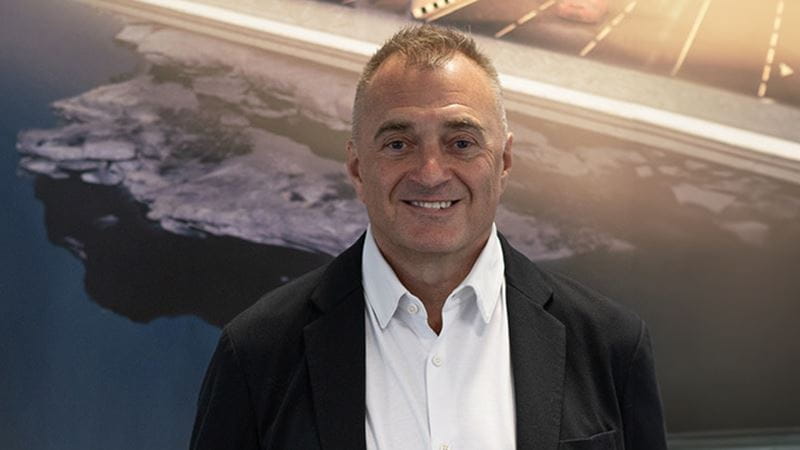
As Q1 2026 gets underway, our Business Unit President, Richard Hepworth, shares his perspective on sustaining momentum, sharpening our focus, and advancing the priorities that will shape the year ahead.
1. What is your outlook for the global marine and infrastructure markets in 2026, and what key trends and challenges do you anticipate will shape the year ahead for your customers?
We're entering 2026 with strong fundamentals that mirror the momentum we saw throughout 2025. The markets we work in such as LNG, offshore wind, tunnels, ports, and clean fuels are continuing to grow, largely because governments and industries around the world are investing heavily in infrastructure and cleaner energy.
What's particularly encouraging is that these aren't isolated pockets of activity. We're seeing consistent demand across all our key markets, which tells us this is a long term shift rather than a short term spike.
At the same time, our customers are looking to invest in solutions that are safe, reliable, and environmentally responsible, while also keeping long term costs under control. Often, they need all of this at once. That’s where our approach makes a difference. We're not just supplying individual components; we're providing integrated solutions that help our customers meet increasingly complex operational and regulatory requirements while advancing their own sustainability commitments.
2. Building on Trelleborg's strategic expansion in 2025, from the Mampaey acquisition to new facilities in Vietnam and India—how do these investments position the business for growth opportunities in 2026 and beyond?
The investments we made in 2025 were deliberate and strategic, designed to deepen our capabilities, expand our geographic reach, and position us to capture growth where it's happening.
The integration of Mampaey Offshore Industries has significantly strengthened our docking and mooring leadership. Mampaey brings world-class engineering and a strong customer base that complements our existing offering, and we're already seeing the benefits of that combination.
Our new factory in Vietnam, which we inaugurated in 2025, unlocks both scale and speed across the key verticals we operate in. It's a state-of-the-art facility that gives us manufacturing depth in a strategically important region and positions us to support the rapid infrastructure development happening not just across Southeast Asia and the Asia-Pacific but worldwide.
In India, we're enhancing our footprint in what is one of the world's major growth markets. Our new facility in Vadodara, Gujarat, scheduled for opening by the end of 2026 will support domestic demand and play a key role in the build-out of our Docking & Mooring, LNG, as well as offshore wind infrastructure portfolio. The location is important as it sits close to our Engineering Centre of Excellence in Ahmedabad. That proximity allows us to bring engineering, manufacturing, and project delivery much closer together, improving responsiveness and collaboration for our customers.
India represents enormous potential, not just as a market, but as a center for engineering talent and innovation.
These investments ensure we’re well positioned to grow alongside the country’s infrastructure and energy transition priorities, while building a sustainable, locally rooted business for the future.
Together, these moves give us scalable, regionally distributed capacity that aligns directly with where our customers are investing.
3. With the energy transition accelerating, what shifts do you foresee in the demand for LNG and alternative fuel transfer systems, and how is Trelleborg preparing to capitalize on these emerging opportunities?
LNG remains one of the fastest-growing segments we serve. Demand is being driven by the role LNG plays as a transition fuel, particularly in Asia and Europe, and we're seeing significant investment in both new terminals and upgrades to existing infrastructure. Because LNG is handled in demanding and sometimes risky environments, the equipment involved has to work safely and reliably every single day. We’ve expanded our gas transfer solutions specifically for these conditions. Our focus is on making sure operators can move gas safely, without interruptions, and with confidence that the systems will perform as expected, because in these situations, there’s no room for mistakes.
But we're also seeing the early stages of a broader shift. Alternative fuels like methanol, ammonia, hydrogen are moving from pilot projects to commercial reality. Ports and terminals are starting to plan for multi-fuel futures, and that creates both complexity and opportunity.
Our systems are engineered with that future in mind. We're ensuring compatibility and safety across a range of alternative fuels, and we've reset our Gas Transfer offerings focusing on delivering advanced equipment systems, optimized operations, crew training, and comprehensive after-sales services, to align with these evolving customer needs. The energy transition isn't a single destination; it's a journey with multiple pathways, and we’re looking to provide the solution and expertise that enable our customers to navigate it safely and efficiently.
4. With offshore wind emerging as a cornerstone of the renewable energy landscape, how is Trelleborg leveraging its expertise to support its development, and what innovations are you bringing to the sector?
Offshore wind is a market where engineering excellence truly matters, and innovation is central to how we're supporting the sector. The operating environment is harsh, the performance requirements are exacting, and the infrastructure needs to last for decades.
That’s why we have made deliberate investments to support this sector. Our facilities in Vietnam and Qingdao provide scalable manufacturing expertise specifically to support large-scale projects while still maintaining the quality and precision our customers expect. Alongside that, our specialist engineering teams in Rotterdam also work side-by-side with customers on design, application engineering, and the more complex challenges that come with offshore wind projects.
A good example is IRIS, our advanced polymer sealing system for airtight platform connections in monopile and transition piece foundations which we launched last year. IRIS creates a durable, airtight seal between the platform and the monopile, and is designed to perform reliably in harsh offshore conditions. The solution is increasingly being specified in key projects and proven to perform because it delivers on durability, safety, and installation efficiency. We're focused on solutions that improve installation efficiency, extend asset life, and enhance safety, all aligned to our longer-term sustainability and efficiency goals.
5. The global push for resilient and sustainable infrastructure is intensifying. How does Trelleborg plan to address the unique challenges of the critical infrastructure sector, and what role do you see your solutions playing in enabling long-term sustainability?
Yes, governments increasingly recognize that resilient, long life infrastructure is essential to economic growth, climate adaptation, and more broadly for communities to thrive. Within this context, expectations around how infrastructure is designed, delivered, and operated continue to evolve.
We deliver integrated solutions that create value across the full lifecycle of an asset, from design and installation through long-term operation and maintenance. What sets us apart, however, is our end to end capability.
Sustainability is embedded in this approach. We actively support policy and regulatory objectives through initiatives such as Environmental Product Declarations (EPDs), which provide transparent, data based insights into the environmental performance of most of our polymer solutions. This enables designers and asset owners to make informed decisions aligned with climate and sustainability goals.
In parallel, our teams actively contribute to the development of industry best practice through participation in international working groups and forums where sustainability, safety, and decarbonization are firmly on the agenda. Through this engagement, we help translate policy ambition into practical, real world solutions.
6. As AI continues to reshape industries, what is your vision for its future in the maritime sector, and how are you preparing your organization to lead this transformation?
Just as we are seeing AI gradually reshape operational workflows and efficiency across many industries, the maritime sector is undergoing a similar transformation. Greater accuracy, better use of data, and more responsive decision‑making are becoming increasingly important; and this shift is already evident in our SafePilot range of solutions which provide a strong digital foundation for smarter, more adaptive pilotage operations.
We are trying to embed digital capability across our services and solutions, particularly in areas such as predictive maintenance and mooring optimization. Here, data‑driven insights can help prevent failures before they occur, reduce unplanned downtime, and deliver tangible improvements in safety and operational performance. AI plays a critical role as a strategic enabler in this journey.
It’s not about adopting technology for its own sake, but about using advanced tools in a practical way to deliver better outcomes for our customers and the industries we support. To do that, we are investing not only in technology, but also in the right capabilities, partnerships, and organizational culture; positioning ourselves to lead as the maritime sector continues its evolution.
7. What strategic initiatives are you looking to focus on in 2026 to ensure innovation, engineering excellence, and sustainability remain core competitive advantages for Trelleborg Marine & Infrastructure?
As we move into 2026, our priorities remain grounded in the values that have always defined us, and that is, a focus on people, customers, innovation, operational excellence, and sustainable growth. These aren’t just business goals; they reflect who we are as an organization and where we are determined to lead.
Everything starts with our people. Their energy, expertise, and integrity are what drive our success every day. That’s why we continue to invest in engagement, safety, leadership, and developing skills. A strong, inclusive culture gives us the foundation to perform and the resilience to adapt. When our people feel supported and inspired, our customers and communities benefit too.
Our customers are also navigating change, one that is defined by new regulations, growing sustainability expectations, increasing complexity. Listening to them, understanding their evolving needs, and making it easier to work with us are constant priorities. We’re challenging ourselves to simplify processes, respond faster, and keep collaborating in ways that create genuine value. At the end of the day, it’s about partnership, solving problems together and delivering the outcomes that matter most.
Innovation remains a powerful catalyst for that partnership. For us, innovation isn’t confined to new products; it’s also about how we think, how we deliver services, and how we bring engineering know how to life across the lifecycle of our customers’ assets. Our goal is to turn bright ideas into practical solutions that scale, solve real challenges, and create long term impact.
Behind this progress is a commitment to operational excellence. We continuously refine how we design, manufacture, and deliver to ensure efficiency, quality, and reliability in everything we do. It’s what keeps us consistent in our performance and trusted in the industries we serve.
Looking ahead, we’re also strengthening our global and regional presence by investing in the Americas, China, and India, and expanding across high growth sectors like sustainable infrastructure, LNG, offshore wind, and clean fuels. These are the spaces where our technology and engineering expertise make a tangible difference, and where we can contribute to a more sustainable future.
Taken together, these priorities reflect a simple idea: when we stay true to our people, our customers, and our purpose, we build a stronger, more resilient business; one that delivers meaningful, lasting value for everyone connected to our journey.
We're entering 2026 with strong fundamentals that mirror the momentum we saw throughout 2025. The markets we work in such as LNG, offshore wind, tunnels, ports, and clean fuels are continuing to grow, largely because governments and industries around the world are investing heavily in infrastructure and cleaner energy.
What's particularly encouraging is that these aren't isolated pockets of activity. We're seeing consistent demand across all our key markets, which tells us this is a long term shift rather than a short term spike.
At the same time, our customers are looking to invest in solutions that are safe, reliable, and environmentally responsible, while also keeping long term costs under control. Often, they need all of this at once. That’s where our approach makes a difference. We're not just supplying individual components; we're providing integrated solutions that help our customers meet increasingly complex operational and regulatory requirements while advancing their own sustainability commitments.
2. Building on Trelleborg's strategic expansion in 2025, from the Mampaey acquisition to new facilities in Vietnam and India—how do these investments position the business for growth opportunities in 2026 and beyond?
The investments we made in 2025 were deliberate and strategic, designed to deepen our capabilities, expand our geographic reach, and position us to capture growth where it's happening.
The integration of Mampaey Offshore Industries has significantly strengthened our docking and mooring leadership. Mampaey brings world-class engineering and a strong customer base that complements our existing offering, and we're already seeing the benefits of that combination.
Our new factory in Vietnam, which we inaugurated in 2025, unlocks both scale and speed across the key verticals we operate in. It's a state-of-the-art facility that gives us manufacturing depth in a strategically important region and positions us to support the rapid infrastructure development happening not just across Southeast Asia and the Asia-Pacific but worldwide.
In India, we're enhancing our footprint in what is one of the world's major growth markets. Our new facility in Vadodara, Gujarat, scheduled for opening by the end of 2026 will support domestic demand and play a key role in the build-out of our Docking & Mooring, LNG, as well as offshore wind infrastructure portfolio. The location is important as it sits close to our Engineering Centre of Excellence in Ahmedabad. That proximity allows us to bring engineering, manufacturing, and project delivery much closer together, improving responsiveness and collaboration for our customers.
India represents enormous potential, not just as a market, but as a center for engineering talent and innovation.
These investments ensure we’re well positioned to grow alongside the country’s infrastructure and energy transition priorities, while building a sustainable, locally rooted business for the future.
Together, these moves give us scalable, regionally distributed capacity that aligns directly with where our customers are investing.
3. With the energy transition accelerating, what shifts do you foresee in the demand for LNG and alternative fuel transfer systems, and how is Trelleborg preparing to capitalize on these emerging opportunities?
LNG remains one of the fastest-growing segments we serve. Demand is being driven by the role LNG plays as a transition fuel, particularly in Asia and Europe, and we're seeing significant investment in both new terminals and upgrades to existing infrastructure. Because LNG is handled in demanding and sometimes risky environments, the equipment involved has to work safely and reliably every single day. We’ve expanded our gas transfer solutions specifically for these conditions. Our focus is on making sure operators can move gas safely, without interruptions, and with confidence that the systems will perform as expected, because in these situations, there’s no room for mistakes.
But we're also seeing the early stages of a broader shift. Alternative fuels like methanol, ammonia, hydrogen are moving from pilot projects to commercial reality. Ports and terminals are starting to plan for multi-fuel futures, and that creates both complexity and opportunity.
Our systems are engineered with that future in mind. We're ensuring compatibility and safety across a range of alternative fuels, and we've reset our Gas Transfer offerings focusing on delivering advanced equipment systems, optimized operations, crew training, and comprehensive after-sales services, to align with these evolving customer needs. The energy transition isn't a single destination; it's a journey with multiple pathways, and we’re looking to provide the solution and expertise that enable our customers to navigate it safely and efficiently.
4. With offshore wind emerging as a cornerstone of the renewable energy landscape, how is Trelleborg leveraging its expertise to support its development, and what innovations are you bringing to the sector?
Offshore wind is a market where engineering excellence truly matters, and innovation is central to how we're supporting the sector. The operating environment is harsh, the performance requirements are exacting, and the infrastructure needs to last for decades.
That’s why we have made deliberate investments to support this sector. Our facilities in Vietnam and Qingdao provide scalable manufacturing expertise specifically to support large-scale projects while still maintaining the quality and precision our customers expect. Alongside that, our specialist engineering teams in Rotterdam also work side-by-side with customers on design, application engineering, and the more complex challenges that come with offshore wind projects.
A good example is IRIS, our advanced polymer sealing system for airtight platform connections in monopile and transition piece foundations which we launched last year. IRIS creates a durable, airtight seal between the platform and the monopile, and is designed to perform reliably in harsh offshore conditions. The solution is increasingly being specified in key projects and proven to perform because it delivers on durability, safety, and installation efficiency. We're focused on solutions that improve installation efficiency, extend asset life, and enhance safety, all aligned to our longer-term sustainability and efficiency goals.
5. The global push for resilient and sustainable infrastructure is intensifying. How does Trelleborg plan to address the unique challenges of the critical infrastructure sector, and what role do you see your solutions playing in enabling long-term sustainability?
Yes, governments increasingly recognize that resilient, long life infrastructure is essential to economic growth, climate adaptation, and more broadly for communities to thrive. Within this context, expectations around how infrastructure is designed, delivered, and operated continue to evolve.
We deliver integrated solutions that create value across the full lifecycle of an asset, from design and installation through long-term operation and maintenance. What sets us apart, however, is our end to end capability.
Sustainability is embedded in this approach. We actively support policy and regulatory objectives through initiatives such as Environmental Product Declarations (EPDs), which provide transparent, data based insights into the environmental performance of most of our polymer solutions. This enables designers and asset owners to make informed decisions aligned with climate and sustainability goals.
In parallel, our teams actively contribute to the development of industry best practice through participation in international working groups and forums where sustainability, safety, and decarbonization are firmly on the agenda. Through this engagement, we help translate policy ambition into practical, real world solutions.
6. As AI continues to reshape industries, what is your vision for its future in the maritime sector, and how are you preparing your organization to lead this transformation?
Just as we are seeing AI gradually reshape operational workflows and efficiency across many industries, the maritime sector is undergoing a similar transformation. Greater accuracy, better use of data, and more responsive decision‑making are becoming increasingly important; and this shift is already evident in our SafePilot range of solutions which provide a strong digital foundation for smarter, more adaptive pilotage operations.
We are trying to embed digital capability across our services and solutions, particularly in areas such as predictive maintenance and mooring optimization. Here, data‑driven insights can help prevent failures before they occur, reduce unplanned downtime, and deliver tangible improvements in safety and operational performance. AI plays a critical role as a strategic enabler in this journey.
It’s not about adopting technology for its own sake, but about using advanced tools in a practical way to deliver better outcomes for our customers and the industries we support. To do that, we are investing not only in technology, but also in the right capabilities, partnerships, and organizational culture; positioning ourselves to lead as the maritime sector continues its evolution.
7. What strategic initiatives are you looking to focus on in 2026 to ensure innovation, engineering excellence, and sustainability remain core competitive advantages for Trelleborg Marine & Infrastructure?
As we move into 2026, our priorities remain grounded in the values that have always defined us, and that is, a focus on people, customers, innovation, operational excellence, and sustainable growth. These aren’t just business goals; they reflect who we are as an organization and where we are determined to lead.
Everything starts with our people. Their energy, expertise, and integrity are what drive our success every day. That’s why we continue to invest in engagement, safety, leadership, and developing skills. A strong, inclusive culture gives us the foundation to perform and the resilience to adapt. When our people feel supported and inspired, our customers and communities benefit too.
Our customers are also navigating change, one that is defined by new regulations, growing sustainability expectations, increasing complexity. Listening to them, understanding their evolving needs, and making it easier to work with us are constant priorities. We’re challenging ourselves to simplify processes, respond faster, and keep collaborating in ways that create genuine value. At the end of the day, it’s about partnership, solving problems together and delivering the outcomes that matter most.
Innovation remains a powerful catalyst for that partnership. For us, innovation isn’t confined to new products; it’s also about how we think, how we deliver services, and how we bring engineering know how to life across the lifecycle of our customers’ assets. Our goal is to turn bright ideas into practical solutions that scale, solve real challenges, and create long term impact.
Behind this progress is a commitment to operational excellence. We continuously refine how we design, manufacture, and deliver to ensure efficiency, quality, and reliability in everything we do. It’s what keeps us consistent in our performance and trusted in the industries we serve.
Looking ahead, we’re also strengthening our global and regional presence by investing in the Americas, China, and India, and expanding across high growth sectors like sustainable infrastructure, LNG, offshore wind, and clean fuels. These are the spaces where our technology and engineering expertise make a tangible difference, and where we can contribute to a more sustainable future.
Taken together, these priorities reflect a simple idea: when we stay true to our people, our customers, and our purpose, we build a stronger, more resilient business; one that delivers meaningful, lasting value for everyone connected to our journey.