
How can optimized interfaces strengthen LNG bunkering performance
Date: 10.04.26
Matt Richardson, Sales Director within Gas Transfer Division at Trelleborg Marine & Infrastructure, sits down with LNG Industry to discuss how standardized interfaces are key to optimizing compatibility in LNG bunkering operations.
Question 1: How have LNG cargo vessels helped to create the blueprint for widespread uptake of LNG as a marine fuel?
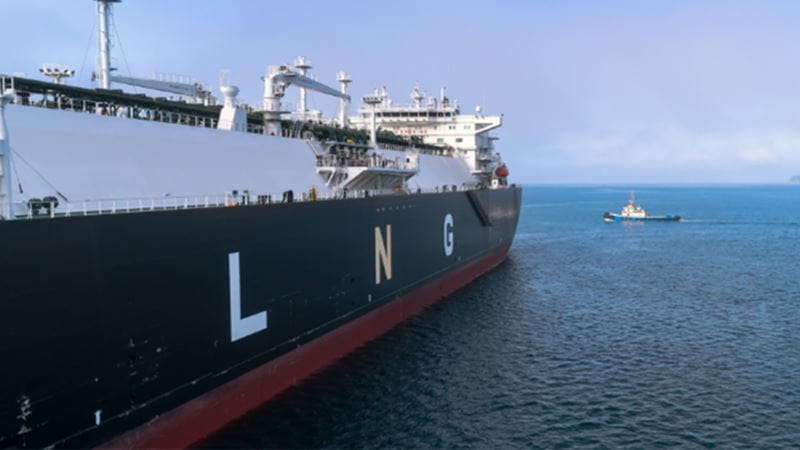
For almost sixty years, LNG carriers have burned boil-off cargo for fuel, shaping the development of comprehensive safety practices that underpin LNG’s wider use as a marine fuel. This long operational history has established key lessons in cryogenic handling, boil-off management, emergency shutdown procedures and ship-shore transfer routines, creating a safety culture and technical foundation unmatched by any other alternative fuel pathway.
As LNG bunkering has scaled, these practices have steadily informed industry standards. Frameworks such as the IMO’s International Code of Safety for Ships using Gases or other Low-flashpoint Fuels (IGF Code), SIGTTO guidance, SGMF recommendations, and BIMCO’s 2021 contractual provisions covering LNG quality, delivery and redelivery, gas-freeing, cooling down and operational considerations all draw directly from procedures developed and validated in LNG cargo operations. The IGF Code includes mandatory criteria for the arrangement and installation of machinery, equipment and systems on vessels operating with gas or low flash-point liquids to minimize risks.
These standards embed core elements such as ESD logic, compatibility planning, manifold arrangements, fluid-dynamic behavior and crew competency requirements. As LNG use has expanded into new vessel classes, these practices have been adapted to support safe, predictable and repeatable bunkering operations. Together, they form an operational blueprint built on systematic risk management, well-defined operating envelopes, reliable communication and shutdown links, and proven methods for handling cryogenic products under real-world conditions.
Such accumulated experience provides the technical confidence and operational predictability that allow LNG bunkering to scale efficiently, supported by decades of validated practice. It is also creating insights that will shape the adoption of other alternative fuels throughout the marine industry.
Question 2: What do you see being the biggest operational challenge of scaling LNG as a marine fuel?
One of the largest operational challenges in scaling LNG as a marine fuel is managing the growing variability and compatibility gaps across bunkering interfaces. Despite progress in safety standards, the market is developing on an invisible fault line characterized by a series of technical compatibility considerations that could compromise efficiency, environmental outcomes and profitability if they are not resolved holistically throughout bunkering operations.
Unlike large-scale cargo transfers, LNG bunkering brings together vessels of different sizes, with changing relative positions and far more frequent transfer cycles. These differences mean that the operational interfaces between ship-to-ship transfer systems can be different each time, such as the alignment of safety links, hose and transfer systems, manifolds and fenders – creating operational unpredictability for each refueling.
These variations directly affect safety margins, flow performance and turnaround times. Maximizing bunkering efficiency is also characteristically different for LNG compared to HFO. The multitude of logistical factors make it a process that requires stringent planning, monitoring and training. Operators often assume that selecting the correct bunker containment system or adhering to key procedural guidance is sufficient. However, ship operators prioritizing flow rates to maximize turnaround times will need to consider a multitude of interconnected factors, from hose size and configuration to fender selection, vessel positioning and mooring under variable conditions such as tidal movements, variable drafts or different loads.
These interlinked technical factors are often overlooked, particularly as more vessel operators and suppliers from outside of traditional LNG supply chains become involved. This risk of “compatibility chaos” across systems and interfaces is fast becoming an operational challenge in scaling LNG as a marine fuel.
A recent commissioning example illustrates this challenge. A major LNGC operator found that its installed Ship-Shore Link and Mooring Load Monitoring systems were incompatible with most Japanese terminals, preventing the vessels from calling and limiting global trading flexibility. Replacing the SSLs within extremely tight timescales, commissioning them during subsequent port calls and even in transit, Trelleborg restored terminal compatibility, enabling compliant data transfer and re-establishing safe, efficient berthing and transfer operations.
Standardized interfaces, strong compatibility planning and informed operational analysis are essential to prevent variability from amplifying inefficiencies, constraining safe operations and slowing LNG uptake.
Question 3: How can LNG suppliers and ship operators improve the predictability of bunker transfer operations?
Unpredictability compromises operations and has significant implications for the efficiency of maritime supply chains. To improve predictability, we need to understand the specific details of each ship or terminal’s interfaces and how their technical architectures compare. The increased frequency of LNG transfers compared to conventional LNG cargoes also means that equipment needs to be more specialized and robust, with suppliers and shipping companies having access to the relevant spares and engineering support to prevent unplanned downtime when issues arise.
Building all this knowledge and putting the necessary support in place in advance enables crews on both sides to plan transfers more meticulously and pre-empt any compatibility and efficiency issues. It also reinforces the need to view LNG bunkering as a symbiotic process, where equipment across ship-to-ship or ship-to-terminal transfers must operate seamlessly under variable conditions. This includes assessing flow behavior, since LNG’s cryogenic nature means that hose sizing, pressure drops, cooling profiles and multi-line configurations can influence boil-off, surge risks and overall transfer performance under varying real-world conditions.
Vessel motion directly affects transfer stability and variability in sea states can create significant line loads. At an offshore LNG terminal in West Africa, long-period infragravity waves induced sway and surge motions that risked snapped moorings during continuous product transfer. Motion analysis and the installation of automated dynamic mooring units provided the adjustment range and redundancy to stabilize vessel movement, improve safety and enable continuous, reliable transfer operations.
Predictability is also shaped by how well equipment is supported throughout its lifecycle. A major Middle East terminal operating more than 400 quick release hooks, maintaining calibration across ageing equipment required a structured approach. A dedicated Load Cell Exchange program enabled planned swap-outs, rapid reinstallation and systematic recalibration, ensuring compliance and consistent performance.
With robust equipment, detailed interface understanding and thorough pre-planning, operators can significantly reduce unpredictability and improve bunkering consistency.
Question 4: What competencies do crew need to develop and apply to ensure safe, efficient LNG bunkering?
Crew competency is a significant factor in achieving safe and efficient LNG bunkering, particularly as non-LNG crews rotate more frequently and may lack consistent specialist experience typically found on LNG cargo vessels. While STCW A-V/3 and the IGF Code set the minimum training standards for handling low flash-point fuels, these frameworks do not in themselves build the practical skills required to manage day-to-day LNG bunkering operations.
The gap is applied competence: understanding the technical nuances between the bunker and receiving vessel, the differences in safety links, transfer equipment, mooring arrangements and the sequencing of critical tasks. Crews also need to recognise how maintenance influences system performance, as higher transfer frequency demands more robust equipment and more attentive operational care than conventional LNG cargo transfer.
Building these competencies requires structured, hands-on training. During the conversion of Puteri Delima Satu into an FSU, the installation of a Gen3 double-bank SSL required comprehensive training for 42 crew members with varied technical backgrounds. A blended program, incorporating project-specific manuals, classroom instruction, a Figma-based simulation tool and onboard practical training, enabled personnel to operate, maintain and troubleshoot the system effectively, reducing downtime risk and strengthening transfer safety.
Simulation continues to play an important role in preparing crews on both the supply and receiving ends for real-world scenarios. By helping them understand equipment behavior, practice emergency responses, and refine sequencing in a controlled environment, simulation supports quicker problem resolution and more consistent execution during live operations.
Sustaining these competencies requires ongoing assessment and training, especially as adaptability becomes increasingly important with the introduction of alternative fuels such as hydrogen, ammonia and methanol. Initiatives such as Trelleborg’s Gas Transfer Centre of Excellence in the UK, which provides classroom and hands-on training initially focused on hose and transfer systems and safety links, help ensure crews can develop and maintain the skills needed for today’s LNG systems while preparing for the operational requirements of emerging fuels.
Question 5: What further steps does Trelleborg recommend in improving compatibility?
Improving compatibility requires coordinated action at both the vessel design stage and during day-to-day operations. Although organizations such as SGMF provide technical guidance on LNG-fueled vessel specifications, this guidance is not mandatory or widely adopted. As a result, shipyards play a critical role in advancing compatibility and standardization across LNG bunkering systems.
A fundamental shift in equipment design philosophy is needed to prioritize interoperability. Instead of over-simplifying specifications or developing proprietary solutions that create compatibility barriers once a vessel enters service, there is untapped potential to collaborate on establishing the correctly sized LNG bunker spaces and adopt universal interface standards for connection points, valve configurations and control systems. Applying modular design principles – where manifold assemblies, coupling mechanisms and safety systems follow industry-wide specifications – allows LNG-capable vessels to integrate with a wider range of bunkering infrastructure.
Forward-thinking shipyards are also beginning to incorporate digital communication protocols and standardized sensors that automatically verify compatibility and coordinate transfer parameters before a physical connection is made, eliminating manual verification processes that currently slow operations and introduce human error.
By embedding standardized sensors, automated safety shutoffs and common control interfaces into their designs from the outset, shipyards can transform LNG bunkering from a complex, vessel-specific procedure into a streamlined, plug-and-play operation that reduces transfer times, minimizes risk and improves reliability.
Operationally, compatibility must be maintained through flexible, well-supported equipment and informed planning. At a Mediterranean terminal handling multiple vessel sizes and transfer modes, including ship-to-ship, ship-to-shore and direct reloading from an FSRU to truck, variability created inefficiencies and required frequent equipment adjustments. By developing a flexible hose transfer system with enhanced diagnostics and minimal adjustment requirements, Trelleborg improved compatibility across all modes, reducing downtime.
Ultimately, improving compatibility depends on aligning interoperable vessel design with reliable equipment, strong digital systems and competent crews. When these elements work together, LNG bunkering becomes more consistent and scalable.
Question 6: What impact will getting ahead of these challenges have on the growth of LNG marine fuel operations?
Standardizing LNG bunkering interfaces represents a critical inflection point for the maritime industry, where technical precision directly translates into commercial advantage. By eliminating the risk of compatibility chaos that could impact LNG bunker suppliers and receiving vessels, the industry can unlock operational efficiency that transforms LNG from a seemingly complex fuel choice into a scalable, streamlined business decision.
This operational optimization has the potential to create a virtuous cycle where reduced transfer times, minimized delays and enhanced safety margins drive down costs while improving service reliability, making LNG bunkering economically attractive to a broader range of operators looking for a viable, immediate alternative fuel pathway.
Ultimately, these technical improvements supported by the increasing use of data to drive compatibility decisions, can accelerate LNG adoption across the global fleet. By doing so, it enables operators to realize the benefits of using cleaner marine fuel options at scale while positioning early adopters to capitalize on emerging carbon credit markets. The lessons learned from standardizing LNG transfer interfaces will accelerate the shipping industry’s readiness for adopting emerging alternative fuels like ammonia, methanol and hydrogen, creating transferable expertise in bunkering requirements, protocols and safety procedures.
The path to maritime decarbonization runs through operational excellence and standardized LNG interfaces, providing the foundation for achieving both environmental progress and commercial opportunity as the alternative fuels landscape evolves.
For almost sixty years, LNG carriers have burned boil-off cargo for fuel, shaping the development of comprehensive safety practices that underpin LNG’s wider use as a marine fuel. This long operational history has established key lessons in cryogenic handling, boil-off management, emergency shutdown procedures and ship-shore transfer routines, creating a safety culture and technical foundation unmatched by any other alternative fuel pathway.
As LNG bunkering has scaled, these practices have steadily informed industry standards. Frameworks such as the IMO’s International Code of Safety for Ships using Gases or other Low-flashpoint Fuels (IGF Code), SIGTTO guidance, SGMF recommendations, and BIMCO’s 2021 contractual provisions covering LNG quality, delivery and redelivery, gas-freeing, cooling down and operational considerations all draw directly from procedures developed and validated in LNG cargo operations. The IGF Code includes mandatory criteria for the arrangement and installation of machinery, equipment and systems on vessels operating with gas or low flash-point liquids to minimize risks.
These standards embed core elements such as ESD logic, compatibility planning, manifold arrangements, fluid-dynamic behavior and crew competency requirements. As LNG use has expanded into new vessel classes, these practices have been adapted to support safe, predictable and repeatable bunkering operations. Together, they form an operational blueprint built on systematic risk management, well-defined operating envelopes, reliable communication and shutdown links, and proven methods for handling cryogenic products under real-world conditions.
Such accumulated experience provides the technical confidence and operational predictability that allow LNG bunkering to scale efficiently, supported by decades of validated practice. It is also creating insights that will shape the adoption of other alternative fuels throughout the marine industry.
Question 2: What do you see being the biggest operational challenge of scaling LNG as a marine fuel?
One of the largest operational challenges in scaling LNG as a marine fuel is managing the growing variability and compatibility gaps across bunkering interfaces. Despite progress in safety standards, the market is developing on an invisible fault line characterized by a series of technical compatibility considerations that could compromise efficiency, environmental outcomes and profitability if they are not resolved holistically throughout bunkering operations.
Unlike large-scale cargo transfers, LNG bunkering brings together vessels of different sizes, with changing relative positions and far more frequent transfer cycles. These differences mean that the operational interfaces between ship-to-ship transfer systems can be different each time, such as the alignment of safety links, hose and transfer systems, manifolds and fenders – creating operational unpredictability for each refueling.
These variations directly affect safety margins, flow performance and turnaround times. Maximizing bunkering efficiency is also characteristically different for LNG compared to HFO. The multitude of logistical factors make it a process that requires stringent planning, monitoring and training. Operators often assume that selecting the correct bunker containment system or adhering to key procedural guidance is sufficient. However, ship operators prioritizing flow rates to maximize turnaround times will need to consider a multitude of interconnected factors, from hose size and configuration to fender selection, vessel positioning and mooring under variable conditions such as tidal movements, variable drafts or different loads.
These interlinked technical factors are often overlooked, particularly as more vessel operators and suppliers from outside of traditional LNG supply chains become involved. This risk of “compatibility chaos” across systems and interfaces is fast becoming an operational challenge in scaling LNG as a marine fuel.
A recent commissioning example illustrates this challenge. A major LNGC operator found that its installed Ship-Shore Link and Mooring Load Monitoring systems were incompatible with most Japanese terminals, preventing the vessels from calling and limiting global trading flexibility. Replacing the SSLs within extremely tight timescales, commissioning them during subsequent port calls and even in transit, Trelleborg restored terminal compatibility, enabling compliant data transfer and re-establishing safe, efficient berthing and transfer operations.
Standardized interfaces, strong compatibility planning and informed operational analysis are essential to prevent variability from amplifying inefficiencies, constraining safe operations and slowing LNG uptake.
Question 3: How can LNG suppliers and ship operators improve the predictability of bunker transfer operations?
Unpredictability compromises operations and has significant implications for the efficiency of maritime supply chains. To improve predictability, we need to understand the specific details of each ship or terminal’s interfaces and how their technical architectures compare. The increased frequency of LNG transfers compared to conventional LNG cargoes also means that equipment needs to be more specialized and robust, with suppliers and shipping companies having access to the relevant spares and engineering support to prevent unplanned downtime when issues arise.
Building all this knowledge and putting the necessary support in place in advance enables crews on both sides to plan transfers more meticulously and pre-empt any compatibility and efficiency issues. It also reinforces the need to view LNG bunkering as a symbiotic process, where equipment across ship-to-ship or ship-to-terminal transfers must operate seamlessly under variable conditions. This includes assessing flow behavior, since LNG’s cryogenic nature means that hose sizing, pressure drops, cooling profiles and multi-line configurations can influence boil-off, surge risks and overall transfer performance under varying real-world conditions.
Vessel motion directly affects transfer stability and variability in sea states can create significant line loads. At an offshore LNG terminal in West Africa, long-period infragravity waves induced sway and surge motions that risked snapped moorings during continuous product transfer. Motion analysis and the installation of automated dynamic mooring units provided the adjustment range and redundancy to stabilize vessel movement, improve safety and enable continuous, reliable transfer operations.
Predictability is also shaped by how well equipment is supported throughout its lifecycle. A major Middle East terminal operating more than 400 quick release hooks, maintaining calibration across ageing equipment required a structured approach. A dedicated Load Cell Exchange program enabled planned swap-outs, rapid reinstallation and systematic recalibration, ensuring compliance and consistent performance.
With robust equipment, detailed interface understanding and thorough pre-planning, operators can significantly reduce unpredictability and improve bunkering consistency.
Question 4: What competencies do crew need to develop and apply to ensure safe, efficient LNG bunkering?
Crew competency is a significant factor in achieving safe and efficient LNG bunkering, particularly as non-LNG crews rotate more frequently and may lack consistent specialist experience typically found on LNG cargo vessels. While STCW A-V/3 and the IGF Code set the minimum training standards for handling low flash-point fuels, these frameworks do not in themselves build the practical skills required to manage day-to-day LNG bunkering operations.
The gap is applied competence: understanding the technical nuances between the bunker and receiving vessel, the differences in safety links, transfer equipment, mooring arrangements and the sequencing of critical tasks. Crews also need to recognise how maintenance influences system performance, as higher transfer frequency demands more robust equipment and more attentive operational care than conventional LNG cargo transfer.
Building these competencies requires structured, hands-on training. During the conversion of Puteri Delima Satu into an FSU, the installation of a Gen3 double-bank SSL required comprehensive training for 42 crew members with varied technical backgrounds. A blended program, incorporating project-specific manuals, classroom instruction, a Figma-based simulation tool and onboard practical training, enabled personnel to operate, maintain and troubleshoot the system effectively, reducing downtime risk and strengthening transfer safety.
Simulation continues to play an important role in preparing crews on both the supply and receiving ends for real-world scenarios. By helping them understand equipment behavior, practice emergency responses, and refine sequencing in a controlled environment, simulation supports quicker problem resolution and more consistent execution during live operations.
Sustaining these competencies requires ongoing assessment and training, especially as adaptability becomes increasingly important with the introduction of alternative fuels such as hydrogen, ammonia and methanol. Initiatives such as Trelleborg’s Gas Transfer Centre of Excellence in the UK, which provides classroom and hands-on training initially focused on hose and transfer systems and safety links, help ensure crews can develop and maintain the skills needed for today’s LNG systems while preparing for the operational requirements of emerging fuels.
Question 5: What further steps does Trelleborg recommend in improving compatibility?
Improving compatibility requires coordinated action at both the vessel design stage and during day-to-day operations. Although organizations such as SGMF provide technical guidance on LNG-fueled vessel specifications, this guidance is not mandatory or widely adopted. As a result, shipyards play a critical role in advancing compatibility and standardization across LNG bunkering systems.
A fundamental shift in equipment design philosophy is needed to prioritize interoperability. Instead of over-simplifying specifications or developing proprietary solutions that create compatibility barriers once a vessel enters service, there is untapped potential to collaborate on establishing the correctly sized LNG bunker spaces and adopt universal interface standards for connection points, valve configurations and control systems. Applying modular design principles – where manifold assemblies, coupling mechanisms and safety systems follow industry-wide specifications – allows LNG-capable vessels to integrate with a wider range of bunkering infrastructure.
Forward-thinking shipyards are also beginning to incorporate digital communication protocols and standardized sensors that automatically verify compatibility and coordinate transfer parameters before a physical connection is made, eliminating manual verification processes that currently slow operations and introduce human error.
By embedding standardized sensors, automated safety shutoffs and common control interfaces into their designs from the outset, shipyards can transform LNG bunkering from a complex, vessel-specific procedure into a streamlined, plug-and-play operation that reduces transfer times, minimizes risk and improves reliability.
Operationally, compatibility must be maintained through flexible, well-supported equipment and informed planning. At a Mediterranean terminal handling multiple vessel sizes and transfer modes, including ship-to-ship, ship-to-shore and direct reloading from an FSRU to truck, variability created inefficiencies and required frequent equipment adjustments. By developing a flexible hose transfer system with enhanced diagnostics and minimal adjustment requirements, Trelleborg improved compatibility across all modes, reducing downtime.
Ultimately, improving compatibility depends on aligning interoperable vessel design with reliable equipment, strong digital systems and competent crews. When these elements work together, LNG bunkering becomes more consistent and scalable.
Question 6: What impact will getting ahead of these challenges have on the growth of LNG marine fuel operations?
Standardizing LNG bunkering interfaces represents a critical inflection point for the maritime industry, where technical precision directly translates into commercial advantage. By eliminating the risk of compatibility chaos that could impact LNG bunker suppliers and receiving vessels, the industry can unlock operational efficiency that transforms LNG from a seemingly complex fuel choice into a scalable, streamlined business decision.
This operational optimization has the potential to create a virtuous cycle where reduced transfer times, minimized delays and enhanced safety margins drive down costs while improving service reliability, making LNG bunkering economically attractive to a broader range of operators looking for a viable, immediate alternative fuel pathway.
Ultimately, these technical improvements supported by the increasing use of data to drive compatibility decisions, can accelerate LNG adoption across the global fleet. By doing so, it enables operators to realize the benefits of using cleaner marine fuel options at scale while positioning early adopters to capitalize on emerging carbon credit markets. The lessons learned from standardizing LNG transfer interfaces will accelerate the shipping industry’s readiness for adopting emerging alternative fuels like ammonia, methanol and hydrogen, creating transferable expertise in bunkering requirements, protocols and safety procedures.
The path to maritime decarbonization runs through operational excellence and standardized LNG interfaces, providing the foundation for achieving both environmental progress and commercial opportunity as the alternative fuels landscape evolves.