
Meet the Pioneers - Rudy Laguna
Date: 07.07.26
Marine fender systems are among the first and last line of defense every time a vessel makes contact with a berth. Yet in project planning, procurement, and asset management conversations, they are routinely treated as an afterthought.
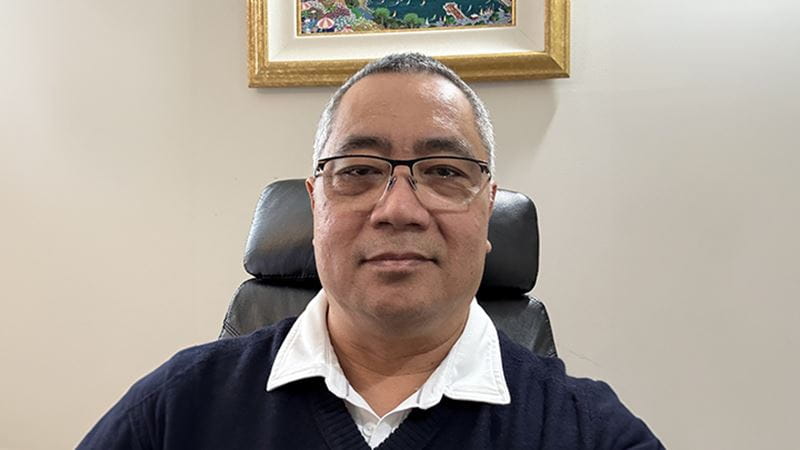
Rudy Laguna has spent over two decades pushing back against that assumption. Being a Technical Director & taking on a challenge as Regional Sales Manager for Trelleborg Marine Systems in Canada, Rudy brings more than 20 years of hands-on expertise across every stage of the project lifecycle, from FEED concept design and facility inspection through to installation, commissioning, and key account management on some of the world's most demanding LNG infrastructure projects. His career spans Dubai, the Americas, and now Canada, where he is actively expanding Trelleborg's fender business.
This is a conversation about what it actually takes to deliver fender systems that perform and why getting it right matters far more than most stakeholders realize.
You've been in this industry for over 20 years. How did you end up here and what has kept you engaged for so long?
My journey started with a simple fascination with the sea and ships. So, when the chance came to join Fentek Marine Systems in Dubai back in 2004, it felt like an easy decision. Looking back, it was one that shaped my entire career. When Fentek was later acquired by Trelleborg in 2006, it opened the door to opportunities that continue to define my path today.
What keeps me engaged is the complexity. No two projects are the same. Every berthing facility has a unique combination of vessel types, operational conditions, environmental loads, and structural constraints. The engineering challenge is always fresh. And after two decades, I'm still encountering problems that require genuine new thinking, that's not something many professions can offer.
Your journey so far has taken you from Project Engineer to Technical Director to your current role, which spans both technical and commercial responsibilities. What does that evolution tell us about what this field actually demands?
In the early stages of my career, the work was primarily about engineering, which meant getting the calculations right, meeting the specifications, delivering a system that performed. But as I progressed, I realized that the ability to translate complex engineering into decisions that customers, contractors, and EPC firms could act on was equally important.
My current role reflects that fully. I'm responsible for expanding the marine fender business in Canada, which means managing key relationships with port owners, operators, marine consultants, EPC firms, and contractors, while also providing direct technical support at every stage of the project. Sales without technical depth can be hollow. And technical capability without commercial awareness struggles to create real value. The two need to move together.
What opportunities do you see in the Canadian maritime market, and what makes it a distinct environment to work in?
Canada has significant maritime infrastructure such as major ports, LNG development ambitions, coastal industrial facilities, and a market that is increasingly focused on performance, lifecycle value, sustainability, environmental impact, and engineering rigor. That's a good environment for what Trelleborg offers.
What makes it distinct is the regulatory and standards landscape. Canadian engineering practice operates within a specific framework of codes and standards, and I'm currently investing time in understanding exactly how those interact with our design methodologies and product specifications. Stakeholders here rightly expect their suppliers to understand the local context, not just arrive with a global portfolio and assume it translates directly.
The opportunity I find most compelling is the gap between what sophisticated port owners and operators genuinely need fully engineered, application-specific berthing systems — and what the market has typically offered them. That gap represents both a commercial opportunity and a chance to raise the standard of practice.
You've described fender systems as "the heart of a berthing facility." That's a strong claim. Why do you believe the industry routinely undervalues them?
Because they don't look impressive. A fender system sits at the waterline, often submerged or obscured, and for most of its operational life it appears to do nothing. That creates a dangerous perception that it's a passive component, a simple buffer, something you can standardize and procure on price.
That perception is wrong, and the consequences of acting on it can be severe. A fender system that fails to meet both its berthing energy and operational requirements doesn't just damage the fender; it transfers that energy to the vessel or the structure. In a worst-case scenario, you're looking at vessel damage, structural failure, or an environmental incident. The question I believe every stakeholder should be asking, but rarely does, is: what are the consequences if this fender system or bollard fails to meet the operational requirement? That question reframes the procurement conversation entirely.
Walk us through one of your most critical projects. What made it technically significant, and what did it teach you about working under genuine pressure?
The project with Qatargas (now QatarEnergy LNG) stands out because virtually every constraint was operating at its limit simultaneously. The brief required designing a Pivoting Mooring Fender that could safely berth larger LNG vessels, while working within a limited support structure capacity. The fender projection had to stay within a tight envelope to ensure the loading manifold's working range wasn't compromised. And the entire installation, three fender systems, had to be completed within a three-day window.
That installation constraint was the most acute risk. Miss that window, and the operational impact on the terminal is immediate and significant. Everything, from the design approach, the fabrication planning, the logistics sequencing had to be built backwards from that deadline.
What it taught me is that the right combination of knowledge, tools, and calm under pressure makes seemingly impossible constraints solvable. The technical outcome was successful. But the more lasting lesson was about ownership: when things look like they might not go to plan, the worst response is to look for someone else to blame. Accept full ownership, stay calm, and focus entirely on solutions. That posture is what separates teams that deliver from teams that don't.
You are involved throughout the entire project lifecycle, from FEED and conceptual design to installation and commissioning. In your experience, at which stages do the most significant and costly errors generally arise?
At the beginning. Decisions made during FEED and concept design set the parameters for everything that follows, including structural dimensions, load assumptions, operational envelope, vessel mix. If a fender system is specified too late or specified generically without accounting for the actual berthing conditions, the project carries that error forward into detailed design, procurement, and ultimately performance.
The most expensive problems I encounter are rarely manufacturing or installation failures. They are design assumptions that were never properly interrogated like vessel types that were added to the operational brief after the fender was specified, energy requirements that were underestimated because the worst-case berthing scenario wasn't modelled, or support structures that weren't sized to accommodate the actual fender loads.
Engaging experienced fender engineering expertise at the FEED stage is significantly less expensive than correcting a misspecification during detailed design or far worse during commissioning.
For the next generation of engineers and technical professionals entering this field, what's the most important thing they should focus on?
Meeting stakeholder expectations without sacrificing quality, performance, functionality, or sustainability. That sounds straightforward, but it requires a disciplined combination of skills that engineering programmes don't always develop: the ability to listen carefully to what a client actually needs, the technical depth to translate that need into a robust design, and the communication skills to explain why certain decisions matter.
I'd also encourage young engineers to develop comfort with complexity and ambiguity. The problems worth solving in this field rarely have a single correct answer. They require thinking outside the box while remaining rigorously grounded in physics, material behavior, and operational reality. Curiosity is essential. So is the willingness to make mistakes and learn from them directly.
Rudy Laguna has spent over two decades pushing back against that assumption. Being a Technical Director & taking on a challenge as Regional Sales Manager for Trelleborg Marine Systems in Canada, Rudy brings more than 20 years of hands-on expertise across every stage of the project lifecycle, from FEED concept design and facility inspection through to installation, commissioning, and key account management on some of the world's most demanding LNG infrastructure projects. His career spans Dubai, the Americas, and now Canada, where he is actively expanding Trelleborg's fender business.
This is a conversation about what it actually takes to deliver fender systems that perform and why getting it right matters far more than most stakeholders realize.
You've been in this industry for over 20 years. How did you end up here and what has kept you engaged for so long?
My journey started with a simple fascination with the sea and ships. So, when the chance came to join Fentek Marine Systems in Dubai back in 2004, it felt like an easy decision. Looking back, it was one that shaped my entire career. When Fentek was later acquired by Trelleborg in 2006, it opened the door to opportunities that continue to define my path today.
What keeps me engaged is the complexity. No two projects are the same. Every berthing facility has a unique combination of vessel types, operational conditions, environmental loads, and structural constraints. The engineering challenge is always fresh. And after two decades, I'm still encountering problems that require genuine new thinking, that's not something many professions can offer.
Your journey so far has taken you from Project Engineer to Technical Director to your current role, which spans both technical and commercial responsibilities. What does that evolution tell us about what this field actually demands?
In the early stages of my career, the work was primarily about engineering, which meant getting the calculations right, meeting the specifications, delivering a system that performed. But as I progressed, I realized that the ability to translate complex engineering into decisions that customers, contractors, and EPC firms could act on was equally important.
My current role reflects that fully. I'm responsible for expanding the marine fender business in Canada, which means managing key relationships with port owners, operators, marine consultants, EPC firms, and contractors, while also providing direct technical support at every stage of the project. Sales without technical depth can be hollow. And technical capability without commercial awareness struggles to create real value. The two need to move together.
What opportunities do you see in the Canadian maritime market, and what makes it a distinct environment to work in?
Canada has significant maritime infrastructure such as major ports, LNG development ambitions, coastal industrial facilities, and a market that is increasingly focused on performance, lifecycle value, sustainability, environmental impact, and engineering rigor. That's a good environment for what Trelleborg offers.
What makes it distinct is the regulatory and standards landscape. Canadian engineering practice operates within a specific framework of codes and standards, and I'm currently investing time in understanding exactly how those interact with our design methodologies and product specifications. Stakeholders here rightly expect their suppliers to understand the local context, not just arrive with a global portfolio and assume it translates directly.
The opportunity I find most compelling is the gap between what sophisticated port owners and operators genuinely need fully engineered, application-specific berthing systems — and what the market has typically offered them. That gap represents both a commercial opportunity and a chance to raise the standard of practice.
You've described fender systems as "the heart of a berthing facility." That's a strong claim. Why do you believe the industry routinely undervalues them?
Because they don't look impressive. A fender system sits at the waterline, often submerged or obscured, and for most of its operational life it appears to do nothing. That creates a dangerous perception that it's a passive component, a simple buffer, something you can standardize and procure on price.
That perception is wrong, and the consequences of acting on it can be severe. A fender system that fails to meet both its berthing energy and operational requirements doesn't just damage the fender; it transfers that energy to the vessel or the structure. In a worst-case scenario, you're looking at vessel damage, structural failure, or an environmental incident. The question I believe every stakeholder should be asking, but rarely does, is: what are the consequences if this fender system or bollard fails to meet the operational requirement? That question reframes the procurement conversation entirely.
Walk us through one of your most critical projects. What made it technically significant, and what did it teach you about working under genuine pressure?
The project with Qatargas (now QatarEnergy LNG) stands out because virtually every constraint was operating at its limit simultaneously. The brief required designing a Pivoting Mooring Fender that could safely berth larger LNG vessels, while working within a limited support structure capacity. The fender projection had to stay within a tight envelope to ensure the loading manifold's working range wasn't compromised. And the entire installation, three fender systems, had to be completed within a three-day window.
That installation constraint was the most acute risk. Miss that window, and the operational impact on the terminal is immediate and significant. Everything, from the design approach, the fabrication planning, the logistics sequencing had to be built backwards from that deadline.
What it taught me is that the right combination of knowledge, tools, and calm under pressure makes seemingly impossible constraints solvable. The technical outcome was successful. But the more lasting lesson was about ownership: when things look like they might not go to plan, the worst response is to look for someone else to blame. Accept full ownership, stay calm, and focus entirely on solutions. That posture is what separates teams that deliver from teams that don't.
You are involved throughout the entire project lifecycle, from FEED and conceptual design to installation and commissioning. In your experience, at which stages do the most significant and costly errors generally arise?
At the beginning. Decisions made during FEED and concept design set the parameters for everything that follows, including structural dimensions, load assumptions, operational envelope, vessel mix. If a fender system is specified too late or specified generically without accounting for the actual berthing conditions, the project carries that error forward into detailed design, procurement, and ultimately performance.
The most expensive problems I encounter are rarely manufacturing or installation failures. They are design assumptions that were never properly interrogated like vessel types that were added to the operational brief after the fender was specified, energy requirements that were underestimated because the worst-case berthing scenario wasn't modelled, or support structures that weren't sized to accommodate the actual fender loads.
Engaging experienced fender engineering expertise at the FEED stage is significantly less expensive than correcting a misspecification during detailed design or far worse during commissioning.
For the next generation of engineers and technical professionals entering this field, what's the most important thing they should focus on?
Meeting stakeholder expectations without sacrificing quality, performance, functionality, or sustainability. That sounds straightforward, but it requires a disciplined combination of skills that engineering programmes don't always develop: the ability to listen carefully to what a client actually needs, the technical depth to translate that need into a robust design, and the communication skills to explain why certain decisions matter.
I'd also encourage young engineers to develop comfort with complexity and ambiguity. The problems worth solving in this field rarely have a single correct answer. They require thinking outside the box while remaining rigorously grounded in physics, material behavior, and operational reality. Curiosity is essential. So is the willingness to make mistakes and learn from them directly.