
Meet the Pioneers - Parthiv Shah
Date: 26.08.25
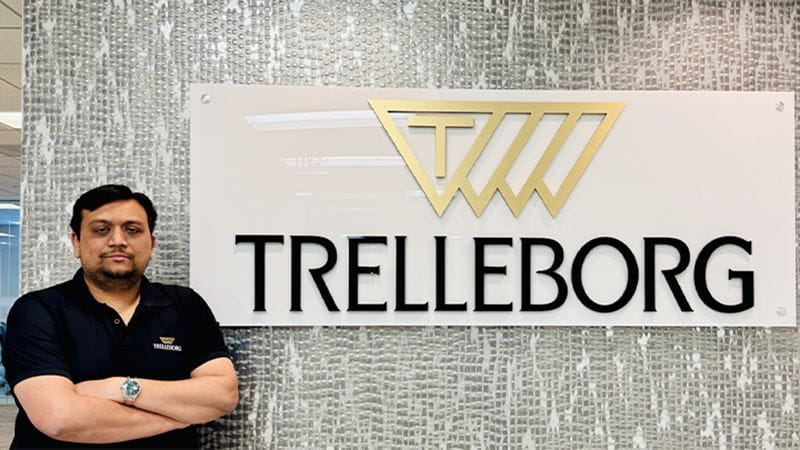
In this conversation, Parthiv Shah, the Engineering Manager for the Americas at Trelleborg Marine Infrastructure, takes us through his daily workflow, challenges and how he leads a team of engineers with his expertise and foresight.
Could you walk us through your journey to becoming the Engineering Manager for the Americas at Trelleborg Marine & Infrastructure?
My journey has been shaped by a deep passion for infrastructure that connects people and economies—particularly in the marine space. I started my career as a design engineer, where I developed a strong foundation in structural mechanics and materials. Over time, I gravitated toward application engineering and project delivery, where the impact of decisions extends beyond the drawing board.
At Trelleborg, I’ve had the opportunity to grow alongside complex and high-value projects across North and South America. Through that, I developed a strong understanding of port operations, stakeholder priorities, and the real-world performance of fender and bollard systems. My transition into the Engineering Manager role was a natural progression, combining technical depth with regional insight and team leadership.
As someone leading technical support and application engineering for marine fender systems and bollards, what does a typical day look like for you?
No two days are ever the same, but most involve a mix of design reviews, customer discussions, team collaboration, and technical problem-solving. I might be evaluating berthing energy calculations for a new bulk terminal in the morning and troubleshooting a site installation issue in the afternoon.
I also spend a good portion of my time aligning technical proposals with commercial needs, working closely with sales teams. The Americas region is vast and diverse, so I’m constantly adapting our engineering solutions to meet local codes, operational constraints, and project-specific risk profiles.
How has your perspective on engineering design evolved throughout your career at Trelleborg? Has working across different projects in the Americas influenced your approach?
Earlier in my career, I viewed engineering design primarily through the lens of optimization and performance. Now, I see it as a balance of performance, constructability, cost-efficiency, and long-term operability.
Working across multiple projects - from Canada to Argentina - has broadened my thinking. I’ve learned to appreciate the importance of stakeholder communication, cultural context, and practical site feedback. It’s not just about designing a system that “works”—it’s about designing a solution that works well in that port, for those users, with those long-term goals.
Could you share a particularly challenging project in the Americas where your team's engineering solution made a significant difference? Are there any recurring challenges you commonly see?
One project that stands out was a retrofit at an LNG terminal where the requirement was to increase the fender system standoff to accommodate a larger host vessel. Simply extending the fender line outward wasn’t an option. There were strict environmental constraints due to the proximity of marine ecosystems, and pushing the berth further into the channel would have encroached on the navigational envelope, which was not permitted by the port authority.
Our team engineered a hybrid solution using a combination of existing fenders and a custom steel structure that utilized the original fender anchors. This approach allowed us to preserve the existing mounting footprint while strategically increasing the effective standoff. By retrofitting around the original design instead of replacing it entirely, we reduced both installation time and cost. Working closely with the terminal operator and the engineering consultant, we conducted detailed modeling and finite element studies to ensure the new system could perform effectively without compromising structural integrity or vessel clearance. The result not only ensured safe operations but also minimized downtime during installation—a critical win for the terminal operator.
Recurring challenges across the Americas often involve constraints such as limited retrofit space, aging infrastructure, accelerated construction schedules, and strict environmental or permitting requirements. Many ports are adapting existing facilities to handle newer, larger vessels, which means we’re frequently designing custom or transitional solutions. At the same time, these challenges present valuable opportunities to innovate with hybrid fender systems, to reuse and reinforce rather than replace, and to apply smart engineering judgment. The key is understanding both the technical and operational realities of each site, and that’s where our team’s regional expertise truly adds value.
What do you consider your most significant professional achievement at Trelleborg so far? How do you measure success beyond just meeting technical specifications?
One of my proudest achievements is building a highly capable and agile engineering team that can adapt to the diverse and often demanding project landscape in the Americas. We’ve been able to take on technically complex challenges and deliver solutions that not only meet specs but elevate the client’s confidence in the long-term performance of their assets.
I measure success in terms of client satisfaction, repeat business, and how well the system performs after handover. When a port calls us back - not because there’s an issue, but because they trust us for the next phase, that’s success.
How do you foster innovation and continuous learning within your team, especially with the evolving needs of ports in the Americas?
We encourage a culture where curiosity and questioning are welcome. We regularly review lessons learned from past projects and track evolving standards and technologies, whether it's new berthing simulation techniques, alternative materials, or digital monitoring tools.
I also push for cross-functional exposure - having engineers interact with product development, R&D, and site teams - so they develop holistic perspectives, not siloed ones. That’s key to staying innovative and delivering value.
What aspects of your role do you find most fulfilling, and why?
What I find most fulfilling is the ability to see our work in action—knowing that what we design protects people, assets, and environments every single day.
There’s also a deep satisfaction in mentoring young engineers and watching them grow into confident problem-solvers. Seeing our team come together to solve a tricky challenge, and then watching the client’s operations benefit from it—that never gets old.
Looking ahead, what goals are you setting for yourself and your team in the next few years?
We're focused on advancing sustainability, smarter systems, and regional responsiveness. That means integrating more eco-conscious materials and digital tools into our product offering, while continuing to build local technical expertise across the Americas.
Personally, I aim to deepen collaboration with key customers and industry bodies so we’re not just meeting today’s needs but helping shape tomorrow’s standards. It’s about staying ahead of change, rather than reacting to it.
Want to learn more about our Americas team and how we can support your project? Reach out to us
My journey has been shaped by a deep passion for infrastructure that connects people and economies—particularly in the marine space. I started my career as a design engineer, where I developed a strong foundation in structural mechanics and materials. Over time, I gravitated toward application engineering and project delivery, where the impact of decisions extends beyond the drawing board.
At Trelleborg, I’ve had the opportunity to grow alongside complex and high-value projects across North and South America. Through that, I developed a strong understanding of port operations, stakeholder priorities, and the real-world performance of fender and bollard systems. My transition into the Engineering Manager role was a natural progression, combining technical depth with regional insight and team leadership.
As someone leading technical support and application engineering for marine fender systems and bollards, what does a typical day look like for you?
No two days are ever the same, but most involve a mix of design reviews, customer discussions, team collaboration, and technical problem-solving. I might be evaluating berthing energy calculations for a new bulk terminal in the morning and troubleshooting a site installation issue in the afternoon.
I also spend a good portion of my time aligning technical proposals with commercial needs, working closely with sales teams. The Americas region is vast and diverse, so I’m constantly adapting our engineering solutions to meet local codes, operational constraints, and project-specific risk profiles.
How has your perspective on engineering design evolved throughout your career at Trelleborg? Has working across different projects in the Americas influenced your approach?
Earlier in my career, I viewed engineering design primarily through the lens of optimization and performance. Now, I see it as a balance of performance, constructability, cost-efficiency, and long-term operability.
Working across multiple projects - from Canada to Argentina - has broadened my thinking. I’ve learned to appreciate the importance of stakeholder communication, cultural context, and practical site feedback. It’s not just about designing a system that “works”—it’s about designing a solution that works well in that port, for those users, with those long-term goals.
Could you share a particularly challenging project in the Americas where your team's engineering solution made a significant difference? Are there any recurring challenges you commonly see?
One project that stands out was a retrofit at an LNG terminal where the requirement was to increase the fender system standoff to accommodate a larger host vessel. Simply extending the fender line outward wasn’t an option. There were strict environmental constraints due to the proximity of marine ecosystems, and pushing the berth further into the channel would have encroached on the navigational envelope, which was not permitted by the port authority.
Our team engineered a hybrid solution using a combination of existing fenders and a custom steel structure that utilized the original fender anchors. This approach allowed us to preserve the existing mounting footprint while strategically increasing the effective standoff. By retrofitting around the original design instead of replacing it entirely, we reduced both installation time and cost. Working closely with the terminal operator and the engineering consultant, we conducted detailed modeling and finite element studies to ensure the new system could perform effectively without compromising structural integrity or vessel clearance. The result not only ensured safe operations but also minimized downtime during installation—a critical win for the terminal operator.
Recurring challenges across the Americas often involve constraints such as limited retrofit space, aging infrastructure, accelerated construction schedules, and strict environmental or permitting requirements. Many ports are adapting existing facilities to handle newer, larger vessels, which means we’re frequently designing custom or transitional solutions. At the same time, these challenges present valuable opportunities to innovate with hybrid fender systems, to reuse and reinforce rather than replace, and to apply smart engineering judgment. The key is understanding both the technical and operational realities of each site, and that’s where our team’s regional expertise truly adds value.
What do you consider your most significant professional achievement at Trelleborg so far? How do you measure success beyond just meeting technical specifications?
One of my proudest achievements is building a highly capable and agile engineering team that can adapt to the diverse and often demanding project landscape in the Americas. We’ve been able to take on technically complex challenges and deliver solutions that not only meet specs but elevate the client’s confidence in the long-term performance of their assets.
I measure success in terms of client satisfaction, repeat business, and how well the system performs after handover. When a port calls us back - not because there’s an issue, but because they trust us for the next phase, that’s success.
How do you foster innovation and continuous learning within your team, especially with the evolving needs of ports in the Americas?
We encourage a culture where curiosity and questioning are welcome. We regularly review lessons learned from past projects and track evolving standards and technologies, whether it's new berthing simulation techniques, alternative materials, or digital monitoring tools.
I also push for cross-functional exposure - having engineers interact with product development, R&D, and site teams - so they develop holistic perspectives, not siloed ones. That’s key to staying innovative and delivering value.
What aspects of your role do you find most fulfilling, and why?
What I find most fulfilling is the ability to see our work in action—knowing that what we design protects people, assets, and environments every single day.
There’s also a deep satisfaction in mentoring young engineers and watching them grow into confident problem-solvers. Seeing our team come together to solve a tricky challenge, and then watching the client’s operations benefit from it—that never gets old.
Looking ahead, what goals are you setting for yourself and your team in the next few years?
We're focused on advancing sustainability, smarter systems, and regional responsiveness. That means integrating more eco-conscious materials and digital tools into our product offering, while continuing to build local technical expertise across the Americas.
Personally, I aim to deepen collaboration with key customers and industry bodies so we’re not just meeting today’s needs but helping shape tomorrow’s standards. It’s about staying ahead of change, rather than reacting to it.
Want to learn more about our Americas team and how we can support your project? Reach out to us