
Meet the Pioneers - Oscar Duque
Date: 26.08.25
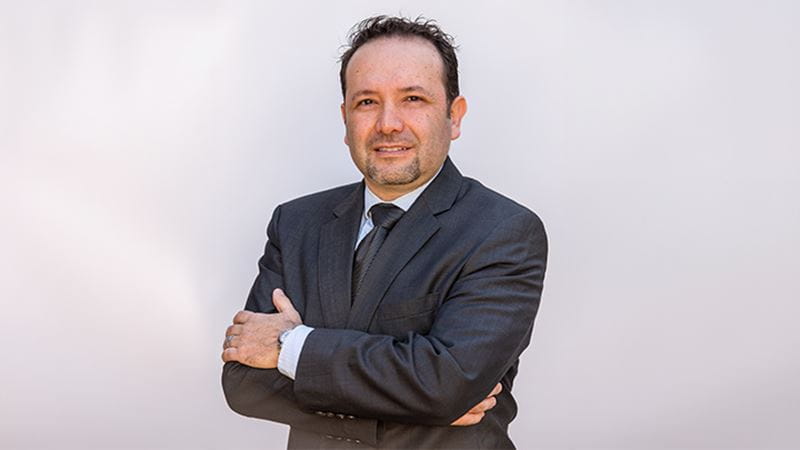
Meet Oscar Duque, Sales Manager for Docking & Mooring systems across the Americas at Trelleborg Marine and Infrastructure. With 16 years of cross-cultural business experience and deep understanding of Latin American business dynamics, Oscar continues to be instrumental in driving successful project delivery across the region.
From Colombia to Brazil to the broader Americas - how has your multicultural background shaped your approach to sales and business relationships across Latin America?
Many people believe that speaking the same language makes us the same, but it's different dealing with a Mexican customer versus a Colombian or an Argentinian customer. One must try to understand the history of the country and also understand the way they think and how they do business. Visiting and talking to customers over the years gives you a good idea of how to approach and work with them.
From your perspective, how important is language and cultural immersion when building trust with international clients?
I believe language and culture are crucial to dealing with people from different countries. We normally hear the saying "now we are speaking the same language"; I know it's not the literal meaning; however, in business it is literal. We all would rather speak our native languages, and by speaking to a customer in their language, that makes us closer to them. If you add a bit of the cultural part, it becomes easier.
Tell us about your experience helping establish Trelleborg's facility in Brazil. What were the key challenges and insights you gained about doing business in Latin America?
The first one, on a more personal level, was the move and the cultural shock, which was managed nicely by the family as a whole. Business-wise, I would say there were two main challenges: taxes and punctuality in deliveries.
It was a different experience to have to learn about the different styles of taxation within the same country (per state) and for different reasons that would apply sometimes and sometimes not. Some of our suppliers were more laid-back, and that put some stress on you when dealing in the market.
As for the insight, I believe that businesses that want to be in Brazil need to get into it with a long-term mentality. It takes time to understand the market, to get used to it, and to begin making profit. Short-term investments are quite difficult, and in the types of industries we are involved in, they're not very likely.
Having worked in both oil & gas and marine systems over your 16 years with Trelleborg, how do these industries differ in terms of customer needs and market dynamics across the Americas?
The Oil & Gas (offshore) market has a nature of one time per project. You would sell and deliver, and that would be it. Within the Marine Systems business, you keep the relationship with the customer as there is a need for parts, technical visits, upgrades, etc. It is not as transactional but more of a constant relationship with the customer.
Currently as Sales Manager for Docking and Mooring across the Americas, what unique challenges does each region present - from Canada down to Chile?
There are some differences; some countries have more constraints in terms of budgets, quickness to decide, approach to maintenance, approach to safety, the way of doing business, etc. They all have their own details, and that is where familiarity with the territory helps.
Quick Release Hooks might seem like a specialized product; can you explain what factors drive purchasing decisions in this market?
The QRHs are still considered advanced mooring equipment by many. Usually, they are used by terminals that have hazardous areas because of their main three attributes:
Safety (avoiding human fatalities)
Quickness to release (which can be crucial for safety but also for improving the client's daily operation by saving time = more profit)
Remote control capability - from far away (control rooms) the hooks and ancillaries can be controlled and triggered. Having said that, there are some terminals that have no hazardous areas that use them because they understand those advantages and are willing to install the QRHs in order to have safer and better terminals.
You've created a scholarship fund that has supported over 200 first-time university students in Colombia over 18 years. Can you give us a walkthrough of what inspired you toward this philanthropic work?
I went to a public university in Colombia because I wanted to be part of it; however, many go because there is no other option, and many do not have enough resources to finish the semesters.
Some students quit university because of that lack of resources (many times being the equivalent to just $30 or $40 USD). I saw that a few times during my studies, and when I was able, I started the scholarship to help students that really want to finish their degrees but need that last little financial push.
Having said that, we are also working hard to improve their chances once they go out into professional life by giving them advice about languages, soft skills, volunteerism, internships, basic financial advice, etc. In a few words, helping them believe in themselves more and to help others.
Many people believe that speaking the same language makes us the same, but it's different dealing with a Mexican customer versus a Colombian or an Argentinian customer. One must try to understand the history of the country and also understand the way they think and how they do business. Visiting and talking to customers over the years gives you a good idea of how to approach and work with them.
From your perspective, how important is language and cultural immersion when building trust with international clients?
I believe language and culture are crucial to dealing with people from different countries. We normally hear the saying "now we are speaking the same language"; I know it's not the literal meaning; however, in business it is literal. We all would rather speak our native languages, and by speaking to a customer in their language, that makes us closer to them. If you add a bit of the cultural part, it becomes easier.
Tell us about your experience helping establish Trelleborg's facility in Brazil. What were the key challenges and insights you gained about doing business in Latin America?
The first one, on a more personal level, was the move and the cultural shock, which was managed nicely by the family as a whole. Business-wise, I would say there were two main challenges: taxes and punctuality in deliveries.
It was a different experience to have to learn about the different styles of taxation within the same country (per state) and for different reasons that would apply sometimes and sometimes not. Some of our suppliers were more laid-back, and that put some stress on you when dealing in the market.
As for the insight, I believe that businesses that want to be in Brazil need to get into it with a long-term mentality. It takes time to understand the market, to get used to it, and to begin making profit. Short-term investments are quite difficult, and in the types of industries we are involved in, they're not very likely.
Having worked in both oil & gas and marine systems over your 16 years with Trelleborg, how do these industries differ in terms of customer needs and market dynamics across the Americas?
The Oil & Gas (offshore) market has a nature of one time per project. You would sell and deliver, and that would be it. Within the Marine Systems business, you keep the relationship with the customer as there is a need for parts, technical visits, upgrades, etc. It is not as transactional but more of a constant relationship with the customer.
Currently as Sales Manager for Docking and Mooring across the Americas, what unique challenges does each region present - from Canada down to Chile?
There are some differences; some countries have more constraints in terms of budgets, quickness to decide, approach to maintenance, approach to safety, the way of doing business, etc. They all have their own details, and that is where familiarity with the territory helps.
Quick Release Hooks might seem like a specialized product; can you explain what factors drive purchasing decisions in this market?
The QRHs are still considered advanced mooring equipment by many. Usually, they are used by terminals that have hazardous areas because of their main three attributes:
Safety (avoiding human fatalities)
Quickness to release (which can be crucial for safety but also for improving the client's daily operation by saving time = more profit)
Remote control capability - from far away (control rooms) the hooks and ancillaries can be controlled and triggered. Having said that, there are some terminals that have no hazardous areas that use them because they understand those advantages and are willing to install the QRHs in order to have safer and better terminals.
You've created a scholarship fund that has supported over 200 first-time university students in Colombia over 18 years. Can you give us a walkthrough of what inspired you toward this philanthropic work?
I went to a public university in Colombia because I wanted to be part of it; however, many go because there is no other option, and many do not have enough resources to finish the semesters.
Some students quit university because of that lack of resources (many times being the equivalent to just $30 or $40 USD). I saw that a few times during my studies, and when I was able, I started the scholarship to help students that really want to finish their degrees but need that last little financial push.
Having said that, we are also working hard to improve their chances once they go out into professional life by giving them advice about languages, soft skills, volunteerism, internships, basic financial advice, etc. In a few words, helping them believe in themselves more and to help others.
Want to learn more about our Americas team and how we can support your project? Reach out to us