
Meet the Pioneers - Nathan Fuentes
Date: 11.09.25
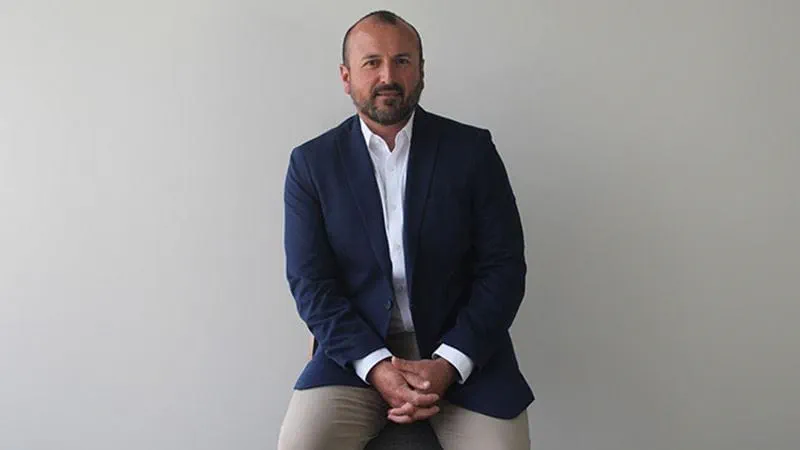
Meet Nathan Fuentes, Aftersales Manager for Fender systems at Trelleborg Marine and Infrastructure. With hands-on experience managing fender inspection across the Americas, Nathan shares valuable insights, lessons learned, and practical advice through this engaging conversation. Whether you’re involved in port infrastructure or just curious about the inner workings of fender care, Nathan’s perspective offers a behind-the-scenes look at what it takes to extend equipment life and ensure safe, efficient operations.
1. From Military Service to Marine Systems - How did your 20-year career with the U.S. Marines and Coast Guard prepare you for your current role in marine fender systems?
In the beginning, the U.S. Marine Corps instilled the discipline, attention to detail, cultural awareness, and other intangibles needed to be successful when inspecting fenders internationally. The U.S. Coast Guard provided the knowledge and training needed to successfully enforce all safety and security rules and regulations internationally.
2. How has your Maritime Enforcement Specialist background influenced your approach to safety and security inspections in commercial marine facilities?
Pre-mission planning and preparation is standard in the military and something that I continue to do by learning as much as possible about the facility prior to the inspection. For example, I like to use Google Earth to look at the docks to get a better understanding of the waterway, how vessels approach, etc. I also review all drawings and historical documents from previous projects prior to the inspection. We keep great records of our projects - if the fenders were supplied by Trelleborg or our legacy fenders, there is a chance I have those records. It saves a lot of time on the back end if replacements are needed. I also enjoy showing the customer the drawings of their fenders on my tablet to go over the components of the fender system. Knowledge is power.
3. You’ve inspected over 200 terminals across the Americas in just three years. Through What are the most common critical issues you’re seeing that could have been prevented during initial installation?
It has been eye-opening lately. Damaged coating and slack or improperly installed weight chains are the two most common issues I’m seeing during the commissioning inspection of fenders. The coating is typically damaged during transportation around the jobsite, from the crane rigging, chains rubbing the coating during the lifting of the panel, and the edges of the panel are often damaged from floating platforms used during the installation. The major issue is if those damaged areas are not corrected prior to installation, and the damaged coating will be at or below the waterline, it will be too late to correct. The recommended procedure to install the weight chains is the most overlooked procedure during installation. The use of a crane or heavy machinery is required to properly tighten a weight chain, so if they are not corrected before the contractor removes the crane and machinery, it will be too late. The mobilization costs of a crane for most customers are too high, so they are left with a system that will have a hard time reaching its design life. I have been onsite with a customer or contractor and pointed out a weight chain that appeared tight to them. I have them focus on the chain tensioner, primarily the hex nuts on the U-bolts. I know right away when I see a hex bolt that was hand-threaded onto the U-bolts only to the point where all the threads are engaged. It is a strong indication that the chains were not installed in accordance with our guidelines. I often hear from contractors’ foremen or project engineers onsite “how hard can they be to install” or “it’s just nuts and bolts, right?” I just smile and continue to explain the installation process in detail.
I can’t stress enough how important it is for end users, consultants, and contractors to be familiar with and institute the recommendations in Chapter 11 of the PIANC Fender Guidelines 2024 into their standard practices. Most facilities that I visit do not conduct maintenance on their fenders, so it is even more critical that any damage to the coating or slack chain assemblies is corrected prior to the contractor handing the facility over to the customer. If they don’t correct it early, chances are those damages will degrade past the point of repair and lead to replacement much sooner than a customer expects. I honestly don’t know why I care so much, but I don’t like seeing new fenders, especially ours, given to a customer in damaged condition.
4. Can you share a specific success story where a simple inspection request led to a complete fender system overhaul? What red flags did you identify during that process?
I had a customer who accepted my offer of a complimentary inspection of the fenders at their docks. They had a barge dock that was built with a whaler wall type of fender system that utilized timber on steel attached to small leg fenders that were mounted to mono piles. They also had two outer dolphins that had large leg fender panel systems that were in similar condition. The systems were extremely deformed and deteriorated past the point of repair and needed to be replaced. The whaler system belonged in Davy Jones’s Locker for sure. I returned to the office and met with our Director of Engineering to go over my findings. With sustainability in mind, I wanted to find a solution that would not require tons upon tons of steel to replace the outdated whaler system. Long story short, our engineering team was able to design a pile-mounted cone fender system that meets their operational needs for the foreseeable future. The new system would cost less and require much less steel than a replacement in kind.
5. Managing aftersales from Canada to Chile - how do different regions in the Americas vary in terms of marine infrastructure needs and maintenance practices?
Every inspection I do, whether in Canada, USA, Caribbean, or Latin America, comes with unique challenges and bureaucratic processes that I am constantly learning and adapting to. For example, the Pacific West Coast from British Columbia down to Chile often has open berths that suffer from cyclic loading caused by the large swells the Pacific Ocean is known to produce. Therefore, there is a need to replace chain systems regularly, maintain plans to tighten all hardware often, and they are replacing rubber much faster than terminals on the East Coast. Facilities on rivers and intracoastal waterways with high amounts of barge traffic have a high occurrence of damage from these barges breaking loose or loss of operational control. Abnormal berthing events caused by strong currents and high winds happen often. The environmental rules and regulations differ between states and countries, which will change how the fenders can be maintained. For example, a panel with large amounts of marine growth may need approval and/or special arrangements made before the marine growth can be removed. This may not be an issue in other parts of the world. Some places have design challenges or restraints because of ice and protected aquatic mammals.
5. You mentioned that proper commissioning inspections could prevent many fender system failures. What should terminal operators specifically look for during the handover process from contractors?
It’s important to note that the handover process needs to be completed before the contractor releases the entire crew and heavy equipment. There needs to be a small contingent of contractors onsite to correct any issues. Once they leave, it’s too late. The panels need to be plumb, level, touched up, and all the chains need to be straight and tight. I do find chains that are installed with a twist in them. The terminal operators can do an inspection with a small boat and physically attempt to move the chains back and forth by hand. There should be very little movement in the chains. Some of the chains will have visible slack. It’s not the norm, but I do find missing hex nuts or washers on chain brackets, tensioners, and through bolt connections.
6. Chain systems and coating damage seem to be recurring issues you’ve identified. Can you walk us through why these are so critical and often overlooked?
Chain systems are used to restrain the movement of fenders during compression or to support static loads. Weight chains, shear chains, tension chains, and uplift chains all serve a different purpose. The weight chain, in my opinion, is the most critical when it comes to service life and longevity. The weight chains are designed to support the weight of the steel panel and may aid in resisting vertical shear forces. If the weight chains are not installed correctly, especially ones with visible slack, the rubber fender will eventually droop or sag excessively. That static stress will form cracks around the bases of the rubber at both ends. Essentially, the loose weight chains are doing nothing but adding more static weight, and when you add marine growth to the panel, that static weight only increases.
There are two notes about the weight chains in our installation guide that can be overlooked when preparing for the installation. There is a newly released installation video available on Trelleborg’s YouTube channel and it should be sent to all contractors and terminal owners prior to installation. It is a great visual aid to complement our Handling, Storage, Installation, and Maintenance manual. To be honest, tightening the chain tensioners can be tedious, especially when you know that there are hundreds of them on larger projects. They often require the use of hand tools because the tensioners are longer than sockets for pneumatic tools allow. So once the person completing the tightening reaches the end of the socket or cannot physically turn the wrench or hex nut any further, they feel that the job is done and move on to the next one. I have seen it happen in real time. This also becomes a problem when attempting to tighten the weight chains without the use of the crane holding the panel supporting that weight. I recommend the use of a manual chain hoist in conjunction with the crane; it will help speed up the process.
8. When you conduct customer education during onsite inspections, what’s the most important insight you try to convey about long-term fender system maintenance?
Most fender systems are out of sight, out of mind for terminal operators. There is high turnover in some positions within the ports or terminals, and the knowledge of the fenders is not passed down. So, I like to get an understanding of the customer’s knowledge of their fenders and their current maintenance plans, if any at all. It is more common than not that no maintenance is conducted at all. Sometimes it’s simply that they didn’t know they could be maintained to begin with. I also like to get a better understanding of the customer’s maintenance capabilities. Some customers have annual contracts with contractors for maintenance, and some customers have the capability to perform their own maintenance. I cater my recommendations based on their capabilities. I show them some simple things they need to look for and can correct on their own, and then guide them on what they need to get a contractor to work on.
I thoroughly enjoy speaking with customers, discussing their fender systems, and pointing out the different components onsite. I like to think my recommendations help them obtain the maximum service life possible from their fenders. However, a terminal operator can have an extremely robust maintenance program for their fenders, but if the fenders are not made of quality materials following strict quality controls and processes from a reputable fender manufacturer, no matter how much maintenance is conducted, the fenders will not last their service life.
Want to learn more about our Americas team and how we can support your project? Reach out to us
In the beginning, the U.S. Marine Corps instilled the discipline, attention to detail, cultural awareness, and other intangibles needed to be successful when inspecting fenders internationally. The U.S. Coast Guard provided the knowledge and training needed to successfully enforce all safety and security rules and regulations internationally.
2. How has your Maritime Enforcement Specialist background influenced your approach to safety and security inspections in commercial marine facilities?
Pre-mission planning and preparation is standard in the military and something that I continue to do by learning as much as possible about the facility prior to the inspection. For example, I like to use Google Earth to look at the docks to get a better understanding of the waterway, how vessels approach, etc. I also review all drawings and historical documents from previous projects prior to the inspection. We keep great records of our projects - if the fenders were supplied by Trelleborg or our legacy fenders, there is a chance I have those records. It saves a lot of time on the back end if replacements are needed. I also enjoy showing the customer the drawings of their fenders on my tablet to go over the components of the fender system. Knowledge is power.
3. You’ve inspected over 200 terminals across the Americas in just three years. Through What are the most common critical issues you’re seeing that could have been prevented during initial installation?
It has been eye-opening lately. Damaged coating and slack or improperly installed weight chains are the two most common issues I’m seeing during the commissioning inspection of fenders. The coating is typically damaged during transportation around the jobsite, from the crane rigging, chains rubbing the coating during the lifting of the panel, and the edges of the panel are often damaged from floating platforms used during the installation. The major issue is if those damaged areas are not corrected prior to installation, and the damaged coating will be at or below the waterline, it will be too late to correct. The recommended procedure to install the weight chains is the most overlooked procedure during installation. The use of a crane or heavy machinery is required to properly tighten a weight chain, so if they are not corrected before the contractor removes the crane and machinery, it will be too late. The mobilization costs of a crane for most customers are too high, so they are left with a system that will have a hard time reaching its design life. I have been onsite with a customer or contractor and pointed out a weight chain that appeared tight to them. I have them focus on the chain tensioner, primarily the hex nuts on the U-bolts. I know right away when I see a hex bolt that was hand-threaded onto the U-bolts only to the point where all the threads are engaged. It is a strong indication that the chains were not installed in accordance with our guidelines. I often hear from contractors’ foremen or project engineers onsite “how hard can they be to install” or “it’s just nuts and bolts, right?” I just smile and continue to explain the installation process in detail.
I can’t stress enough how important it is for end users, consultants, and contractors to be familiar with and institute the recommendations in Chapter 11 of the PIANC Fender Guidelines 2024 into their standard practices. Most facilities that I visit do not conduct maintenance on their fenders, so it is even more critical that any damage to the coating or slack chain assemblies is corrected prior to the contractor handing the facility over to the customer. If they don’t correct it early, chances are those damages will degrade past the point of repair and lead to replacement much sooner than a customer expects. I honestly don’t know why I care so much, but I don’t like seeing new fenders, especially ours, given to a customer in damaged condition.
4. Can you share a specific success story where a simple inspection request led to a complete fender system overhaul? What red flags did you identify during that process?
I had a customer who accepted my offer of a complimentary inspection of the fenders at their docks. They had a barge dock that was built with a whaler wall type of fender system that utilized timber on steel attached to small leg fenders that were mounted to mono piles. They also had two outer dolphins that had large leg fender panel systems that were in similar condition. The systems were extremely deformed and deteriorated past the point of repair and needed to be replaced. The whaler system belonged in Davy Jones’s Locker for sure. I returned to the office and met with our Director of Engineering to go over my findings. With sustainability in mind, I wanted to find a solution that would not require tons upon tons of steel to replace the outdated whaler system. Long story short, our engineering team was able to design a pile-mounted cone fender system that meets their operational needs for the foreseeable future. The new system would cost less and require much less steel than a replacement in kind.
5. Managing aftersales from Canada to Chile - how do different regions in the Americas vary in terms of marine infrastructure needs and maintenance practices?
Every inspection I do, whether in Canada, USA, Caribbean, or Latin America, comes with unique challenges and bureaucratic processes that I am constantly learning and adapting to. For example, the Pacific West Coast from British Columbia down to Chile often has open berths that suffer from cyclic loading caused by the large swells the Pacific Ocean is known to produce. Therefore, there is a need to replace chain systems regularly, maintain plans to tighten all hardware often, and they are replacing rubber much faster than terminals on the East Coast. Facilities on rivers and intracoastal waterways with high amounts of barge traffic have a high occurrence of damage from these barges breaking loose or loss of operational control. Abnormal berthing events caused by strong currents and high winds happen often. The environmental rules and regulations differ between states and countries, which will change how the fenders can be maintained. For example, a panel with large amounts of marine growth may need approval and/or special arrangements made before the marine growth can be removed. This may not be an issue in other parts of the world. Some places have design challenges or restraints because of ice and protected aquatic mammals.
5. You mentioned that proper commissioning inspections could prevent many fender system failures. What should terminal operators specifically look for during the handover process from contractors?
It’s important to note that the handover process needs to be completed before the contractor releases the entire crew and heavy equipment. There needs to be a small contingent of contractors onsite to correct any issues. Once they leave, it’s too late. The panels need to be plumb, level, touched up, and all the chains need to be straight and tight. I do find chains that are installed with a twist in them. The terminal operators can do an inspection with a small boat and physically attempt to move the chains back and forth by hand. There should be very little movement in the chains. Some of the chains will have visible slack. It’s not the norm, but I do find missing hex nuts or washers on chain brackets, tensioners, and through bolt connections.
6. Chain systems and coating damage seem to be recurring issues you’ve identified. Can you walk us through why these are so critical and often overlooked?
Chain systems are used to restrain the movement of fenders during compression or to support static loads. Weight chains, shear chains, tension chains, and uplift chains all serve a different purpose. The weight chain, in my opinion, is the most critical when it comes to service life and longevity. The weight chains are designed to support the weight of the steel panel and may aid in resisting vertical shear forces. If the weight chains are not installed correctly, especially ones with visible slack, the rubber fender will eventually droop or sag excessively. That static stress will form cracks around the bases of the rubber at both ends. Essentially, the loose weight chains are doing nothing but adding more static weight, and when you add marine growth to the panel, that static weight only increases.
There are two notes about the weight chains in our installation guide that can be overlooked when preparing for the installation. There is a newly released installation video available on Trelleborg’s YouTube channel and it should be sent to all contractors and terminal owners prior to installation. It is a great visual aid to complement our Handling, Storage, Installation, and Maintenance manual. To be honest, tightening the chain tensioners can be tedious, especially when you know that there are hundreds of them on larger projects. They often require the use of hand tools because the tensioners are longer than sockets for pneumatic tools allow. So once the person completing the tightening reaches the end of the socket or cannot physically turn the wrench or hex nut any further, they feel that the job is done and move on to the next one. I have seen it happen in real time. This also becomes a problem when attempting to tighten the weight chains without the use of the crane holding the panel supporting that weight. I recommend the use of a manual chain hoist in conjunction with the crane; it will help speed up the process.
8. When you conduct customer education during onsite inspections, what’s the most important insight you try to convey about long-term fender system maintenance?
Most fender systems are out of sight, out of mind for terminal operators. There is high turnover in some positions within the ports or terminals, and the knowledge of the fenders is not passed down. So, I like to get an understanding of the customer’s knowledge of their fenders and their current maintenance plans, if any at all. It is more common than not that no maintenance is conducted at all. Sometimes it’s simply that they didn’t know they could be maintained to begin with. I also like to get a better understanding of the customer’s maintenance capabilities. Some customers have annual contracts with contractors for maintenance, and some customers have the capability to perform their own maintenance. I cater my recommendations based on their capabilities. I show them some simple things they need to look for and can correct on their own, and then guide them on what they need to get a contractor to work on.
I thoroughly enjoy speaking with customers, discussing their fender systems, and pointing out the different components onsite. I like to think my recommendations help them obtain the maximum service life possible from their fenders. However, a terminal operator can have an extremely robust maintenance program for their fenders, but if the fenders are not made of quality materials following strict quality controls and processes from a reputable fender manufacturer, no matter how much maintenance is conducted, the fenders will not last their service life.
Want to learn more about our Americas team and how we can support your project? Reach out to us