
Meet the Pioneers - Morten Bryder
Date: 28.04.26
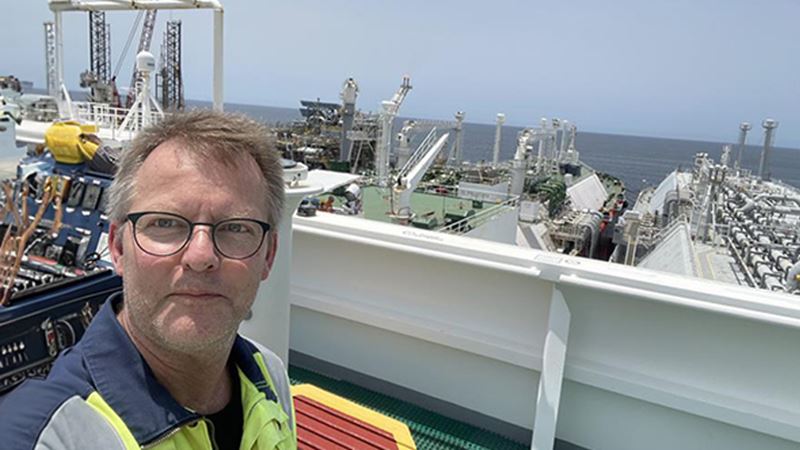
Morten Bryder, Service and Commissioning Engineer in Trelleborg’s Navigation and Piloting division, brings a practical, lifecycle‑driven approach to navigation and positioning systems in demanding offshore environments. Here, he shares his journey.
Q: How did your journey into navigation and offshore solutions begin?
I graduated as an Electronics Engineer and started my career designing electronic circuits, working hands on in that field during my first year. What shaped my career direction quite early on was the opportunity to work in environments where technology wasn’t theoretical; it had to work, every day, under real operational conditions.
Q: Was there an experience early on that influenced the direction of your career?
Yes. A defining moment came when I joined a team travelling across NATO countries to upgrade a ground to air missile system. I spent four years in that role, gaining experience in international technical work.
It taught me very quickly that technical knowledge alone isn’t enough. You need adaptability, clear thinking under pressure, and the ability to work with people in unfamiliar environments.
Q: How did that experience lead you to Trelleborg?
After the NATO project, I continued working in highly operational settings. I spent four years working on the upgrade and implementation of a tactical system Danish Naval ships, followed by another four years as part of a team responsible for maintaining all airports in Greenland.
In 2001, I joined Marimatech, which later became part of Trelleborg. That move felt like a natural continuation; working with critical navigation systems, supporting customers directly, and being close to operations rather than far removed from them.
Q: Your role has evolved across different parts of the business. How would you describe what you do today?
My role covers a broad scope of responsibilities.
I work across global projects and am involved throughout most stages of the lifecycle -from early design and specification, through installation and commissioning, to operations, maintenance, and ongoing customer support through site visits. Much of my work focuses on ensuring systems perform reliably in offshore operating conditions, where technology must interface seamlessly with people, vessels, and challenging environments.
Acting as a technical interface for customers, I help ensure solutions continue to perform as intended once they are operational. That end to end involvement is a key part of what I enjoy about the role.
Q: What should offshore customers be asking to ensure navigation and positioning systems perform reliably over their full operational life?
A key question is how navigation and positioning systems will perform reliably over time in real offshore operating conditions, not just during installation. That perspective helps shift the focus from short term requirements to long term performance.
Offshore environments place very different demands on technology. Weather, vessel behavior, crew workflows, and operating patterns all influence how systems are used day to day. That’s why I always start by understanding the operational context, speaking directly with users and operational managers. From there, it’s about working through any problems step by step, ensuring solutions remain practical, robust, and usable throughout their operational life, not just compliant on paper. Customers tend to rely on people they trust to deliver consistently. In my experience, that trust comes from being present, following through, and ensuring solutions work as intended.
Q: Is there a recent project that stands out for you?
One recent highlight was the installation and commissioning of the Automoor system in Tallinn. I arrived on site with very little hands on experience with that specific system, so the challenge was learning and executing everything in real time, while still ensuring a successful commissioning.
It reinforced something I’ve learned many times over the years: strong fundamentals, adaptability, and calm problem solving matter more than familiarity alone.
Q: What continues to motivate you in your work today?
The variation. Each project brings different challenges, environments, and people.
Meeting new customers and working in different operational settings keeps the work engaging.
Q: What advice would you give to engineers entering this field?
Develop practical experience alongside technical knowledge.
Understanding how systems are used in real conditions is essential for designing and supporting reliable solutions.
I graduated as an Electronics Engineer and started my career designing electronic circuits, working hands on in that field during my first year. What shaped my career direction quite early on was the opportunity to work in environments where technology wasn’t theoretical; it had to work, every day, under real operational conditions.
Q: Was there an experience early on that influenced the direction of your career?
Yes. A defining moment came when I joined a team travelling across NATO countries to upgrade a ground to air missile system. I spent four years in that role, gaining experience in international technical work.
It taught me very quickly that technical knowledge alone isn’t enough. You need adaptability, clear thinking under pressure, and the ability to work with people in unfamiliar environments.
Q: How did that experience lead you to Trelleborg?
After the NATO project, I continued working in highly operational settings. I spent four years working on the upgrade and implementation of a tactical system Danish Naval ships, followed by another four years as part of a team responsible for maintaining all airports in Greenland.
In 2001, I joined Marimatech, which later became part of Trelleborg. That move felt like a natural continuation; working with critical navigation systems, supporting customers directly, and being close to operations rather than far removed from them.
Q: Your role has evolved across different parts of the business. How would you describe what you do today?
My role covers a broad scope of responsibilities.
I work across global projects and am involved throughout most stages of the lifecycle -from early design and specification, through installation and commissioning, to operations, maintenance, and ongoing customer support through site visits. Much of my work focuses on ensuring systems perform reliably in offshore operating conditions, where technology must interface seamlessly with people, vessels, and challenging environments.
Acting as a technical interface for customers, I help ensure solutions continue to perform as intended once they are operational. That end to end involvement is a key part of what I enjoy about the role.
Q: What should offshore customers be asking to ensure navigation and positioning systems perform reliably over their full operational life?
A key question is how navigation and positioning systems will perform reliably over time in real offshore operating conditions, not just during installation. That perspective helps shift the focus from short term requirements to long term performance.
Offshore environments place very different demands on technology. Weather, vessel behavior, crew workflows, and operating patterns all influence how systems are used day to day. That’s why I always start by understanding the operational context, speaking directly with users and operational managers. From there, it’s about working through any problems step by step, ensuring solutions remain practical, robust, and usable throughout their operational life, not just compliant on paper. Customers tend to rely on people they trust to deliver consistently. In my experience, that trust comes from being present, following through, and ensuring solutions work as intended.
Q: Is there a recent project that stands out for you?
One recent highlight was the installation and commissioning of the Automoor system in Tallinn. I arrived on site with very little hands on experience with that specific system, so the challenge was learning and executing everything in real time, while still ensuring a successful commissioning.
It reinforced something I’ve learned many times over the years: strong fundamentals, adaptability, and calm problem solving matter more than familiarity alone.
Q: What continues to motivate you in your work today?
The variation. Each project brings different challenges, environments, and people.
Meeting new customers and working in different operational settings keeps the work engaging.
Q: What advice would you give to engineers entering this field?
Develop practical experience alongside technical knowledge.
Understanding how systems are used in real conditions is essential for designing and supporting reliable solutions.