
Meet the Pioneers - Matteo Suzzani
Date: 12.08.26
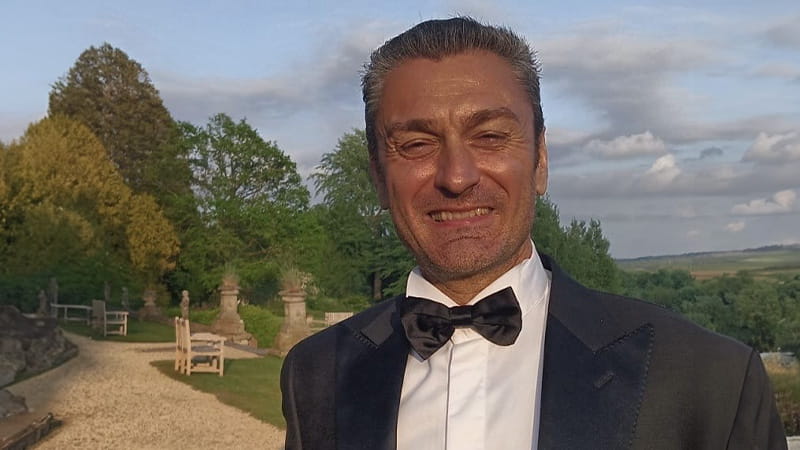
Matteo Suzzani's route into LNG ran through onshore transmission equipment, then subsea pipeline laying and repair, before arriving at cryogenic transfer. Twenty years on, he is Managing Director of Trelleborg's Transfer Systems product group and contributes to industry standards including BSI, EN 1474 and ISO 21593. His view, shaped by all of it: the hardware is rarely the whole answer. In this Q&A he sets out what else determines whether a transfer operation is safe, and what customers should be asking before they buy.
You've spent 20 years in gas transport and transfer. How did that journey unfold?
I began at Pietro Fiorentini working on onshore gas transmission equipment — filtration systems, regulation stations, valves. From there I moved to Saipem's offshore EPC division, focusing on subsea gas pipeline laying and repair. Eventually I entered the fluid transfer and LNG market, developing expertise in cryogenic transfer applications like loading arms and hoses.
Each step built on the previous one. Nine years ago, I joined the company I'm leading today, before the Trelleborg acquisition. It gave meaning to all my previous experience in gas transfer and offered a clear vision of the future.
In 2019, Trelleborg acquired the company. I started as business development manager, moved to sales director, and two years ago became managing director. It's been quite a journey from pure sales to general management.
Gas transfer systems have become increasingly critical as LNG operations expand globally. Based on your interactions with customers over these years, what are some of the key considerations they face when selecting or implementing these systems?
From my experience, one of the key considerations when customers look to implement gas transfer systems is recognizing that the hardware itself is one important piece among many, rather than the whole for a safe operation. Many customers naturally focus on the technical specifications and equipment performance, and while those are critical, there's also the integration of procedures, training, competence, and lifecycle support to consider.
There are also operational, maintenance, and crew competency considerations — across both the equipment and the broader systems. Even when we have equipment that performs well in testing, there can be challenges in scaling. Moving beyond a single installation to broader fleet - level implementation often requires a different approach in terms of organizational buy-in, process integration, and building trust within and beyond the organization itself.
Because maritime is a safety-critical industry, and safety is foundational to how shipping has enabled the modern global economy, it's important as LNG and gas applications expand that we maintain confidence in these integrated solutions — the equipment, the people, the procedures, the maintenance schedules, and the support network. Building that trust is just as important as developing the technology itself.
What does the current pace of growth in LNG and gas applications mean for safety and operations?
LNG and gas applications are expanding at unprecedented pace. This means more people are joining the industry, often without extensive prior experience in this specific area. One of the ongoing priorities is maintaining high standards of safety while effectively training larger numbers of new operators in shorter timeframes.
The growth is exciting, every day brings new projects and new possibilities. But it's important to consider the human side of the equation. Even with excellent equipment, if operators aren't properly trained or maintenance procedures aren't followed consistently, there can be gaps in operational safety.
Have you seen customer priorities evolve over the years?
Yes, noticeably. Over the last decade, the focus has evolved from primarily technical performance and compliance toward a broader lifecycle perspective. Safety remains foundational. That will always be central — and customers are increasingly considering operational efficiency, sustainability, digitalization, crew competency, and long-term asset performance.
The industry seems to be moving from buying equipment to seeking trusted lifecycle partners. Customers often want to understand not just what the equipment does, but how it will perform over 20 years, how accessible it will be to maintain, how support works when issues arise, and how the solution aligns with their broader sustainability goals. That shift is further along in some segments than others — but the direction is clear.
Given that, how should customers approach procurement differently?
One question I'd encourage customers to consider alongside the purchase price is: what is the total operational value and risk profile over the life of the asset?.
There are often significant opportunities in looking at safety, reliability, up time, maintainability, and crew competence. Not just the initial capital cost. When the focus is primarily on upfront cost, it's possible to overlook the fuller picture of what a solution might actually cost over its lifetime; including maintenance, training, potential downtime, and safety considerations .
There's a second question worth asking us directly: why are you doing this equipment, service or design in this way? What's the thinking behind this technical decision? Understanding the reasoning behind design choices can help customers make more informed decisions and helps us ensure we're addressing the right challenges rather than just meeting a specification on paper.
Beyond your role at Trelleborg, you're involved in industry groups. How does that inform your work?
I'm a member of BSI, the British Standards Institution, and contribute to industry standards and guidelines including EN 1474, ISO 21593 and PIANC. Standards work shapes how the industry approaches safety, performance and best practice.
It also connects you to what's happening across the global market. Contributing to standards gives you insight into challenges the broader industry is working through, beyond what any single company sees. That perspective helps us anticipate trends, understand emerging requirements, and develop solutions that meet what's coming rather than only what's here.
What emerging developments are you watching most closely?
I'm increasingly interested in how digital tools, simulation, data analytics, and training technologies might improve operational performance and competency within gas transfer operations. There seems to be considerable potential in using data to help predict maintenance needs, optimize operations, and enhance crew training. We're likely still in the earlier stages of understanding what's possible in these areas.
After 20 years in this industry, what keeps you curious and engaged?
The fact that no two projects are really the same. Each project tends to bring a somewhat different combination of technical, commercial, operational, and human considerations, so there's usually something new to learn.
What particularly interests me is the energy transition and how the maritime and LNG industries are evolving. We're helping customers move cleaner energy around the world while developing technologies, services, and competence that can help make these operations safer and more efficient.
You've talked about trust running through all of this — the equipment, the procedures, and the people. Where does that come from for you?
There's a Latin phrase I keep coming back to: "Acta non verba” - deeds, not words. Business is ultimately about relationships, and relationships are built on what you actually do, not what you say you'll do.
In this industry, reputation travels. Projects are long, the community is small, and people remember whether you delivered when it was difficult. That's why trust has to be built into the work itself rather than claimed alongside it. And it's how you end up with lasting partnerships and a business that endures.
I began at Pietro Fiorentini working on onshore gas transmission equipment — filtration systems, regulation stations, valves. From there I moved to Saipem's offshore EPC division, focusing on subsea gas pipeline laying and repair. Eventually I entered the fluid transfer and LNG market, developing expertise in cryogenic transfer applications like loading arms and hoses.
Each step built on the previous one. Nine years ago, I joined the company I'm leading today, before the Trelleborg acquisition. It gave meaning to all my previous experience in gas transfer and offered a clear vision of the future.
In 2019, Trelleborg acquired the company. I started as business development manager, moved to sales director, and two years ago became managing director. It's been quite a journey from pure sales to general management.
Gas transfer systems have become increasingly critical as LNG operations expand globally. Based on your interactions with customers over these years, what are some of the key considerations they face when selecting or implementing these systems?
From my experience, one of the key considerations when customers look to implement gas transfer systems is recognizing that the hardware itself is one important piece among many, rather than the whole for a safe operation. Many customers naturally focus on the technical specifications and equipment performance, and while those are critical, there's also the integration of procedures, training, competence, and lifecycle support to consider.
There are also operational, maintenance, and crew competency considerations — across both the equipment and the broader systems. Even when we have equipment that performs well in testing, there can be challenges in scaling. Moving beyond a single installation to broader fleet - level implementation often requires a different approach in terms of organizational buy-in, process integration, and building trust within and beyond the organization itself.
Because maritime is a safety-critical industry, and safety is foundational to how shipping has enabled the modern global economy, it's important as LNG and gas applications expand that we maintain confidence in these integrated solutions — the equipment, the people, the procedures, the maintenance schedules, and the support network. Building that trust is just as important as developing the technology itself.
What does the current pace of growth in LNG and gas applications mean for safety and operations?
LNG and gas applications are expanding at unprecedented pace. This means more people are joining the industry, often without extensive prior experience in this specific area. One of the ongoing priorities is maintaining high standards of safety while effectively training larger numbers of new operators in shorter timeframes.
The growth is exciting, every day brings new projects and new possibilities. But it's important to consider the human side of the equation. Even with excellent equipment, if operators aren't properly trained or maintenance procedures aren't followed consistently, there can be gaps in operational safety.
Have you seen customer priorities evolve over the years?
Yes, noticeably. Over the last decade, the focus has evolved from primarily technical performance and compliance toward a broader lifecycle perspective. Safety remains foundational. That will always be central — and customers are increasingly considering operational efficiency, sustainability, digitalization, crew competency, and long-term asset performance.
The industry seems to be moving from buying equipment to seeking trusted lifecycle partners. Customers often want to understand not just what the equipment does, but how it will perform over 20 years, how accessible it will be to maintain, how support works when issues arise, and how the solution aligns with their broader sustainability goals. That shift is further along in some segments than others — but the direction is clear.
Given that, how should customers approach procurement differently?
One question I'd encourage customers to consider alongside the purchase price is: what is the total operational value and risk profile over the life of the asset?.
There are often significant opportunities in looking at safety, reliability, up time, maintainability, and crew competence. Not just the initial capital cost. When the focus is primarily on upfront cost, it's possible to overlook the fuller picture of what a solution might actually cost over its lifetime; including maintenance, training, potential downtime, and safety considerations .
There's a second question worth asking us directly: why are you doing this equipment, service or design in this way? What's the thinking behind this technical decision? Understanding the reasoning behind design choices can help customers make more informed decisions and helps us ensure we're addressing the right challenges rather than just meeting a specification on paper.
Beyond your role at Trelleborg, you're involved in industry groups. How does that inform your work?
I'm a member of BSI, the British Standards Institution, and contribute to industry standards and guidelines including EN 1474, ISO 21593 and PIANC. Standards work shapes how the industry approaches safety, performance and best practice.
It also connects you to what's happening across the global market. Contributing to standards gives you insight into challenges the broader industry is working through, beyond what any single company sees. That perspective helps us anticipate trends, understand emerging requirements, and develop solutions that meet what's coming rather than only what's here.
What emerging developments are you watching most closely?
I'm increasingly interested in how digital tools, simulation, data analytics, and training technologies might improve operational performance and competency within gas transfer operations. There seems to be considerable potential in using data to help predict maintenance needs, optimize operations, and enhance crew training. We're likely still in the earlier stages of understanding what's possible in these areas.
After 20 years in this industry, what keeps you curious and engaged?
The fact that no two projects are really the same. Each project tends to bring a somewhat different combination of technical, commercial, operational, and human considerations, so there's usually something new to learn.
What particularly interests me is the energy transition and how the maritime and LNG industries are evolving. We're helping customers move cleaner energy around the world while developing technologies, services, and competence that can help make these operations safer and more efficient.
You've talked about trust running through all of this — the equipment, the procedures, and the people. Where does that come from for you?
There's a Latin phrase I keep coming back to: "Acta non verba” - deeds, not words. Business is ultimately about relationships, and relationships are built on what you actually do, not what you say you'll do.
In this industry, reputation travels. Projects are long, the community is small, and people remember whether you delivered when it was difficult. That's why trust has to be built into the work itself rather than claimed alongside it. And it's how you end up with lasting partnerships and a business that endures.