
From echo sounders to GNSS: thirty years with Dennis
Date: 30.07.26
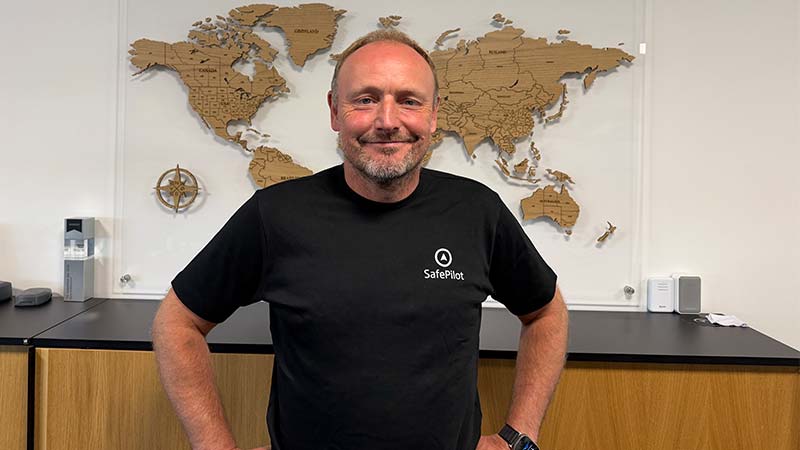
Dennis has spent three decades developing and commissioning maritime positioning systems around the world, his career spanning the full evolution of Trelleborg's Navigation & Piloting business. From early echo sounders and laser docking systems to the first GNSS-based Portable Pilot Units (PPUs), his work has helped shape the hardware behind Trelleborg's pilotage solutions today. He oversees both hardware development and support.
You've been with Trelleborg for 30 years, starting in 1995. Looking back, how has the maritime navigation landscape changed, and what's driven those shifts?
I actually started in the business back in 1995, in its earlier days as a family-owned company, before it became part of Trelleborg. At that time our main business was hydrographic products — echo sounders, side-scan sonars, tide gauges, and sound velocity profilers.
My own journey began with echo sounders, both developing and commissioning them around the world. My very first trip was to Kokkola in Finland, installing a GPS system on a dredger. To be honest, I had very little idea what I was doing at the time, it was very much learning by doing. But throughout my career I've always thrown myself into new challenges, and that's really how I evolved professionally.
The biggest technological evolution I've witnessed has definitely been in GNSS systems and the many different ways they're used today. Back in 1998 we started developing PPU systems based on GNSS technology, and at that point it was GPS only. Since then, technology has advanced enormously, and we've kept evolving our solutions by using all the new capabilities that have emerged over the years.
What has really driven the changes in the industry is the increasing demand for precision, safety, and efficiency. Ports have become busier, vessels larger, and operations more complex, while developments in satellite positioning, sensor technology, communications, and computing power have opened up completely new possibilities. Looking back, it's remarkable how far technology has come, but it’s just as important to stay curious and adaptable throughout the journey.
You've commissioned systems in ports around the world. What's the most challenging environment you've had to make navigation equipment work in, and what did that teach you?
One of the most challenging assignments was commissioning a PPU system in a country considered very unsafe to travel in, so just getting to the site was already a challenge. Throughout the trip I was surrounded by armed guards and never really left alone, which made for a very unusual working environment compared to most other projects.
Once I arrived, the technical work was equally demanding. I had to install a base station in a tower roughly 100 meters high, which meant pulling cables and climbing at significant heights. That was personally challenging, because I've never been very comfortable with heights, but when you're on site, you focus on getting the job done safely and correctly. On top of that, I had to install navigation systems on several tugboats. The conditions were extremely hot, the working spaces very limited, and everything took longer than expected because of the environment. It required a lot of patience, flexibility, and problem-solving.
In the end everything worked successfully and the systems performed as intended, which was very satisfying. That experience taught me a lot about resilience and adaptability, and it reinforced how important it is to design equipment that's robust, practical, and reliable even in the most difficult operating conditions.
You've developed multiple generations of PPUs since 1998. Can you walk us through how a real operational challenge from the field gets translated into hardware improvement?
One example that really illustrates how we work is the development of SafePilot. When we started that project, we didn't begin with a specification written in an office. Instead, we invited ten pilots from around the world to a workshop and asked them what they needed from the next generation of pilot systems.
That approach has always been at the heart of how we develop. We spend time with users, visit pilot organizations, get onboard ships, and listen carefully to their experiences — because the people using our products every day are the ones who best understand the operational challenges. And pilots are very clear about what they want: a system that's reliable, precise, easy to use, and as compact as possible. When you're standing on the bridge during a critical maneuver, those things matter far more than a long list of features.
That initial workshop was a great example of real user input shaping product development. By involving pilots from the very beginning, we understood their needs, priorities, and frustrations before a single piece of hardware was designed. That user-driven approach continues today through a network of beta testers from across the piloting community who help evaluate both SafePilot hardware and software, ensuring new developments are guided by real-world operational feedback. For me, that's the key to successful development. After more than 25 years working with PPUs, I still believe spending time with pilots in their operational environment is the most valuable source of innovation we have — every generation of our products has been shaped by those conversations.
You oversee both development and support. How does wearing both hats change the way you prioritize features versus reliability in new products?
For me, those two hats fit together perfectly. In many companies’ development and support are separate functions, but I see a huge advantage in having responsibility for both.
Through the support organization, we receive direct user feedback every day — their challenges, their ideas, the areas where they see room for improvement. That gives us a very clear picture of what's actually happening in the real world, and because I also own development, we can take those insights straight into the product instead of making assumptions about what users need.
Over the years, some of our best improvements have come from support cases and conversations onboard ships. Sometimes a small issue reported by one user leads to an important improvement in the next generation of hardware or software. Having visibility on both sides means we never lose sight of the end user, and it's how we balance innovation with reliability — making sure every new feature solves a real problem. In that sense the two roles don't compete with each other; they strengthen each other.
In your 30 years with the company, what's the proudest moment you've had seeing one of your systems perform exactly as designed in a critical situation?
I honestly find it difficult to point to a single event. We've developed many great products over the years, and I've been fortunate to be involved in most of them, but none of those successes were individual achievements. They were always the result of a strong team effort.
What makes me proud is seeing an idea evolve into a product used by pilots around the world, and knowing I've been part of that journey alongside so many talented colleagues. Every successful product has been built through collaboration - development, support, sales, project teams, and our users in the field - and the result is always stronger for it.
Being part of this team is something that makes me proud every day when I walk through the door. After 30 years, I still enjoy seeing what we can accomplish together and how our solutions continue to make a difference for maritime professionals around the world. For me, that's the greatest achievement, and not a single product or project but being part of a team that has continuously innovated, learned, and grown over three decades.
As maritime operations become increasingly complex, what principle guides your hardware development decisions to keep Trelleborg's navigation solutions relevant and trusted for the next decade?
The fundamental principle is still to keep the user at the center of every decision. Technology will keep evolving, but our goal stays the same: to give pilots and maritime professionals reliable, accurate, easy-to-use solutions that help them do their jobs safely and efficiently. That philosophy has guided us from the early days of GPS-based PPUs to today's solutions, and I believe it will matter just as much in the future.
What gives me real confidence about the next decade is the strength of our hardware development team. It has grown significantly, and we now have many highly skilled people bringing new ideas, knowledge, and perspectives. As a result, I've deliberately stepped back a little from some of the day-to-day development to give the next generation room to grow and take ownership. I still contribute experience and guidance, but it's important that new talent has the chance to challenge existing thinking and drive innovation forward.
For me, that's one of the keys to staying relevant: combining the experience we've built over many years with fresh ideas and new technologies. If we keep listening to our users, stay curious, and keep developing talented people, I'm confident our navigation solutions will remain trusted by pilots around the world for many years to come.
I actually started in the business back in 1995, in its earlier days as a family-owned company, before it became part of Trelleborg. At that time our main business was hydrographic products — echo sounders, side-scan sonars, tide gauges, and sound velocity profilers.
My own journey began with echo sounders, both developing and commissioning them around the world. My very first trip was to Kokkola in Finland, installing a GPS system on a dredger. To be honest, I had very little idea what I was doing at the time, it was very much learning by doing. But throughout my career I've always thrown myself into new challenges, and that's really how I evolved professionally.
The biggest technological evolution I've witnessed has definitely been in GNSS systems and the many different ways they're used today. Back in 1998 we started developing PPU systems based on GNSS technology, and at that point it was GPS only. Since then, technology has advanced enormously, and we've kept evolving our solutions by using all the new capabilities that have emerged over the years.
What has really driven the changes in the industry is the increasing demand for precision, safety, and efficiency. Ports have become busier, vessels larger, and operations more complex, while developments in satellite positioning, sensor technology, communications, and computing power have opened up completely new possibilities. Looking back, it's remarkable how far technology has come, but it’s just as important to stay curious and adaptable throughout the journey.
You've commissioned systems in ports around the world. What's the most challenging environment you've had to make navigation equipment work in, and what did that teach you?
One of the most challenging assignments was commissioning a PPU system in a country considered very unsafe to travel in, so just getting to the site was already a challenge. Throughout the trip I was surrounded by armed guards and never really left alone, which made for a very unusual working environment compared to most other projects.
Once I arrived, the technical work was equally demanding. I had to install a base station in a tower roughly 100 meters high, which meant pulling cables and climbing at significant heights. That was personally challenging, because I've never been very comfortable with heights, but when you're on site, you focus on getting the job done safely and correctly. On top of that, I had to install navigation systems on several tugboats. The conditions were extremely hot, the working spaces very limited, and everything took longer than expected because of the environment. It required a lot of patience, flexibility, and problem-solving.
In the end everything worked successfully and the systems performed as intended, which was very satisfying. That experience taught me a lot about resilience and adaptability, and it reinforced how important it is to design equipment that's robust, practical, and reliable even in the most difficult operating conditions.
You've developed multiple generations of PPUs since 1998. Can you walk us through how a real operational challenge from the field gets translated into hardware improvement?
One example that really illustrates how we work is the development of SafePilot. When we started that project, we didn't begin with a specification written in an office. Instead, we invited ten pilots from around the world to a workshop and asked them what they needed from the next generation of pilot systems.
That approach has always been at the heart of how we develop. We spend time with users, visit pilot organizations, get onboard ships, and listen carefully to their experiences — because the people using our products every day are the ones who best understand the operational challenges. And pilots are very clear about what they want: a system that's reliable, precise, easy to use, and as compact as possible. When you're standing on the bridge during a critical maneuver, those things matter far more than a long list of features.
That initial workshop was a great example of real user input shaping product development. By involving pilots from the very beginning, we understood their needs, priorities, and frustrations before a single piece of hardware was designed. That user-driven approach continues today through a network of beta testers from across the piloting community who help evaluate both SafePilot hardware and software, ensuring new developments are guided by real-world operational feedback. For me, that's the key to successful development. After more than 25 years working with PPUs, I still believe spending time with pilots in their operational environment is the most valuable source of innovation we have — every generation of our products has been shaped by those conversations.
You oversee both development and support. How does wearing both hats change the way you prioritize features versus reliability in new products?
For me, those two hats fit together perfectly. In many companies’ development and support are separate functions, but I see a huge advantage in having responsibility for both.
Through the support organization, we receive direct user feedback every day — their challenges, their ideas, the areas where they see room for improvement. That gives us a very clear picture of what's actually happening in the real world, and because I also own development, we can take those insights straight into the product instead of making assumptions about what users need.
Over the years, some of our best improvements have come from support cases and conversations onboard ships. Sometimes a small issue reported by one user leads to an important improvement in the next generation of hardware or software. Having visibility on both sides means we never lose sight of the end user, and it's how we balance innovation with reliability — making sure every new feature solves a real problem. In that sense the two roles don't compete with each other; they strengthen each other.
In your 30 years with the company, what's the proudest moment you've had seeing one of your systems perform exactly as designed in a critical situation?
I honestly find it difficult to point to a single event. We've developed many great products over the years, and I've been fortunate to be involved in most of them, but none of those successes were individual achievements. They were always the result of a strong team effort.
What makes me proud is seeing an idea evolve into a product used by pilots around the world, and knowing I've been part of that journey alongside so many talented colleagues. Every successful product has been built through collaboration - development, support, sales, project teams, and our users in the field - and the result is always stronger for it.
Being part of this team is something that makes me proud every day when I walk through the door. After 30 years, I still enjoy seeing what we can accomplish together and how our solutions continue to make a difference for maritime professionals around the world. For me, that's the greatest achievement, and not a single product or project but being part of a team that has continuously innovated, learned, and grown over three decades.
As maritime operations become increasingly complex, what principle guides your hardware development decisions to keep Trelleborg's navigation solutions relevant and trusted for the next decade?
The fundamental principle is still to keep the user at the center of every decision. Technology will keep evolving, but our goal stays the same: to give pilots and maritime professionals reliable, accurate, easy-to-use solutions that help them do their jobs safely and efficiently. That philosophy has guided us from the early days of GPS-based PPUs to today's solutions, and I believe it will matter just as much in the future.
What gives me real confidence about the next decade is the strength of our hardware development team. It has grown significantly, and we now have many highly skilled people bringing new ideas, knowledge, and perspectives. As a result, I've deliberately stepped back a little from some of the day-to-day development to give the next generation room to grow and take ownership. I still contribute experience and guidance, but it's important that new talent has the chance to challenge existing thinking and drive innovation forward.
For me, that's one of the keys to staying relevant: combining the experience we've built over many years with fresh ideas and new technologies. If we keep listening to our users, stay curious, and keep developing talented people, I'm confident our navigation solutions will remain trusted by pilots around the world for many years to come.