
Meet the Pioneers - Ahmed Gouda
Date: 10.03.26
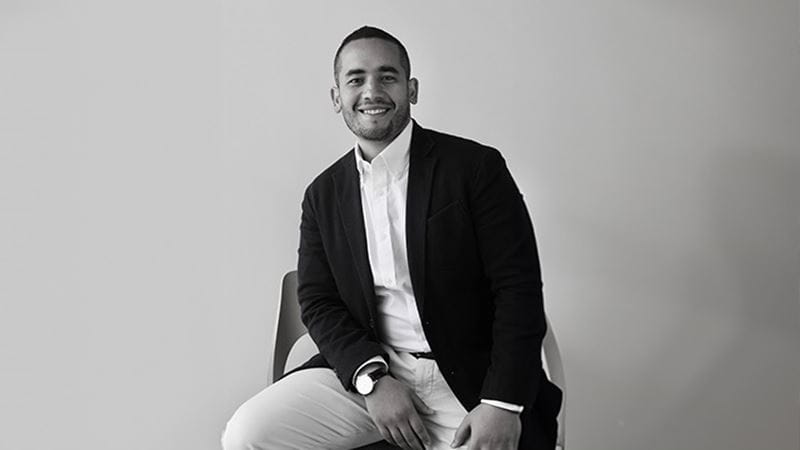
In this edition of Meet the Pioneers, we speak with Ahmed Gouda, who has spent nearly a decade with Trelleborg Marine and Infrastructure. Beginning his journey in our Dubai office, Ahmed now leads the growth of our marine fenders business in the Americas. He shares how his experiences across regions have shaped his leadership style and strengthened the way he supports both his team and customers in a rapidly evolving industry.
What originally drew you to the maritime industry, and how has your perspective evolved throughout your career?
I was drawn to the maritime industry from the start because it combines interesting technical work with something that really matters globally. This industry keeps goods moving around the world, and the infrastructure behind it like ports, terminals, berthing systems, have to work safely, efficiently, and reliably, because any failure can have serious financial and operational consequences.
Early on, I was fascinated by the technical side, that is, interaction between vessels and structures, and by how engineered systems like fenders protect critical assets. Over time, my perspective broadened. Today, what motivates me most is the systemic value we create, helping ports improve uptime, enhance safety, and adopt more sustainable practices that futureproof their infrastructure. As the industry evolves, I’ve come to appreciate the balance between performance, environmental responsibility, and long‑term lifecycle value.
Looking back on your nine years with Trelleborg, what key lessons have shaped the way you lead and build long-term customer relationships today?
One of the biggest lessons I’ve learned at Trelleborg is that trust is built through consistency. Our customers rely on us to protect billion‑dollar assets, and that trust goes beyond technical expertise. It’s about transparency, responsiveness, and understanding the system as a whole rather than just focusing on a single aspect.
Strong customer relationships are about clear communication, setting realistic expectations, and delivering data‑driven, application‑specific solutions. That means supporting customers all the way through, from the first idea to long after the solution is in place so they know they can rely on us at every step.
I also believe strongly in empowering our teams to lead with expertise rather than salesmanship. By focusing on long term relationships instead of quick wins and always doing things the right way from an engineering standpoint, we build stronger partnerships and better outcomes for everyone.
You’ve worked across both the Middle East and the Americas. How have these regional experiences shaped your understanding of customer needs?
Both regions have offered valuable and contrasting lessons. In the Middle East, large-scale projects and extreme environmental conditions demand high durability, future proofing, and uncompromising technical performance.
In the Americas, the market is more diverse ranging from LNG terminals and high‑throughput commercial ports to municipal docks. Here, customers often balance performance with cost optimization, making lifecycle analysis and tailored engineering essential. These experiences have taught me to listen first, tailor solutions to local realities, and adapt to the nuances of different regulatory, climatic, and operational environments.
During your field visits to ports and terminals, what do you focus on most?
Site visits are among the most valuable parts of my role. When I’m in the field, I focus on three key areas: real berthing behaviors such as vessel types, approach angles, tidal conditions, and operational patterns; the condition and performance of existing fender systems, including wear patterns and load distribution; and structural constraints like piles, capping beams, and allowable reaction loads.
These observations allow us to design fender systems based on actual operating conditions rather than assumptions. The result is solutions that are safer, more reliable, and better suited to each port’s specific environment.
How has the marine fendering and port infrastructure landscape changed over the past decade?
The industry has evolved significantly. Vessels are larger, which means higher berthing energies and increased demands on fender performance. At the same time, customers are placing greater emphasis on lifecycle performance, testing data, certification, and supplier credibility.
Sustainability is also a core consideration. Environmentally responsible materials, lower‑impact designs, and holistic engineering approaches are reshaping expectations. Today, fenders are no longer viewed as standalone components but as integrated systems involving design, anchoring, panels, and long-term maintenance strategies.
Looking ahead, what innovations do you think will shape the future of marine fender solutions?
The future of fendering lies in sustainable materials, smarter maintenance, and whole system optimization. We’re seeing rapid advancements in eco-focused elastomers and recycled components that extend lifespan while reducing environmental impact. At the same time, predictive maintenance, sensor-based technologies, and digital inspection tools will help ports to plan more proactively and reduce downtime.
Customers are increasingly looking for a single, trusted partner that brings together application engineering, testing, manufacturing, installation, and lifecycle support. Our team is investing heavily in engineering expertise, digital tools, and closer collaboration with customers to ensure we’re ready to support the next generation of maritime infrastructure
I was drawn to the maritime industry from the start because it combines interesting technical work with something that really matters globally. This industry keeps goods moving around the world, and the infrastructure behind it like ports, terminals, berthing systems, have to work safely, efficiently, and reliably, because any failure can have serious financial and operational consequences.
Early on, I was fascinated by the technical side, that is, interaction between vessels and structures, and by how engineered systems like fenders protect critical assets. Over time, my perspective broadened. Today, what motivates me most is the systemic value we create, helping ports improve uptime, enhance safety, and adopt more sustainable practices that futureproof their infrastructure. As the industry evolves, I’ve come to appreciate the balance between performance, environmental responsibility, and long‑term lifecycle value.
Looking back on your nine years with Trelleborg, what key lessons have shaped the way you lead and build long-term customer relationships today?
One of the biggest lessons I’ve learned at Trelleborg is that trust is built through consistency. Our customers rely on us to protect billion‑dollar assets, and that trust goes beyond technical expertise. It’s about transparency, responsiveness, and understanding the system as a whole rather than just focusing on a single aspect.
Strong customer relationships are about clear communication, setting realistic expectations, and delivering data‑driven, application‑specific solutions. That means supporting customers all the way through, from the first idea to long after the solution is in place so they know they can rely on us at every step.
I also believe strongly in empowering our teams to lead with expertise rather than salesmanship. By focusing on long term relationships instead of quick wins and always doing things the right way from an engineering standpoint, we build stronger partnerships and better outcomes for everyone.
You’ve worked across both the Middle East and the Americas. How have these regional experiences shaped your understanding of customer needs?
Both regions have offered valuable and contrasting lessons. In the Middle East, large-scale projects and extreme environmental conditions demand high durability, future proofing, and uncompromising technical performance.
In the Americas, the market is more diverse ranging from LNG terminals and high‑throughput commercial ports to municipal docks. Here, customers often balance performance with cost optimization, making lifecycle analysis and tailored engineering essential. These experiences have taught me to listen first, tailor solutions to local realities, and adapt to the nuances of different regulatory, climatic, and operational environments.
During your field visits to ports and terminals, what do you focus on most?
Site visits are among the most valuable parts of my role. When I’m in the field, I focus on three key areas: real berthing behaviors such as vessel types, approach angles, tidal conditions, and operational patterns; the condition and performance of existing fender systems, including wear patterns and load distribution; and structural constraints like piles, capping beams, and allowable reaction loads.
These observations allow us to design fender systems based on actual operating conditions rather than assumptions. The result is solutions that are safer, more reliable, and better suited to each port’s specific environment.
How has the marine fendering and port infrastructure landscape changed over the past decade?
The industry has evolved significantly. Vessels are larger, which means higher berthing energies and increased demands on fender performance. At the same time, customers are placing greater emphasis on lifecycle performance, testing data, certification, and supplier credibility.
Sustainability is also a core consideration. Environmentally responsible materials, lower‑impact designs, and holistic engineering approaches are reshaping expectations. Today, fenders are no longer viewed as standalone components but as integrated systems involving design, anchoring, panels, and long-term maintenance strategies.
Looking ahead, what innovations do you think will shape the future of marine fender solutions?
The future of fendering lies in sustainable materials, smarter maintenance, and whole system optimization. We’re seeing rapid advancements in eco-focused elastomers and recycled components that extend lifespan while reducing environmental impact. At the same time, predictive maintenance, sensor-based technologies, and digital inspection tools will help ports to plan more proactively and reduce downtime.
Customers are increasingly looking for a single, trusted partner that brings together application engineering, testing, manufacturing, installation, and lifecycle support. Our team is investing heavily in engineering expertise, digital tools, and closer collaboration with customers to ensure we’re ready to support the next generation of maritime infrastructure
Want to learn more about our Americas team and how we can support your project? Reach out to us