
Navigating Change: Nevan Holland at Port of Cork on Evolving Role of Marine Piloting, Technology, and Way Forward
Date: 03.11.25
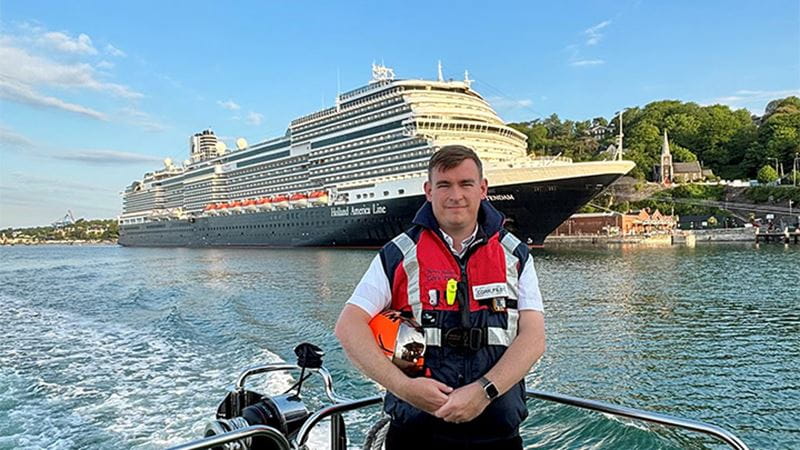
Nevan Holland from Castletownbere in West Cork, and now based in Carrigaline, County Cork, is a Marine Pilot at Port of Cork Company Ltd. With extensive maritime experience, Nevan has held various roles at Port of Cork Company Ltd., the Association of Marine Pilots Ireland, Holland America Line, and EXTREME E. In this conversation, Nevan shares his insights on the evolving role of marine pilots, the integration of technology like SafePilot, and the challenges and opportunities in piloting at one of Ireland's most dynamic ports.
What motivated you to pursue a career as a Pilot at the Port of Cork?
Prior to becoming a Pilot in the Port of Cork, I worked on various vessel types in all ranks. I was working on seagoing vessels for almost 15 years, but my ultimate goal had always been to become a Marine Pilot, and I was very fortunate to successfully achieve this goal in my home Port, which is one of the most varied, challenging, and exciting Ports in Ireland to be a Pilot.
What do you consider the most challenging aspect of piloting in the Port of Cork?
The Port of Cork is a Multi-modal Port with a huge variety of vessel types including oil tankers, gas carriers, bulk carriers, containerships, cruise ships, offshore vessels, Ro-Ro, and Pure Car Carriers. The variety of vessels and ship types makes the job more interesting but can also provide challenges. The constant change between them requires adaptability and flexibility.
Every Port has different navigational challenges like narrow areas for navigation, large turns, restricted swinging basins, etc., which we also have. The entrance to the Port is exposed to rough sea conditions and contains two entrances or Channels with a large rock or shallow area between them. Once inside the Port, further challenges are met every step of the way depending on conditions and vessel type, draft, size, etc.
The Port of Cork Pilotage district runs from several miles off the coast to a point up the River Lee in Cork City, with berths scattered along the way, each affected differently by certain winds from certain directions, and affected differently throughout all stages of the tide by varied tidal current and current generated by freshwater in the river.
In your opinion, how is the role of a pilot evolving with increasing technological integration?
This would be a difficult question for me to answer as I have only been a Pilot for two and a half years, but throughout my career at sea, I have witnessed a huge increase in technological integration - from sailing with a world folio of paper charts on a bulk carrier to sailing without any charts on fully ECDIS compliant ships. The basic role of all deck officers, Masters, and Pilots alike has not changed in that period as the vessels are the same size, going to the same Ports. But, in my opinion, technology has greatly increased safety, efficiency, and these persons' situational awareness, especially during arrivals and departures to or from port. In short, the role hasn’t changed, but the decision-making processes are certainly aided by increased technological integration.
What traditional piloting skills remain essential despite technological advancement?
Piloting visually by simply looking out of the window, using transits or bearings of landmarks, buoyage, etc., will always be the primary means. Also, proper use of radar techniques to aid what is being observed visually, or to replace it in cases of restricted visibility, remains essential. Use of technology such as Portable Pilot Units can never replace the above but can certainly be an aid rather than a replacement. For berthing or maneuvering in restricted spaces, Pilots use their “eye” as a primary means of determining speed, distances, and such critical information. This is another skill that will remain essential, but again, can certainly be, and is being, aided by technological advancement.
Have you noticed generational differences in how pilots adapt to new technologies like SafePilot?
No, I have not seen generational differences, but certainly some Pilots prefer the aid of SafePilot more than others. I think it has less to do with generation and more to do with the type of Pilot. I recently read an interesting discussion on this, and people were describing themselves or their Pilotage Organizations using percentages of Visual Pilotage against use of PPU. For example, I would like to think that I am 80% visual and 20% PPU when carrying the SafePilot equipment with me, which is on most acts of Pilotage. But there are Pilots who would be more one way or the other. Some Pilots take the equipment, set it up, and may not reference it throughout the act of Pilotage but have it there in case required. Others will have it with them and cross-check their position or other information on every leg.
What was your personal experience adapting to SafePilot technology?
A large portion of my career was spent working with Holland America Line on cruise ships. During my time there, we went through huge periods of change with regards to all aspects of bridge operations. This was due to technological advances, such as going from Radar combined with Paper Charts to Fully ECDIS vessels, but also due to incidents that occurred, such as the Costa Concordia. I felt the ethos in that company and in those bridge teams was to embrace change and use every tool at our disposal to make operations as safe and efficient as possible. ECDIS and the many electronic aids available were used for every arrival and departure, and we became skilled not just in the use of them but in interpreting the quality of data received and recognizing potential errors or bad information. This meant that we were not reliant on the electronic aids but used them properly to aid decision-making and increase situational awareness. We were also sent for many trainings in CSMART, the corporation's own training center, and learned how to spot potential errors in GNSS data and to use the data to best support our operations.
Therefore, when I became a Pilot and started using SafePilot, I treated it the same and was quickly accustomed to its use and its limitations.
What benefits have you discovered since implementing SafePilot?
I have found the system very useful for many reasons. Two of which would be using the system on vessels with poor standards of electronic equipment and for my own training purposes going through my Pilot Classes.
Some vessels have fantastic bridge equipment, and the PPU is not required as much or used as much due to this fact. Unfortunately, there are many vessels with questionable bridge equipment, and deploying SafePilot combined with the likes of our CAT PRO equipment gives me complete independence and reliable information throughout the act of Pilotage. We even have one vessel in the port which is regularly moved “dead ship,” and it is without any electronic aids, but by deploying the above, we have a full suite of tools available to us.
I am still currently training as a Pilot towards Class 1, or unlimited restrictions on what vessels I can Pilot. While training with my colleagues on larger vessels above my license restrictions, I find the PPU very helpful. It gives me a sense of comfort and removes doubt in certain moments, but mostly I find it very helpful to analyze maneuvers and learn from any mistakes or things I could improve on. I would use the Replay function after quite a lot of different or tighter maneuvers to analyze and debrief the act of Pilotage, so that I can take the lessons learned to the next job.
Can you share a specific example where SafePilot technology helped you safely complete a challenging maneuver?
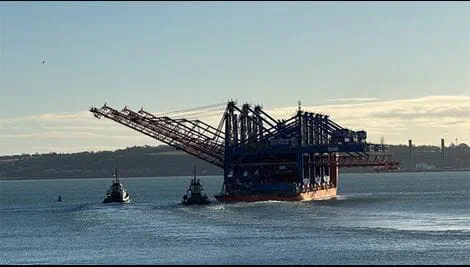
In the Port of Cork, we also regularly have Heavy Lift vessels which load STS Container Cranes for export. These vessels, when fully loaded, are very restricted due to increased width, windage area, and draft in relation to the available depth of water. Visibility is another factor as it is severely hampered due to the large cargo on deck. By deploying our SafePilot and associated equipment, such challenging maneuvers are certainly aided. Another example would be the above-mentioned “dead ship” large bulk carrier, which without the use of SafePilot would be completely visual with regards to navigational data and references.

How has the technology changed the way you communicate and collaborate with vessel masters?
With the vessel’s Masters, technology such as our SafePilot equipment is useful for communication. During the Master/Pilot Exchange, I would regularly run through the planned route using the iPad and discuss the various stages of the Pilotage. Also, when swinging or maneuvering, the data provided by SafePilot, such as distances or speeds, is of great use to the masters’ to improve their situational awareness, as well as my own.
How do you see pilotage balancing human expertise and technological assistance in the future?
In the future, I cannot foresee Pilotage balancing these any differently than we do now. Human expertise will always be required and outweigh technological assistance, but this expertise will be aided by technology to assist with decision-making processes and increase situational awareness.
Prior to becoming a Pilot in the Port of Cork, I worked on various vessel types in all ranks. I was working on seagoing vessels for almost 15 years, but my ultimate goal had always been to become a Marine Pilot, and I was very fortunate to successfully achieve this goal in my home Port, which is one of the most varied, challenging, and exciting Ports in Ireland to be a Pilot.
What do you consider the most challenging aspect of piloting in the Port of Cork?
The Port of Cork is a Multi-modal Port with a huge variety of vessel types including oil tankers, gas carriers, bulk carriers, containerships, cruise ships, offshore vessels, Ro-Ro, and Pure Car Carriers. The variety of vessels and ship types makes the job more interesting but can also provide challenges. The constant change between them requires adaptability and flexibility.
Every Port has different navigational challenges like narrow areas for navigation, large turns, restricted swinging basins, etc., which we also have. The entrance to the Port is exposed to rough sea conditions and contains two entrances or Channels with a large rock or shallow area between them. Once inside the Port, further challenges are met every step of the way depending on conditions and vessel type, draft, size, etc.
The Port of Cork Pilotage district runs from several miles off the coast to a point up the River Lee in Cork City, with berths scattered along the way, each affected differently by certain winds from certain directions, and affected differently throughout all stages of the tide by varied tidal current and current generated by freshwater in the river.
In your opinion, how is the role of a pilot evolving with increasing technological integration?
This would be a difficult question for me to answer as I have only been a Pilot for two and a half years, but throughout my career at sea, I have witnessed a huge increase in technological integration - from sailing with a world folio of paper charts on a bulk carrier to sailing without any charts on fully ECDIS compliant ships. The basic role of all deck officers, Masters, and Pilots alike has not changed in that period as the vessels are the same size, going to the same Ports. But, in my opinion, technology has greatly increased safety, efficiency, and these persons' situational awareness, especially during arrivals and departures to or from port. In short, the role hasn’t changed, but the decision-making processes are certainly aided by increased technological integration.
What traditional piloting skills remain essential despite technological advancement?
Piloting visually by simply looking out of the window, using transits or bearings of landmarks, buoyage, etc., will always be the primary means. Also, proper use of radar techniques to aid what is being observed visually, or to replace it in cases of restricted visibility, remains essential. Use of technology such as Portable Pilot Units can never replace the above but can certainly be an aid rather than a replacement. For berthing or maneuvering in restricted spaces, Pilots use their “eye” as a primary means of determining speed, distances, and such critical information. This is another skill that will remain essential, but again, can certainly be, and is being, aided by technological advancement.
Have you noticed generational differences in how pilots adapt to new technologies like SafePilot?
No, I have not seen generational differences, but certainly some Pilots prefer the aid of SafePilot more than others. I think it has less to do with generation and more to do with the type of Pilot. I recently read an interesting discussion on this, and people were describing themselves or their Pilotage Organizations using percentages of Visual Pilotage against use of PPU. For example, I would like to think that I am 80% visual and 20% PPU when carrying the SafePilot equipment with me, which is on most acts of Pilotage. But there are Pilots who would be more one way or the other. Some Pilots take the equipment, set it up, and may not reference it throughout the act of Pilotage but have it there in case required. Others will have it with them and cross-check their position or other information on every leg.
What was your personal experience adapting to SafePilot technology?
A large portion of my career was spent working with Holland America Line on cruise ships. During my time there, we went through huge periods of change with regards to all aspects of bridge operations. This was due to technological advances, such as going from Radar combined with Paper Charts to Fully ECDIS vessels, but also due to incidents that occurred, such as the Costa Concordia. I felt the ethos in that company and in those bridge teams was to embrace change and use every tool at our disposal to make operations as safe and efficient as possible. ECDIS and the many electronic aids available were used for every arrival and departure, and we became skilled not just in the use of them but in interpreting the quality of data received and recognizing potential errors or bad information. This meant that we were not reliant on the electronic aids but used them properly to aid decision-making and increase situational awareness. We were also sent for many trainings in CSMART, the corporation's own training center, and learned how to spot potential errors in GNSS data and to use the data to best support our operations.
Therefore, when I became a Pilot and started using SafePilot, I treated it the same and was quickly accustomed to its use and its limitations.
What benefits have you discovered since implementing SafePilot?
I have found the system very useful for many reasons. Two of which would be using the system on vessels with poor standards of electronic equipment and for my own training purposes going through my Pilot Classes.
Some vessels have fantastic bridge equipment, and the PPU is not required as much or used as much due to this fact. Unfortunately, there are many vessels with questionable bridge equipment, and deploying SafePilot combined with the likes of our CAT PRO equipment gives me complete independence and reliable information throughout the act of Pilotage. We even have one vessel in the port which is regularly moved “dead ship,” and it is without any electronic aids, but by deploying the above, we have a full suite of tools available to us.
I am still currently training as a Pilot towards Class 1, or unlimited restrictions on what vessels I can Pilot. While training with my colleagues on larger vessels above my license restrictions, I find the PPU very helpful. It gives me a sense of comfort and removes doubt in certain moments, but mostly I find it very helpful to analyze maneuvers and learn from any mistakes or things I could improve on. I would use the Replay function after quite a lot of different or tighter maneuvers to analyze and debrief the act of Pilotage, so that I can take the lessons learned to the next job.
Can you share a specific example where SafePilot technology helped you safely complete a challenging maneuver?
In the Port of Cork, we also regularly have Heavy Lift vessels which load STS Container Cranes for export. These vessels, when fully loaded, are very restricted due to increased width, windage area, and draft in relation to the available depth of water. Visibility is another factor as it is severely hampered due to the large cargo on deck. By deploying our SafePilot and associated equipment, such challenging maneuvers are certainly aided. Another example would be the above-mentioned “dead ship” large bulk carrier, which without the use of SafePilot would be completely visual with regards to navigational data and references.
How has the technology changed the way you communicate and collaborate with vessel masters?
With the vessel’s Masters, technology such as our SafePilot equipment is useful for communication. During the Master/Pilot Exchange, I would regularly run through the planned route using the iPad and discuss the various stages of the Pilotage. Also, when swinging or maneuvering, the data provided by SafePilot, such as distances or speeds, is of great use to the masters’ to improve their situational awareness, as well as my own.
How do you see pilotage balancing human expertise and technological assistance in the future?
In the future, I cannot foresee Pilotage balancing these any differently than we do now. Human expertise will always be required and outweigh technological assistance, but this expertise will be aided by technology to assist with decision-making processes and increase situational awareness.