
Enhancing Pilotage Operations: Insights from Antonio A. Sánchez Romero at Cádiz Bay
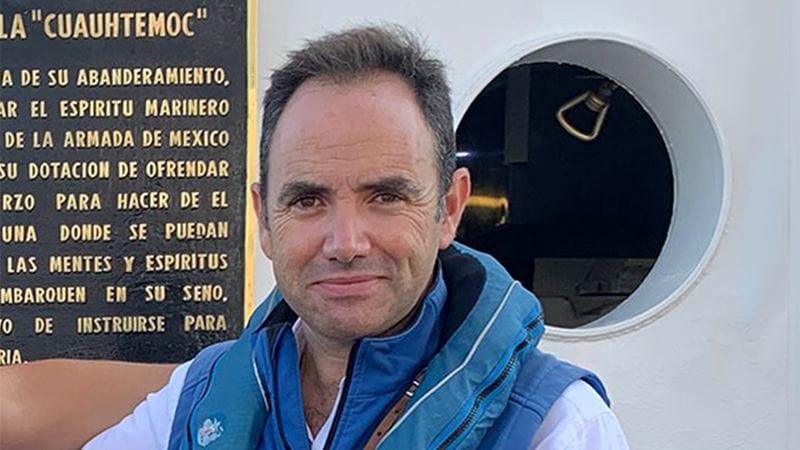
In his dual role as both a working pilot and a leader, Antonio combines hands-on expertise with strategic oversight, ensuring the highest standards of safety, efficiency, and innovation in pilotage operations.
Through this conversation, Antonio shares his insights on the intricacies of pilotage in Cádiz Bay, how Trelleborg's SafePilot technology has been enabling him and Cadiz Pilots, the evolution of the industry, and the critical role of leadership in shaping the future of maritime operations.
Stepping into the role of Práctico Presidente at the Corporación de Prácticos de Cádiz fundamentally raises the level of engagement required. This leadership position demands oversight across all divisions comprising the Corporation’s structure, presenting a highly challenging responsibility—especially for a service that operates continuously, twenty-four hours a day, every day of the year.
Transitioning from an experienced pilot to a presidential role brings a complete shift in perspective. The new responsibilities open up a complex universe of interconnected matters, revealing the intricacies of a dynamic 365/24 operation that relies on the coordination of numerous roles. As President, you encounter and manage facets from every part of the organization, gaining insight and influence over each.
This broader perspective, shaped by experience in both piloting and leadership, provides a comprehensive understanding of the unique challenges and opportunities within pilotage operations at the Port of Cadiz.
2. As a leader, how do you approach decision-making when it comes to adopting new pilotage technologies?
Maritime business is evolving rapidly on a global scale, with most attention focused on advancements in technology, digitalization, and artificial intelligence.
However, other key aspects must be considered. The experience provided by the Pilot Corporation, grounded in safety, is transferred to the ship’s master by the pilot. Establishing a high level of mutual confidence in a short time is essential, and soft skills are the primary tools to achieve this.
While pilotage operations are fundamentally similar worldwide, local procedures are increasingly interconnected; the internet now allows pilots to stay updated on practices across the globe.
The International Maritime Pilots’ Association (IMPA) is developing common guidelines to further standardize pilotage procedures.
Any improvement, whether it be a new procedure or technological innovation, is carefully evaluated before being integrated into operations.
All these factors contribute to establishing standardized pilotage protocols. Within this context, decision-making processes that incorporate new pilotage technologies rely exclusively on the level of confidence and accuracy provided by such technology.
If the new technology does not provide this capability, it will not be adopted by pilots.
3. What unique navigational challenges does the Port of Cadiz present that might not be found in other European ports?
Diversity of Pilotage Operations
Cádiz Bay Harbour, situated on the Atlantic, encompasses a broad spectrum of pilotage activities. It serves not only as a commercial port but also accommodates navy bases, shipyards, offshore facilities, fishing fleets, container terminals, dry and liquid bulk cargo, ro-ro vessels, cruise liners, and recreational boating. This diversity creates a truly complex landscape for pilotage operations.
Challenging Environmental Conditions
Pilots at Cádiz Bay handle everything from small general cargo vessels to the largest ships, all while contending with strong tidal currents, shifting winds, and navigation within restricted waters. While such conditions might be familiar to pilotage services around the world, Cádiz distinguishes itself through its frequent and unique offshore projects and dry-docking operations.
Dry-Docking and Off-Shore Expertise
Dry-docking maneuvers are rare in the career of most captains. However, with three shipyards and ongoing offshore construction, pilots in Cádiz Bay regularly oversee these intricate operations. Their extensive experience is a valuable asset offered to ship captains, ensuring safety and precision during these challenging procedures.
Coordination and Technological Support
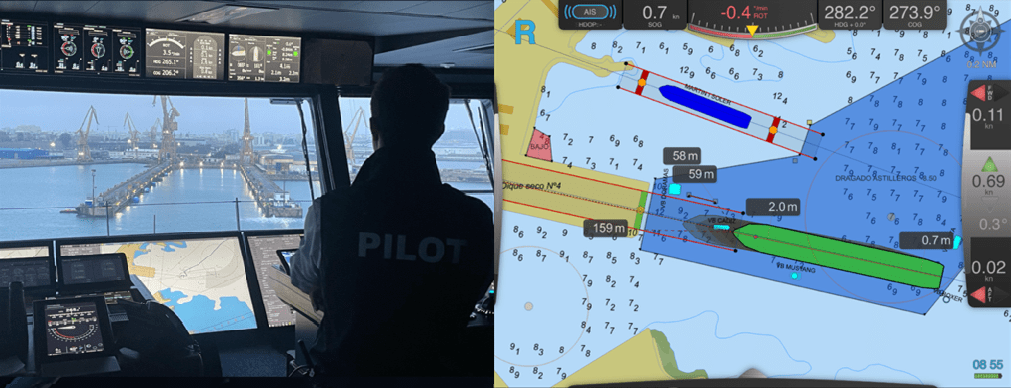
Beyond navigational difficulty, the true challenge lies in coordinating the multiple actors involved in each operation. To facilitate this, Cádiz Bay pilots utilize eMPX software and Portable Pilot Units (PPU) to document maneuvers and share their expertise with captains, fostering cooperative and informed decision-making.
4. How has the practice of pilotage in Cadiz evolved during your career?
I began my career as a pilot in Cadiz Bay in 2006. Since that time, the maritime industry has experienced continuous evolution, and the harbour itself has undergone significant changes, including the addition of new basins and berths. The shift towards global markets has driven economies of scale, resulting in the arrival of ever-larger vessels.
Harbour services have also advanced, with the introduction of new tugboats, improved procedures, and the adoption of digital technologies.
In my view, the most essential factor remains unchanged: the nature of the pilot’s role. The pilot advises the captain, and a relationship of utmost trust must be established in a very short period. Every operation carries high levels of responsibility, with considerable risks to people, assets, port facilities, and the environment.
5. What aspects of Cadiz's maritime traffic do you find most challenging as a pilot?
Challenges in Maritime Traffic: The Role of Dry-Docking Operations and Human Factors
Dry-docking operations present unique challenges for pilots in Cadiz Bay. These challenges arise not only from the inherent complexity of the maneuvers but are also closely linked to human factors. For many captains, dry-docking is a relatively rare occurrence during their seafaring careers.
However, pilots in Cádiz Bay routinely manage such operations, given the presence of three distinct shipyards and offshore building facilities in the area. Their frequent involvement in these maneuvers sets a demanding standard for skill and coordination.
The use of PPUs has become an invaluable asset in handling these operations. PPUs assist pilots in developing a shared mental model for the maneuvers, enhancing situational awareness and decision-making. Recordings of prior similar vessel operations are reviewed during the Master-Pilot Exchange (MPX) process, providing critical insights and preparation. Additionally, the ability to incorporate various navigational layers—such as designated no-go areas and minimum depth areas—through the PPU’s layer editing tool further improves safety and efficiency during dry-docking procedures.
6. How is the Port of Cadiz adapting to accommodate increasingly larger vessels?
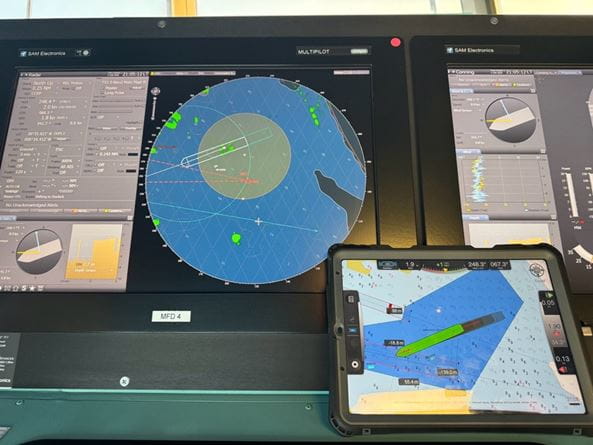
The increasing size of vessels and marine structures is a global trend that has firmly established itself in modern maritime operations. In this new reality, port environments often feel constricted, and traditional visual methods, even those honed by years of experience, are no longer sufficient. The challenges are particularly pronounced when attempting to fully grasp the scale and positioning from the conning position at the wing of a 400-meter vessel, especially when high container stacks obscure the view both fore and aft.
The adoption of PPUs has transformed the pilot’s perspective. With PPU technology, pilots gain an enhanced, almost “hawk eye” view of their surroundings. This digital situational awareness provides a level of clarity and confidence that surpasses human observation alone, empowering pilots to manage ever-larger vessels within the increasingly complex confines of modern harbours.
7. What initially convinced you to implement SafePilot technology?
The initial exposure to SafePilot technology came in 2015 at the Port of Rotterdam. Observing its use firsthand left a strong impression, and, over the following years, it became evident that pilot organizations around the world were increasingly integrating this technology into their daily routines.
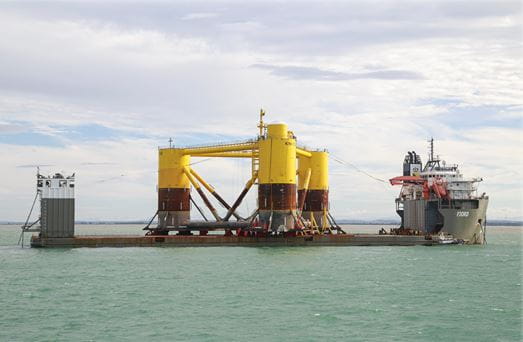
By 2020, the Cádiz Bay pilots faced the demanding KINKARDINE Project involving a wind energy marine structure. Collaborating closely with Trelleborg, they were able to upgrade the aging submergible barge used for the LOAD OUT operation. The installation of a CAT MAX system brought back reliable self-positioning capabilities, demonstrating the efficacy of modern navigation technology in complex operations.
Routine Adoption and Impact
The success of these operations led to the widespread adoption of PPU with SafePilot software among Cádiz Bay pilots. The technology became an indispensable part of pilotage, to the point where its absence felt uncomfortable. Pilots described the sensation of operating without it as akin to feeling “naked.” Years of consistent use have made SafePilot an integral companion during every pilotage maneuver.
Initially, the use of PPUs in daily pilotage routines began gradually, with only a few pilots embracing the technology. There was initial resistance among the majority, who questioned the necessity of adopting PPUs given their experience over the past two decades without such tools. Over time, as pilots observed the advantages and capabilities of PPUs during routine operations, the skepticism diminished.
Today, PPU technology has become an essential tool for pilots, widely recognized for its value and routinely integrated into operations.

9. What was the learning curve like when adopting SafePilot, and what advice would you give to pilots facing similar transitions?
The process of integrating a PPU into pilotage services represents a significant shift, particularly for those who have not previously depended on such technology. Persuasion from sales representatives is often met with skepticism, whereas witnessing a partner or colleague effectively demonstrate the value and convenience of the PPU has a much greater impact.
In our experience, we benefited from having a pilot who thoroughly researched the market and developed a deep understanding of PPU technology. This individual was able to present the advantages of PPUs at a National Pilots Meeting, giving Cádiz a certain headstart in awareness and adoption.
For most pilots, initial proficiency with the technology increases only gradually, especially in the absence of prior knowledge. However, as pilots incorporate the PPU into their daily operations and become more familiar with its features and limitations, their proficiency grows markedly over time. As experience accumulates, the rate of improvement becomes especially notable in the early stages and then more moderate as expertise is gained—echoing the wisdom of Socrates: “I know that I know nothing.”
10. Can you describe a particularly challenging pilotage situation where SafePilot technology proved invaluable?
Fog, dry-docking operations, and handling large vessels are just a few examples of scenarios where technology like SafePilot becomes invaluable. However, after regular use, this tool is no longer seen as reserved only for special or challenging pilotage operations. Instead, it evolves into an essential companion—much like a trusted right hand—providing consistent support in daily practice.

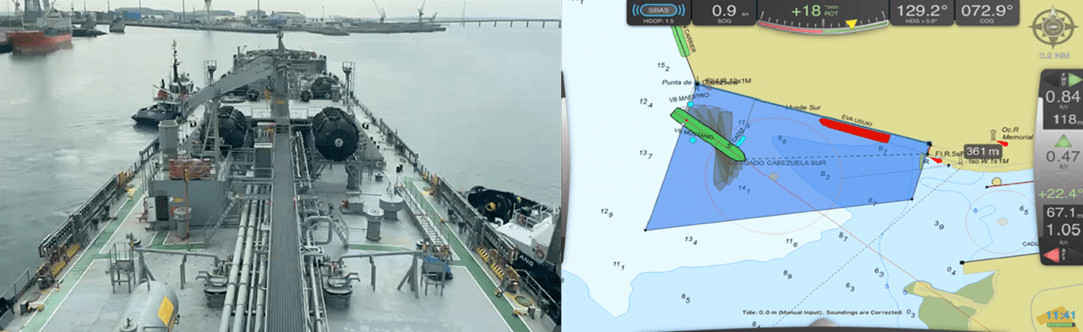
Following an engine failure while departing the harbour with a fully loaded tanker, the capabilities of PPUs—particularly their predictive functions—proved essential in ensuring the vessel remained within safe waters until tug assistance was provided.
11. How are you handling the training of new pilots with modern technologies like SafePilot?
The effectiveness of PPUs technology is closely linked to the level of training received by pilots. It is crucial for pilots to have a solid understanding of the system’s limitations, potential malfunction points, and the importance of precise offset calibration.
Real-World Experience and Limitations
Despite technological advances, the realities of pilotage remain outside the window. Delays in installation or technical issues must quickly lead pilots to work without the technology and keep focused. Staying mindful of these limitations helps pilots make practical decisions during operations.
Pilotage is a profession built on continual learning, as each day presents new challenges and situations. Openly sharing experiences is essential for feedback and collective progress within the corporation, allowing pilots to learn from one another and adjust their practices as needed.
Regular review and discussion of PPU recordings play a vital role in developing pilot expertise and refining operational practices. By examining both everyday maneuvers and exceptional cases in group settings, pilots gain valuable insight into effective decision-making and response strategies. This process encourages skill development and collective learning, ensuring that teams are well-prepared to address challenges and continuously improve pilotage standards.
A rational approach to managing PPU recordings is crucial for this purpose.
Introducing PPUs into pilotage routines is straightforward when approached systematically. One effective method is the two-pilot scheme, where the primary pilot focuses on navigation while the supporting pilot manages PPU installation and technical support. This collaboration ensures that the main pilot benefits fully from PPU assistance throughout the maneuver.
12. How has your longstanding partnership with Trelleborg evolved over the years?
The current partnership with Trelleborg can best be described as a longstanding and dynamic collaboration, much like two dedicated colleagues engaged in meaningful dialogue over a shared passion.
From the outset, every need, comment, and suggestion has been addressed thoroughly and promptly. This unwavering support has been consistent and not influenced by commercial interests or external pressures.
Overall, there is a strong sense of belonging to Trelleborg’s visionary “Navigating the Future” initiative, which further strengthens the cooperative spirit and shared commitment to progress.
13. What potential do you see for further technological integration in pilotage operations at Cadiz?
The maritime sector today is characterized by continuous, rapid evolution. Technological advancements are readily available, yet the traditionally high-inertia nature of the maritime industry means that adapting to and fully integrating these innovations is often a gradual process. In fact, the pace of change is such that what is considered cutting-edge today may quickly become outdated.
In daily operations, it is now common to see ship bridges filled with sophisticated, high-tech equipment. However, there remains a gap, as some maritime professionals continue to rely on methods reminiscent of ancient navigators—standing at the helm and focusing intently ahead, often working in ways disconnected from contemporary Bridge Resource Management (BRM) procedures.
As discussed previously, technology is driving the sector towards artificial intelligence, autonomous vessels, and comprehensive digital integration. Yet, it is essential that this remarkable journey into the future does not compromise the well-established foundation of maritime safety.