
Closing the competency gap as LNG and alternative fuel transfers scale
Date: 21.09.26
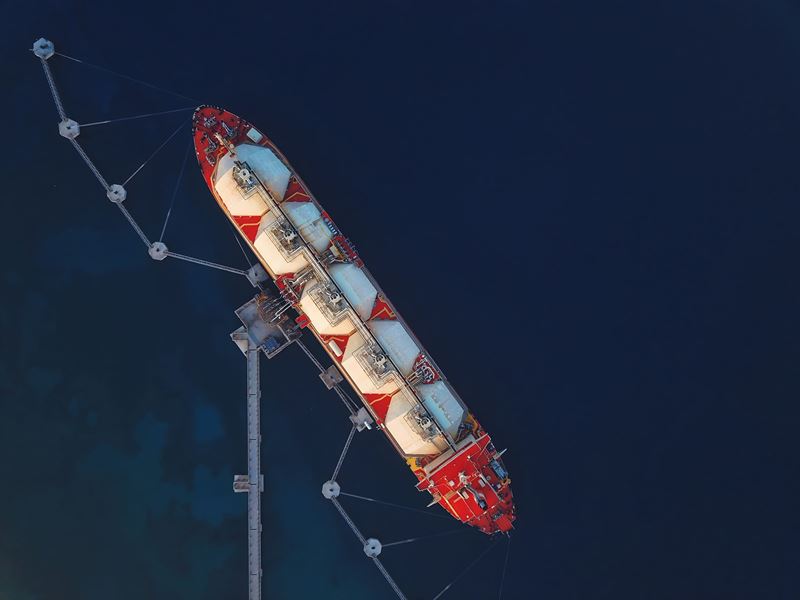
Global LNG trade has been at record volumes and looks like it will continue to rise. According to the International Group of LNG Importers (GIIGNL), imports reached 428 million tonnes in 2025, around 5% higher than the 406 million tonnes recorded a year earlier. Signals show that the carrier fleet is expanding to match it, with the orderbook now standing at 42% of the existing fleet and 95 vessels due for delivery in 2026 alone.
At the same time, LNG bunkering is scaling quickly, and emerging alternative fuels such as methanol and ammonia are beginning to follow. Each fuel has its own equipment, procedures and hazards, but they share one critical feature a transfer interface where cryogenic or otherwise hazardous products cross between two independently operated assets.
As these operations become more frequent and more varied, crew competency has to keep pace not only with individual equipment, but with the complete transfer process and the way both sides of the interface work together.
Where value and risk converge
The transfer connection is where the commercial, safety and environmental stakes of the entire operation converge. For example, a single large-scale LNG cargo can be worth tens or hundreds of millions of dollars, yet a transfer will not begin, or will be halted, if a safety link fails to show a healthy signal or a hose is not installed correctly. Seemingly modest pieces of interface equipment can therefore become the bottleneck that stops an expensive transaction.
The physical risk also concentrates around the same point. LNG is carried at roughly minus 162 degrees centigrade and expands around 600 times on vaporizing so a release at the interface can form a flammable vapor cloud within moments and cause brittle-fracture in ordinary steel. The integrity, monitoring and shutdown behaviour of the transfer system are therefore critical controls.
At the same time, the operating environment around that interface has changed. Crew movement between operators and flags can erode the continuous familiarity that comes with a stable crew, while many personnel handling transfers now come from outside the traditional LNG-carrier sector. Ownership and operational responsibility have fragmented too. A transfer today can involve a separate vessel operator, vessel owner and cargo owner, often across carrier-to-terminal, carrier-to-FSRU or ship-to-ship operations. The result is that knowledge once contained within a single organization now has to be understood and applied across several parties.
Why guidance does not cover the whole interface
The regulatory framework was not built for the LNG industry as it operates today, or for the emergence of new fuels. The STCW Code, the IGF Code for ships using low-flashpoint fuels and the IGC Code for gas carriers provide important requirements and competencies, but these are largely bounded by the working scope of the individual vessel. In practice, that can encourage a “my ship, my manifold, my tank” view rather than a complete understanding of what happens across the transfer interface.
Similarly, guidelines can also specify what equipment must be present without providing the same level of direction on how it should be configured, operated and maintained. The IGC Code, for example, requires an emergency shutdown link to be fitted and capable of transmitting shutdown signals, but does not prescribe which link to fit or how it should be implemented in practice. This leaves an important distinction between equipment compliance and the consistent, competent use of that equipment across a live transfer interface.
These gaps are being recognized for bunkering. The European Maritime Safety Agency's (EMSA) 2024 TRAINALTER study concluded that existing International Maritime Organization’s STCW standards do not specifically cover all aspects of the new fuels and fuel systems now being adopted. EMSA subsequently held a dedicated competences workshop in November 2025, while the IMO's comprehensive review of the STCW Convention is under way in light of oncoming alternative fuels. That progress is important, but regulation alone is unlikely to move at the same pace as the market.
Training for the complete transfer system
At Trelleborg, we see closing this competency gap as requiring a discipline increasingly described as critical interface training. This goes beyond familiarity with individual pieces of equipment so that crews understand how the whole transfer system behaves end-to-end, across the space between one asset and another. This is the area outside of a vessel’s individual scope and is what is currently overlooked by the codes so it is where the most uncertainty sits. Two well-configured and correctly maintained systems can still fail where they meet if the crews on either side do not share an understanding of how the connection is intended to behave. The competency that matters is not only the ability to operate one side's equipment in isolation, but to run the interface as a single, coordinated process.
Two areas demand particular attention and they cut across every relevant operational asset from large-scale carriers to floating units to bunker vessels. The first is the LNG composite transfer hose. Crews need to understand its design and behaviour, including correct handling, lifting and storage, inspection and retirement criteria, and the conditions that can cause collapse. Current guidance assumes this competence exists rather than instilling it. The second is the transfer system as a whole. That includes understanding the position, type and location of the emergency release coupling, quick connect and disconnect arrangements, confirmation that emergency shutdown is active and the ability to perform a manual shutdown. It also includes a disciplined sequence of pre-transfer, proof-test, start-of-transfer and in-transfer checks.
Training, therefore, has to move beyond theoretical familiarization. Effective programmes should be manageable, based on realistic application and simulation, and aligned with the configurations crews will actually encounter. As operational requirements change, competency assessment should be built into the training cycle rather than treated as a one-off certification.
Putting critical interface training into practice
Crew capability is the human layer of transfer performance. Equipment, procedures and safety systems are essential, but they deliver their full value only when the people operating them have the knowledge, confidence and shared visibility to use them as an integrated system. That is where our collaboration with SimWave becomes particularly relevant.
The training approach is built around short, scenario-based modules, typically around 20 minutes each, delivered online and reinforced by in-person sessions for both suppliers and receivers. The curriculum covers Gas Transfer Hoses, Transfer Systems and Safety Links across gas-fuelled vessels, bunker vessels, large-scale LNG bulk transfer and terminals.
Each module maps directly to a practical interface risk. Safety Links addresses the communication and shared-visibility gap between supplier and receiver. Transfer Systems focuses on safe start-to-finish sequencing, emergency shutdown and hose recovery. Gas Transfer Hoses builds understanding of correct handling and potential failures such as hose collapse. The objective is not to provide just another training certificate, but to help crews translate equipment knowledge into operational readiness, so that they can read, anticipate and respond to system behaviour in real time.
The same principle should extend beyond individual training programmes. Operators, bunker suppliers, terminals and other parties involved in shared-risk transfers need to scrutinize competency at the interface more closely and work with crews to understand where practical knowledge gaps remain.
Building an industry-led benchmark
Industry also needs better visibility of where transfers go wrong. Marine casualty data sits within general databases such as the EU's EMCIP platform and the IMO's GISIS rather than being segmented specifically for LNG transfer. Bodies such as SIGTTO have built valuable incident knowledge over several decades, but the dataset remains small relative to the volume of loading and discharging operations carried out each year. Parties with genuine end-to-end visibility, including engineering specialists, like Trelleborg, whose systems span the interface, together with class societies and industry bodies, are therefore well placed to identify operational patterns no single operator can see and turn those lessons into practical instruction.
Ultimately, suppliers and receivers of gas products want predictable operations. Recognizing where knowledge gaps exist and building competency in those areas is an investment in protecting that predictability.
Until complete and standardized guidance exists throughout the interface, there is an opportunity for the industry to collectively raise its own standards, strengthen operational readiness and build a more consistent approach to competency across the complete transfer process.
At the same time, LNG bunkering is scaling quickly, and emerging alternative fuels such as methanol and ammonia are beginning to follow. Each fuel has its own equipment, procedures and hazards, but they share one critical feature a transfer interface where cryogenic or otherwise hazardous products cross between two independently operated assets.
As these operations become more frequent and more varied, crew competency has to keep pace not only with individual equipment, but with the complete transfer process and the way both sides of the interface work together.
Where value and risk converge
The transfer connection is where the commercial, safety and environmental stakes of the entire operation converge. For example, a single large-scale LNG cargo can be worth tens or hundreds of millions of dollars, yet a transfer will not begin, or will be halted, if a safety link fails to show a healthy signal or a hose is not installed correctly. Seemingly modest pieces of interface equipment can therefore become the bottleneck that stops an expensive transaction.
The physical risk also concentrates around the same point. LNG is carried at roughly minus 162 degrees centigrade and expands around 600 times on vaporizing so a release at the interface can form a flammable vapor cloud within moments and cause brittle-fracture in ordinary steel. The integrity, monitoring and shutdown behaviour of the transfer system are therefore critical controls.
At the same time, the operating environment around that interface has changed. Crew movement between operators and flags can erode the continuous familiarity that comes with a stable crew, while many personnel handling transfers now come from outside the traditional LNG-carrier sector. Ownership and operational responsibility have fragmented too. A transfer today can involve a separate vessel operator, vessel owner and cargo owner, often across carrier-to-terminal, carrier-to-FSRU or ship-to-ship operations. The result is that knowledge once contained within a single organization now has to be understood and applied across several parties.
Why guidance does not cover the whole interface
The regulatory framework was not built for the LNG industry as it operates today, or for the emergence of new fuels. The STCW Code, the IGF Code for ships using low-flashpoint fuels and the IGC Code for gas carriers provide important requirements and competencies, but these are largely bounded by the working scope of the individual vessel. In practice, that can encourage a “my ship, my manifold, my tank” view rather than a complete understanding of what happens across the transfer interface.
Similarly, guidelines can also specify what equipment must be present without providing the same level of direction on how it should be configured, operated and maintained. The IGC Code, for example, requires an emergency shutdown link to be fitted and capable of transmitting shutdown signals, but does not prescribe which link to fit or how it should be implemented in practice. This leaves an important distinction between equipment compliance and the consistent, competent use of that equipment across a live transfer interface.
These gaps are being recognized for bunkering. The European Maritime Safety Agency's (EMSA) 2024 TRAINALTER study concluded that existing International Maritime Organization’s STCW standards do not specifically cover all aspects of the new fuels and fuel systems now being adopted. EMSA subsequently held a dedicated competences workshop in November 2025, while the IMO's comprehensive review of the STCW Convention is under way in light of oncoming alternative fuels. That progress is important, but regulation alone is unlikely to move at the same pace as the market.
Training for the complete transfer system
At Trelleborg, we see closing this competency gap as requiring a discipline increasingly described as critical interface training. This goes beyond familiarity with individual pieces of equipment so that crews understand how the whole transfer system behaves end-to-end, across the space between one asset and another. This is the area outside of a vessel’s individual scope and is what is currently overlooked by the codes so it is where the most uncertainty sits. Two well-configured and correctly maintained systems can still fail where they meet if the crews on either side do not share an understanding of how the connection is intended to behave. The competency that matters is not only the ability to operate one side's equipment in isolation, but to run the interface as a single, coordinated process.
Two areas demand particular attention and they cut across every relevant operational asset from large-scale carriers to floating units to bunker vessels. The first is the LNG composite transfer hose. Crews need to understand its design and behaviour, including correct handling, lifting and storage, inspection and retirement criteria, and the conditions that can cause collapse. Current guidance assumes this competence exists rather than instilling it. The second is the transfer system as a whole. That includes understanding the position, type and location of the emergency release coupling, quick connect and disconnect arrangements, confirmation that emergency shutdown is active and the ability to perform a manual shutdown. It also includes a disciplined sequence of pre-transfer, proof-test, start-of-transfer and in-transfer checks.
Training, therefore, has to move beyond theoretical familiarization. Effective programmes should be manageable, based on realistic application and simulation, and aligned with the configurations crews will actually encounter. As operational requirements change, competency assessment should be built into the training cycle rather than treated as a one-off certification.
Putting critical interface training into practice
Crew capability is the human layer of transfer performance. Equipment, procedures and safety systems are essential, but they deliver their full value only when the people operating them have the knowledge, confidence and shared visibility to use them as an integrated system. That is where our collaboration with SimWave becomes particularly relevant.
The training approach is built around short, scenario-based modules, typically around 20 minutes each, delivered online and reinforced by in-person sessions for both suppliers and receivers. The curriculum covers Gas Transfer Hoses, Transfer Systems and Safety Links across gas-fuelled vessels, bunker vessels, large-scale LNG bulk transfer and terminals.
Each module maps directly to a practical interface risk. Safety Links addresses the communication and shared-visibility gap between supplier and receiver. Transfer Systems focuses on safe start-to-finish sequencing, emergency shutdown and hose recovery. Gas Transfer Hoses builds understanding of correct handling and potential failures such as hose collapse. The objective is not to provide just another training certificate, but to help crews translate equipment knowledge into operational readiness, so that they can read, anticipate and respond to system behaviour in real time.
The same principle should extend beyond individual training programmes. Operators, bunker suppliers, terminals and other parties involved in shared-risk transfers need to scrutinize competency at the interface more closely and work with crews to understand where practical knowledge gaps remain.
Building an industry-led benchmark
Industry also needs better visibility of where transfers go wrong. Marine casualty data sits within general databases such as the EU's EMCIP platform and the IMO's GISIS rather than being segmented specifically for LNG transfer. Bodies such as SIGTTO have built valuable incident knowledge over several decades, but the dataset remains small relative to the volume of loading and discharging operations carried out each year. Parties with genuine end-to-end visibility, including engineering specialists, like Trelleborg, whose systems span the interface, together with class societies and industry bodies, are therefore well placed to identify operational patterns no single operator can see and turn those lessons into practical instruction.
Ultimately, suppliers and receivers of gas products want predictable operations. Recognizing where knowledge gaps exist and building competency in those areas is an investment in protecting that predictability.
Until complete and standardized guidance exists throughout the interface, there is an opportunity for the industry to collectively raise its own standards, strengthen operational readiness and build a more consistent approach to competency across the complete transfer process.