
Career Paths: Tommy Mikkelsen
Date: 06.04.26
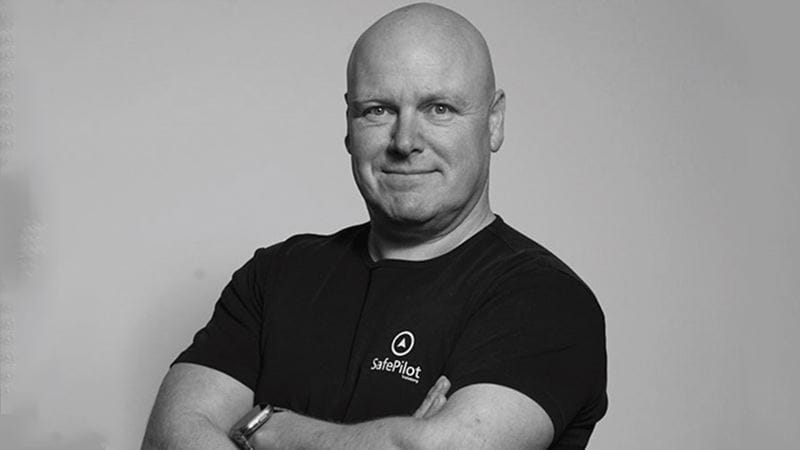
Tommy Mikkelsen, Managing Director of the Navigation and Piloting business at Trelleborg Marine & Infrastructure in Denmark, advocates for a shift in how the industry approaches technology investment. Too often, port authorities and maritime operators purchase point solutions to address isolated problems. What is truly needed is the courage to build connected ecosystems. As seen in Safety4Sea, March 2026.
Tommy is energized by the convergence of forces transforming the maritime sector: AI, real-time data exchange, regulatory pressure for digitalization, and an industry that is finally ready to embrace change. His role also allows him to foster a culture where people feel safe to innovate—where they can challenge assumptions, experiment, and occasionally fail forward. “This is the kind of leadership challenge that gets me out of bed every morning,” he says, making the work deeply rewarding.
Q1: How did it come about that you joined the shipping industry and your field of expertise specifically?
I grew up in a small Danish town, and my path into technology started not with any grand plan, but with curiosity. At 12 years old, I had my first encounter with a computer, an orange Comet 3000, and something clicked. I spent countless hours teaching myself to code, not because anyone told me to, but because I found the idea of understanding and manipulating digital systems genuinely fascinating. That early obsession led me to pursue a formal degree in Computer Science.
My first real role in industry was as a software developer at Marimatech, and it was there that the maritime world revealed itself to me. I quickly saw a gap: the industry was responsible for moving the vast majority of global trade, yet in many places it was running on fragmented workflows and ageing technology. That gap between what existed and what was clearly possible was all I needed.
I threw myself into it. My focus on innovative problem-solving and leadership saw me spearhead the creation of a new development department, which led to my appointment as Chief Technology Officer. Eventually, that path took me to the Managing Director for Navigation and Piloting operations within Trelleborg Group’s Marine and Infrastructure business unit, based in Denmark, and beyond into broader roles across the Trelleborg Group in mergers and acquisitions, board work, and strategic advisory. Trelleborg has enabled me to broaden my horizon and work with skilled people at different level all over the world
The deeper I have gone, the more I have come to believe that this industry does not just need better software. It needs people willing to think fundamentally differently about safety, data, and the digital future of maritime operations.
Q2: What about your current job/role most excites you and why?
The honest answer? The fact that the stakes are real.
When we build something that works, when an operator has better situational awareness, when a pilot can make a safer decision because the right data is in front of them, when a port becomes more efficient without sacrificing safety, that is not just a product win. That is lives protected and trade moving more reliably around the world.
What excites me most right now is the convergence of forces happening in maritime: AI, real-time data exchange, regulatory pressure for digitalization, and an industry that is finally, genuinely, ready to embrace change. We are building platforms that sit right at that intersection.
But equally exciting is the human side. My role gives me the ability to build a culture where people feel genuinely safe to innovate, where they are not afraid to challenge assumptions, experiment, and occasionally fail forward. I believe the best technology comes from teams that feel trusted and inspired. Creating that environment, while pursuing work that leaves a lasting mark on an entire industry, is the kind of leadership challenge that gets me out of bed every morning.
Q3: When you think of the word 'successful', who's the first person who comes to mind and why?
The engineer, inventor, and business creator Elon Musk comes to mind. And I want to be precise about why, because it is specifically the idea of what he represents, not every dimension of the man himself.
What I think about is the audacity to pursue impact at a scale most people never allow themselves to imagine. He redefined what was possible in not one but two industries, automotive and aerospace, that most observers had written off as mature and settled. He created companies that became platforms for entire ecosystems of innovation and changed the conversation about what private enterprise can achieve.
More specifically, I think about the iterative philosophy behind SpaceX. The willingness to launch, fail publicly, learn fast, and go again. That approach, treating failure as data rather than defeat, is something I carry into how we build products and how we run our teams.
What I am equally conscious of, though, is that this kind of ambition can come at a human cost if you let it. The individuals who create lasting, positive changes in the world are rare, and I think the ones who do it with lasting integrity are rarer still. So, I carry that inspiration while trying to protect my empathy and genuine care for the people I lead. Ambition and humanity are not in conflict. You just have to be intentional about holding both.
Q4: Who is/was the most influential person/mentor to you and why?
There is not one name. It was a mosaic of people who showed up at the right moments.
But if I had to identify the pattern that runs through the mentors who shaped me most, it is this: they asked better questions rather than giving me answers. The ones who said - that is interesting, have you considered what happens when you are wrong? Those conversations changed how I think.
One particular leader I worked with early in my career had an unusual quality: radical transparency. He was completely honest about his own mistakes, not in a self-deprecating way, but as a teaching tool. He normalized fallibility, and in doing so created a team that was genuinely unafraid to take risks. I have tried to carry that into my own leadership. I would rather have a team that tells me an uncomfortable truth early than one that protects me from reality until it is too late.
The principle I have taken from all of them is the same: your job as a leader is to make the people around you better. If you do that consistently, the results take care of themselves.
Q5: What is the best and what was the worst piece of advice you've ever been given and why?
Best: "Make the decision with the information you have, then be willing to be wrong."
I spent a lot of early energy trying to be certain before I acted. A mentor challenged me on that directly. The search for certainty, he said, is often just sophisticated procrastination. The ability to make a call, commit fully, and course-correct when needed is a far more valuable skill than being right the first time. That advice fundamentally changed my relationship with decision-making.
Worst: "Show me the ROI."
I have spent too much of my career trying to justify vision to people who want to put a tangible KPI on everything. The bean counters who need every investment to show a measurable return before they will support it. And I understand the impulse, financial discipline matters. But there are things you cannot put a number on. Curiosity. Culture. The willingness to invest in people before they have proven themselves. The decision to build something that seems costly today but creates a platform for something much bigger tomorrow.
You cannot put a KPI on what happens when a team feels genuinely trusted to experiment. You cannot spreadsheet your way to a breakthrough. I have wasted too many hours trying to convince visionless people that some of the most important investments look like costs right up until the moment they become the thing that changes everything. The advice to ignore is any version of "if you cannot measure it, it does not count."
Q6: What is the most worthwhile career investment (in energy, time, money) you've ever made?
Without question: investing in learning to think, not just to execute.
Early in my career I was very good at building things. What I was less good at was stepping back and asking whether we were building the right things, for the right reasons, in the right sequence. The investment I made in developing a more strategic, systems-level way of thinking, through books, conversations, advisors, and honestly through some expensive mistakes, has paid more dividends than any technical skill I have acquired.
Specifically, learning to understand business from a financial and strategic lens, not just a product lens, transformed how I operate. It is what allows me to hold three things simultaneously: creating the right environment for my team, making decisions that have long-term industry impact, and delivering genuine value to shareholders. Those are not competing goals, but you need the thinking infrastructure to navigate them together.
If I had to point to one tangible investment: time spent with people outside my domain. Maritime professionals in conversation with aerospace engineers. Technology builders in conversation with operators at sea. Cross-pollination is where the real insight lives.
Q7: If you could give a piece of advice to your 18-year-old self, what would it be and why? What piece of advice should you ignore?
To my 18-year-old self: your curiosity is your greatest asset. Protect it and feed it obsessively. Do not let the pressure to specialize early push you into a box too small for who you will become. The fact that you are interested in too many things is not a flaw. It is the architecture of a future you cannot yet see.
And more practically: learn to be comfortable with being misunderstood. People who move early and think differently will often seem wrong to the majority, right up until they are not. Develop the inner stability to hold a conviction under pressure without needing external validation to keep going.
Advice to ignore: anything that tells you to wait until you have all the answers before you act. The people who change industries do not wait for permission. They build something, show it working, and let the results do the talking.
Q8: In the last five years, what new belief, behavior, or habit has most improved your business life?
Structured reflection. And by that, I mean making time, deliberately, not accidentally, to ask what is actually happening here rather than constantly reacting to what is in front of me.
I started being much more intentional about how I consume information, how I make decisions, and how I manage energy rather than just time. That shift, from calendar management to energy management, has been transformative. I am more useful to my team when I protect the conditions under which I think well.
But the deeper belief shift has been this: long-term thinking is a competitive advantage, not a luxury. In a world that rewards quarterly thinking, the leader or company willing to make a decision that is painful now but right over five years has a structural edge. I have become much more willing to accept short-term friction in the service of durable outcomes, in how we build our platforms, in how we grow our team, and in how we position ourselves in the market.
That patience, paired with genuine urgency, is a combination I try to model every day.
Q9: What would you like to change in the current maritime landscape and your area of expertise specifically and why?
The fragmentation. It is the single biggest obstacle to meaningful progress.
Maritime is an industry built on information, vessel positions, weather, traffic, pilotage conditions, port status, and yet that information sits in silos. Different stakeholders, different systems, different protocols, and far too often, no shared operational picture. That fragmentation does not just create inefficiency. In safety-critical moments, it costs lives.
What I want to see, and what I am actively working toward, is a neutral, trusted layer for safety-critical data exchange across maritime stakeholders. Not a product owned by one vendor, not a platform that centralizes everything through a single commercial gateway, but a shared infrastructure that lets different systems speak to each other when it matters most. Privacy-first, interoperable, and built for the long term.
The broader change I would push for is a mindset shift in how the industry approaches technology investment. Too many port authorities and maritime operators are buying point solutions to isolated problems. What we need is the courage to build connected ecosystems. That is harder. It requires trust, collaboration, and a willingness to think beyond your own organization. But that is where the real transformation lives.
Q10: What is your personal motto?
"Do meaningful work, with good people, and do not compromise the things that matter." It sounds simple. It is surprisingly demanding in practice.
Meaningful work means not confusing busyness with impact. It means regularly asking whether what I am building actually matters, to the people who use it, to the industry it serves, and to the team that gives their best to it every day.
Good people means prioritizing character and curiosity alongside competence. The most technically brilliant person in the room who does not care about the mission or the team will cost you more than they are worth.
And not compromising the things that matter means being clear about your values before you are tested on them, because by the time you are in the moment, it is too late to decide.
That is the lens through which I try to lead: first, a safe, innovative and inspiring place to work. Second, work that leaves a lasting and sustainable mark on the industry we operate in. And third, returns that make all of it viable for the long term. In that order.
Q1: How did it come about that you joined the shipping industry and your field of expertise specifically?
I grew up in a small Danish town, and my path into technology started not with any grand plan, but with curiosity. At 12 years old, I had my first encounter with a computer, an orange Comet 3000, and something clicked. I spent countless hours teaching myself to code, not because anyone told me to, but because I found the idea of understanding and manipulating digital systems genuinely fascinating. That early obsession led me to pursue a formal degree in Computer Science.
My first real role in industry was as a software developer at Marimatech, and it was there that the maritime world revealed itself to me. I quickly saw a gap: the industry was responsible for moving the vast majority of global trade, yet in many places it was running on fragmented workflows and ageing technology. That gap between what existed and what was clearly possible was all I needed.
I threw myself into it. My focus on innovative problem-solving and leadership saw me spearhead the creation of a new development department, which led to my appointment as Chief Technology Officer. Eventually, that path took me to the Managing Director for Navigation and Piloting operations within Trelleborg Group’s Marine and Infrastructure business unit, based in Denmark, and beyond into broader roles across the Trelleborg Group in mergers and acquisitions, board work, and strategic advisory. Trelleborg has enabled me to broaden my horizon and work with skilled people at different level all over the world
The deeper I have gone, the more I have come to believe that this industry does not just need better software. It needs people willing to think fundamentally differently about safety, data, and the digital future of maritime operations.
Q2: What about your current job/role most excites you and why?
The honest answer? The fact that the stakes are real.
When we build something that works, when an operator has better situational awareness, when a pilot can make a safer decision because the right data is in front of them, when a port becomes more efficient without sacrificing safety, that is not just a product win. That is lives protected and trade moving more reliably around the world.
What excites me most right now is the convergence of forces happening in maritime: AI, real-time data exchange, regulatory pressure for digitalization, and an industry that is finally, genuinely, ready to embrace change. We are building platforms that sit right at that intersection.
But equally exciting is the human side. My role gives me the ability to build a culture where people feel genuinely safe to innovate, where they are not afraid to challenge assumptions, experiment, and occasionally fail forward. I believe the best technology comes from teams that feel trusted and inspired. Creating that environment, while pursuing work that leaves a lasting mark on an entire industry, is the kind of leadership challenge that gets me out of bed every morning.
Q3: When you think of the word 'successful', who's the first person who comes to mind and why?
The engineer, inventor, and business creator Elon Musk comes to mind. And I want to be precise about why, because it is specifically the idea of what he represents, not every dimension of the man himself.
What I think about is the audacity to pursue impact at a scale most people never allow themselves to imagine. He redefined what was possible in not one but two industries, automotive and aerospace, that most observers had written off as mature and settled. He created companies that became platforms for entire ecosystems of innovation and changed the conversation about what private enterprise can achieve.
More specifically, I think about the iterative philosophy behind SpaceX. The willingness to launch, fail publicly, learn fast, and go again. That approach, treating failure as data rather than defeat, is something I carry into how we build products and how we run our teams.
What I am equally conscious of, though, is that this kind of ambition can come at a human cost if you let it. The individuals who create lasting, positive changes in the world are rare, and I think the ones who do it with lasting integrity are rarer still. So, I carry that inspiration while trying to protect my empathy and genuine care for the people I lead. Ambition and humanity are not in conflict. You just have to be intentional about holding both.
Q4: Who is/was the most influential person/mentor to you and why?
There is not one name. It was a mosaic of people who showed up at the right moments.
But if I had to identify the pattern that runs through the mentors who shaped me most, it is this: they asked better questions rather than giving me answers. The ones who said - that is interesting, have you considered what happens when you are wrong? Those conversations changed how I think.
One particular leader I worked with early in my career had an unusual quality: radical transparency. He was completely honest about his own mistakes, not in a self-deprecating way, but as a teaching tool. He normalized fallibility, and in doing so created a team that was genuinely unafraid to take risks. I have tried to carry that into my own leadership. I would rather have a team that tells me an uncomfortable truth early than one that protects me from reality until it is too late.
The principle I have taken from all of them is the same: your job as a leader is to make the people around you better. If you do that consistently, the results take care of themselves.
Q5: What is the best and what was the worst piece of advice you've ever been given and why?
Best: "Make the decision with the information you have, then be willing to be wrong."
I spent a lot of early energy trying to be certain before I acted. A mentor challenged me on that directly. The search for certainty, he said, is often just sophisticated procrastination. The ability to make a call, commit fully, and course-correct when needed is a far more valuable skill than being right the first time. That advice fundamentally changed my relationship with decision-making.
Worst: "Show me the ROI."
I have spent too much of my career trying to justify vision to people who want to put a tangible KPI on everything. The bean counters who need every investment to show a measurable return before they will support it. And I understand the impulse, financial discipline matters. But there are things you cannot put a number on. Curiosity. Culture. The willingness to invest in people before they have proven themselves. The decision to build something that seems costly today but creates a platform for something much bigger tomorrow.
You cannot put a KPI on what happens when a team feels genuinely trusted to experiment. You cannot spreadsheet your way to a breakthrough. I have wasted too many hours trying to convince visionless people that some of the most important investments look like costs right up until the moment they become the thing that changes everything. The advice to ignore is any version of "if you cannot measure it, it does not count."
Q6: What is the most worthwhile career investment (in energy, time, money) you've ever made?
Without question: investing in learning to think, not just to execute.
Early in my career I was very good at building things. What I was less good at was stepping back and asking whether we were building the right things, for the right reasons, in the right sequence. The investment I made in developing a more strategic, systems-level way of thinking, through books, conversations, advisors, and honestly through some expensive mistakes, has paid more dividends than any technical skill I have acquired.
Specifically, learning to understand business from a financial and strategic lens, not just a product lens, transformed how I operate. It is what allows me to hold three things simultaneously: creating the right environment for my team, making decisions that have long-term industry impact, and delivering genuine value to shareholders. Those are not competing goals, but you need the thinking infrastructure to navigate them together.
If I had to point to one tangible investment: time spent with people outside my domain. Maritime professionals in conversation with aerospace engineers. Technology builders in conversation with operators at sea. Cross-pollination is where the real insight lives.
Q7: If you could give a piece of advice to your 18-year-old self, what would it be and why? What piece of advice should you ignore?
To my 18-year-old self: your curiosity is your greatest asset. Protect it and feed it obsessively. Do not let the pressure to specialize early push you into a box too small for who you will become. The fact that you are interested in too many things is not a flaw. It is the architecture of a future you cannot yet see.
And more practically: learn to be comfortable with being misunderstood. People who move early and think differently will often seem wrong to the majority, right up until they are not. Develop the inner stability to hold a conviction under pressure without needing external validation to keep going.
Advice to ignore: anything that tells you to wait until you have all the answers before you act. The people who change industries do not wait for permission. They build something, show it working, and let the results do the talking.
Q8: In the last five years, what new belief, behavior, or habit has most improved your business life?
Structured reflection. And by that, I mean making time, deliberately, not accidentally, to ask what is actually happening here rather than constantly reacting to what is in front of me.
I started being much more intentional about how I consume information, how I make decisions, and how I manage energy rather than just time. That shift, from calendar management to energy management, has been transformative. I am more useful to my team when I protect the conditions under which I think well.
But the deeper belief shift has been this: long-term thinking is a competitive advantage, not a luxury. In a world that rewards quarterly thinking, the leader or company willing to make a decision that is painful now but right over five years has a structural edge. I have become much more willing to accept short-term friction in the service of durable outcomes, in how we build our platforms, in how we grow our team, and in how we position ourselves in the market.
That patience, paired with genuine urgency, is a combination I try to model every day.
Q9: What would you like to change in the current maritime landscape and your area of expertise specifically and why?
The fragmentation. It is the single biggest obstacle to meaningful progress.
Maritime is an industry built on information, vessel positions, weather, traffic, pilotage conditions, port status, and yet that information sits in silos. Different stakeholders, different systems, different protocols, and far too often, no shared operational picture. That fragmentation does not just create inefficiency. In safety-critical moments, it costs lives.
What I want to see, and what I am actively working toward, is a neutral, trusted layer for safety-critical data exchange across maritime stakeholders. Not a product owned by one vendor, not a platform that centralizes everything through a single commercial gateway, but a shared infrastructure that lets different systems speak to each other when it matters most. Privacy-first, interoperable, and built for the long term.
The broader change I would push for is a mindset shift in how the industry approaches technology investment. Too many port authorities and maritime operators are buying point solutions to isolated problems. What we need is the courage to build connected ecosystems. That is harder. It requires trust, collaboration, and a willingness to think beyond your own organization. But that is where the real transformation lives.
Q10: What is your personal motto?
"Do meaningful work, with good people, and do not compromise the things that matter." It sounds simple. It is surprisingly demanding in practice.
Meaningful work means not confusing busyness with impact. It means regularly asking whether what I am building actually matters, to the people who use it, to the industry it serves, and to the team that gives their best to it every day.
Good people means prioritizing character and curiosity alongside competence. The most technically brilliant person in the room who does not care about the mission or the team will cost you more than they are worth.
And not compromising the things that matter means being clear about your values before you are tested on them, because by the time you are in the moment, it is too late to decide.
That is the lens through which I try to lead: first, a safe, innovative and inspiring place to work. Second, work that leaves a lasting and sustainable mark on the industry we operate in. And third, returns that make all of it viable for the long term. In that order.