
Embracing innovation to drive dry bulk port development
Date: 06.04.26
Contrary to the belief that the Ports 4.0 concept will bring rapid and radical changes, the reality is that most ports will undergo a gradual and incremental transformation. Ports like Rotterdam and Singapore set examples for less advanced ones, which still heavily rely on manual labor and traditional operations. Richard Hepworth, Business Unit President at Trelleborg Marine and Infrastructure, explains how over time, the integration of advanced data systems will enhance these operations, much like assembling a complex puzzle. The pace of change, he says, will depend on the scale of the transition, modernization costs, and the influence of labor forces, particularly in heavily unionized ports.
Ports and terminal operators are navigating a transformative era, driven by the integration of Internet of Things (IoT) technologies and the pressing need for enhanced efficiency, safety, and environmental impact. This evolution is particularly evident in the adoption of automated mooring systems and the development of advanced, more sustainable fenders. Adoption of these innovations offer significant safety and operational benefits.
An essential first step in driving change is strengthening the critical interface between ship and port, both on land and at sea. This can be achieved by leveraging a combination of technologies and physical innovations to connect port operations. These integrated systems allow operators to analyze performance and make data-driven decisions, incorporating assets such as mooring equipment, ship performance monitoring, and navigation systems, all supported by cloud and IoT technologies.
Transforming mooring
Upgrading berthing and mooring operations is critical due to their impact on efficiency, environmental sustainability, and safety. The United Nations Conference on Trade and Development (UNCTAD) has urged port authorities to expedite the adoption of advanced technologies to improve clearance times and labor productivity. With the International Monetary Fund (IMF) projecting substantial growth in the global economy, ports face increasing pressure to accommodate larger vessels and higher trade volumes. At the same time, ports must adhere to stringent environmental, social, and governance (ESG) standards to reduce emissions and enhance safety.
As safety becomes a growing priority for bulk owners and operators, companies are increasingly engaging in various initiatives to strengthen operational standards and prevent incidents and casualties. INTERCARGO’s “Together in Safety” coalition is just one example of how organisations are collaborating to improve safety onboard, especially for seafarers.
Looking at the full supply chain, there is still more to be done, especially in terms of shoreside operations. For example, traditional mooring systems using ropes are not only time-consuming but also hazardous, posing significant risk of accidents. The UK Protection and Indemnity (P&I) Club reported in 2016 that 5% of injuries during mooring operations over the preceding 20 years were due to equipment failure. Several scalable approaches can enhance the safety, efficiency, and environmental aspects of mooring dry bulk vessels. Dynamic line tensioning systems, for example, can improve mooring accuracy by using situational data to adjust mooring lines, ensuring the appropriate tension is automatically applied. This reduces the risk of rope snapping due to manual errors.
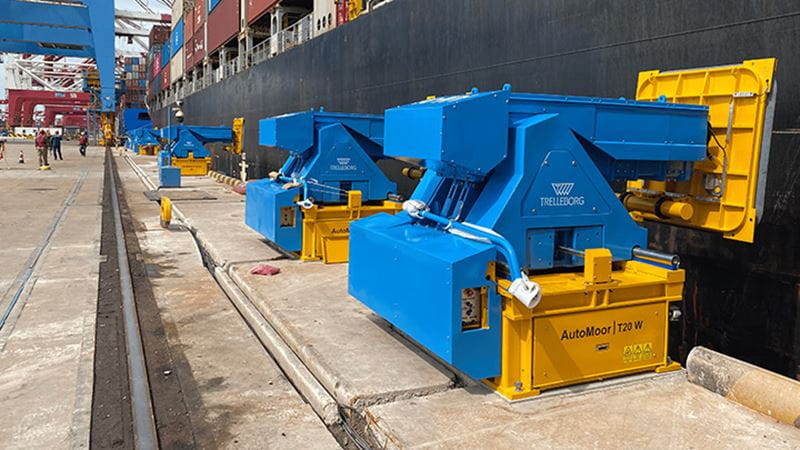
The industry’s more impactful leap is the gradual adoption of rope-free mooring systems, which use vacuum technology to quickly secure vessels at berth, minimizing motion from external forces and providing live data to improve productivity. A Trelleborg study on vacuum mooring systems in an Australian port highlighted reductions in mooring and turnaround times, fuel consumption, and carbon emissions. Data from a Baltic Sea port operating 12 vacuum mooring pads showed that mooring times could be cut from 50 minutes to just three.
Berthing innovation in dry bulk ports
The characteristics of some bulk cargoes pose serious risks that must be meticulously managed to ensure the safety of both the crew and the ship. Some of these might be increased if vessels are unstable.
Steadying the vessel during the loading and discharge processes can help to mitigate risk, enhancing both safety and operational efficiency. This is where innovative rope-free mooring solutions like vacuum mooring can make a tangible impact. Results of a recent study highlighted how, through the use of vacuum-based solutions, significant reductions in the surge and sway of container vessels increased berth operability from 65% to 95%. If also applied to bulk vessels, similar reductions will limit personnel involvement, decrease human error, and enhance safety while drastically cutting fuel consumption and emissions.
Transitioning to automated mooring systems requires a mindset shift among port operators, who must look beyond implementation costs to recognize long-term productivity benefits. Developing product specifications and standards to guide the adoption of vacuum-based mooring systems will be crucial for building confidence in this transition. Expedited guidelines and leadership recognition of the strategic, commercial, and regulatory benefits of these new systems are essential.
Improving standards in fender testing
While unassuming in appearance, a single fender's failure can have extensive repercussions. Designing and implementing reliable fender systems is crucial for preventing damage to a vessel's structural components, ensuring smooth port operations, and supporting waste reduction by minimizing frequent replacements. Developing an effective fender system is vital, especially for a lifespan of 15 to 20 years.
There is no one-size-fits-all solution for fender systems, highlighting the importance of design, engineering, quality control, and maintenance in berthing solutions for safe and optimized operations. However, the market currently features cheap, poorly designed, and low-quality fenders, with manufacturers offering low-cost performance promises. Without expert guidance, port operators and their consultants might not distinguish the merits of competing solutions, potentially compromising operations by prioritizing cost.
The issue is further exacerbated by the lack of rigorous, independent testing and standardized certification. Manufacturers are still allowed to conduct their own performance tests and self-certify products, creating a conflict of interest and leaving customers without reliable benchmarks or third-party quality assurance for fender design and components.
The World Association for Waterborne Transport Infrastructure (PIANC) set guidelines for marine fender system design, but these have become outdated. Trelleborg has collaborated with PIANC to develop new guidelines, published in March 2024. These updates offer comprehensive guidance on the design, manufacture, and testing of fender systems to ensure safe installation and operation for both vessel and berth, optimizing total cost of ownership.
Looking ahead, digitalization will help ports better understand operational conditions, resulting in optimized fender designs, improved costs, and more efficient operations. Smart fenders will collect berthing data, aiding in maintenance and influencing future designs. Trelleborg plans to prototype smart fenders in two ports this year, aiming to supply them by 2025. These fenders will feature QR codes, providing easy access to information about manufacturing, design,and maintenance and send regular inspection reminders to end users.
Navigating towards a more efficient future
The dry bulk industry stands on the precipice of transformative change, driven by the integration of IoT technologies, with the promise of enhanced efficiency, safety and sustainability. The future of port development hinges on the strategic, incremental integration of advanced technologies.
This gradual transformation will be marked by the systematic adoption of connected technologies that strengthen the critical interface between ship and port. These innovations will facilitate data-driven decision-making and performance optimization, enabling ports to meet the increasing demands of global trade while adhering to stringent ESG standards.
Improvements in fender standards and testing will bring additional longevity and safety to the port environment, while adoption of automated and vacuum mooring systems will redefine operational safety and efficiency, reducing manual errors and environmental impact. The journey may be gradual, but the destination promises a smarter, more resilient industry ready to overcome both current and future obstacles.
Ports and terminal operators are navigating a transformative era, driven by the integration of Internet of Things (IoT) technologies and the pressing need for enhanced efficiency, safety, and environmental impact. This evolution is particularly evident in the adoption of automated mooring systems and the development of advanced, more sustainable fenders. Adoption of these innovations offer significant safety and operational benefits.
An essential first step in driving change is strengthening the critical interface between ship and port, both on land and at sea. This can be achieved by leveraging a combination of technologies and physical innovations to connect port operations. These integrated systems allow operators to analyze performance and make data-driven decisions, incorporating assets such as mooring equipment, ship performance monitoring, and navigation systems, all supported by cloud and IoT technologies.
Transforming mooring
Upgrading berthing and mooring operations is critical due to their impact on efficiency, environmental sustainability, and safety. The United Nations Conference on Trade and Development (UNCTAD) has urged port authorities to expedite the adoption of advanced technologies to improve clearance times and labor productivity. With the International Monetary Fund (IMF) projecting substantial growth in the global economy, ports face increasing pressure to accommodate larger vessels and higher trade volumes. At the same time, ports must adhere to stringent environmental, social, and governance (ESG) standards to reduce emissions and enhance safety.
As safety becomes a growing priority for bulk owners and operators, companies are increasingly engaging in various initiatives to strengthen operational standards and prevent incidents and casualties. INTERCARGO’s “Together in Safety” coalition is just one example of how organisations are collaborating to improve safety onboard, especially for seafarers.
Looking at the full supply chain, there is still more to be done, especially in terms of shoreside operations. For example, traditional mooring systems using ropes are not only time-consuming but also hazardous, posing significant risk of accidents. The UK Protection and Indemnity (P&I) Club reported in 2016 that 5% of injuries during mooring operations over the preceding 20 years were due to equipment failure. Several scalable approaches can enhance the safety, efficiency, and environmental aspects of mooring dry bulk vessels. Dynamic line tensioning systems, for example, can improve mooring accuracy by using situational data to adjust mooring lines, ensuring the appropriate tension is automatically applied. This reduces the risk of rope snapping due to manual errors.
The industry’s more impactful leap is the gradual adoption of rope-free mooring systems, which use vacuum technology to quickly secure vessels at berth, minimizing motion from external forces and providing live data to improve productivity. A Trelleborg study on vacuum mooring systems in an Australian port highlighted reductions in mooring and turnaround times, fuel consumption, and carbon emissions. Data from a Baltic Sea port operating 12 vacuum mooring pads showed that mooring times could be cut from 50 minutes to just three.
Berthing innovation in dry bulk ports
The characteristics of some bulk cargoes pose serious risks that must be meticulously managed to ensure the safety of both the crew and the ship. Some of these might be increased if vessels are unstable.
Steadying the vessel during the loading and discharge processes can help to mitigate risk, enhancing both safety and operational efficiency. This is where innovative rope-free mooring solutions like vacuum mooring can make a tangible impact. Results of a recent study highlighted how, through the use of vacuum-based solutions, significant reductions in the surge and sway of container vessels increased berth operability from 65% to 95%. If also applied to bulk vessels, similar reductions will limit personnel involvement, decrease human error, and enhance safety while drastically cutting fuel consumption and emissions.
Transitioning to automated mooring systems requires a mindset shift among port operators, who must look beyond implementation costs to recognize long-term productivity benefits. Developing product specifications and standards to guide the adoption of vacuum-based mooring systems will be crucial for building confidence in this transition. Expedited guidelines and leadership recognition of the strategic, commercial, and regulatory benefits of these new systems are essential.
Improving standards in fender testing
While unassuming in appearance, a single fender's failure can have extensive repercussions. Designing and implementing reliable fender systems is crucial for preventing damage to a vessel's structural components, ensuring smooth port operations, and supporting waste reduction by minimizing frequent replacements. Developing an effective fender system is vital, especially for a lifespan of 15 to 20 years.
There is no one-size-fits-all solution for fender systems, highlighting the importance of design, engineering, quality control, and maintenance in berthing solutions for safe and optimized operations. However, the market currently features cheap, poorly designed, and low-quality fenders, with manufacturers offering low-cost performance promises. Without expert guidance, port operators and their consultants might not distinguish the merits of competing solutions, potentially compromising operations by prioritizing cost.
The issue is further exacerbated by the lack of rigorous, independent testing and standardized certification. Manufacturers are still allowed to conduct their own performance tests and self-certify products, creating a conflict of interest and leaving customers without reliable benchmarks or third-party quality assurance for fender design and components.
The World Association for Waterborne Transport Infrastructure (PIANC) set guidelines for marine fender system design, but these have become outdated. Trelleborg has collaborated with PIANC to develop new guidelines, published in March 2024. These updates offer comprehensive guidance on the design, manufacture, and testing of fender systems to ensure safe installation and operation for both vessel and berth, optimizing total cost of ownership.
Looking ahead, digitalization will help ports better understand operational conditions, resulting in optimized fender designs, improved costs, and more efficient operations. Smart fenders will collect berthing data, aiding in maintenance and influencing future designs. Trelleborg plans to prototype smart fenders in two ports this year, aiming to supply them by 2025. These fenders will feature QR codes, providing easy access to information about manufacturing, design,and maintenance and send regular inspection reminders to end users.
Navigating towards a more efficient future
The dry bulk industry stands on the precipice of transformative change, driven by the integration of IoT technologies, with the promise of enhanced efficiency, safety and sustainability. The future of port development hinges on the strategic, incremental integration of advanced technologies.
This gradual transformation will be marked by the systematic adoption of connected technologies that strengthen the critical interface between ship and port. These innovations will facilitate data-driven decision-making and performance optimization, enabling ports to meet the increasing demands of global trade while adhering to stringent ESG standards.
Improvements in fender standards and testing will bring additional longevity and safety to the port environment, while adoption of automated and vacuum mooring systems will redefine operational safety and efficiency, reducing manual errors and environmental impact. The journey may be gradual, but the destination promises a smarter, more resilient industry ready to overcome both current and future obstacles.