
Reducing noise pollution from ships – from effects on marine life to IMO guidelines
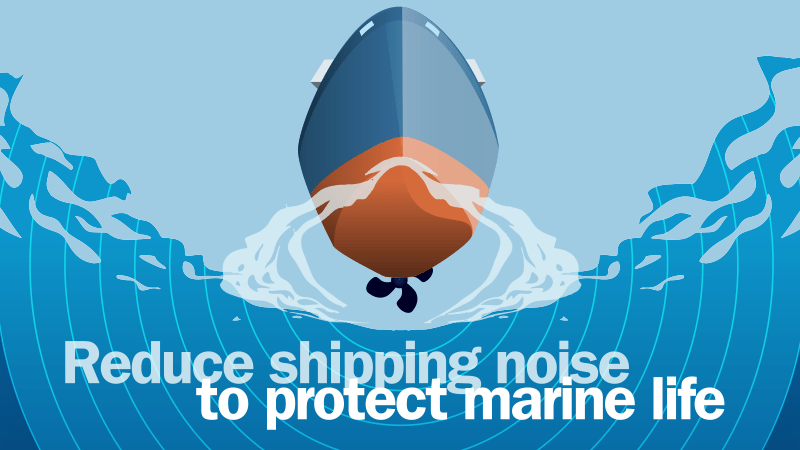
This shipping noise is now recognized as a form of pollution, with proven effects on marine life and growing regulatory attention. For shipyards and vessel designers, underwater noise is no longer a minor detail. It is becoming a key engineering consideration and an important part of wider discussions around environmental performance, passenger comfort, and future-ready ship design.
How does commercial shipping affect marine life?
Both commercial shipping and cruise vessels contribute significantly to long-term underwater noise pollution. Propulsion systems, onboard machinery and exhaust lines generate noise that travels efficiently through water.
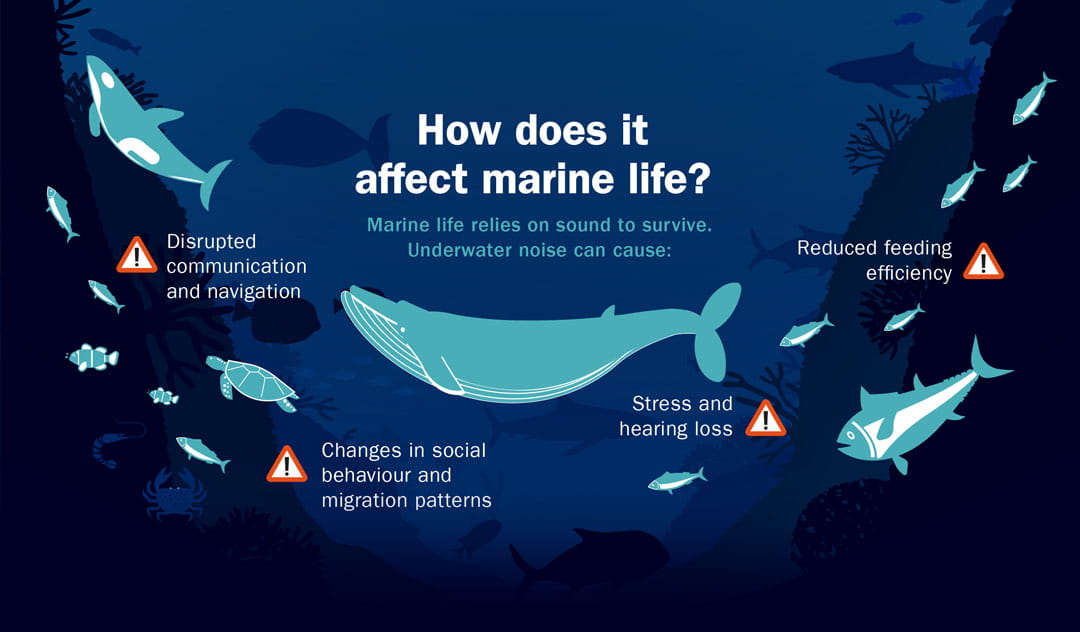
This constant background noise affects marine life worldwide. Scientific studies covering more than 100 species have linked chronic underwater noise exposure to a range of physical and behavioral effects. These include hearing damage, elevated stress levels, reduced fertility, and disruption to essential activities such as communication, feeding, navigation, and mate selection.
For many marine animals, sound is the primary way of sensing and understanding their surroundings. As background noise levels rise, their ability to detect important biological signals decreases. In practice, this means noise pollution can degrade marine habitats – even where there is little visible human activity.
Where does underwater ship noise come from?
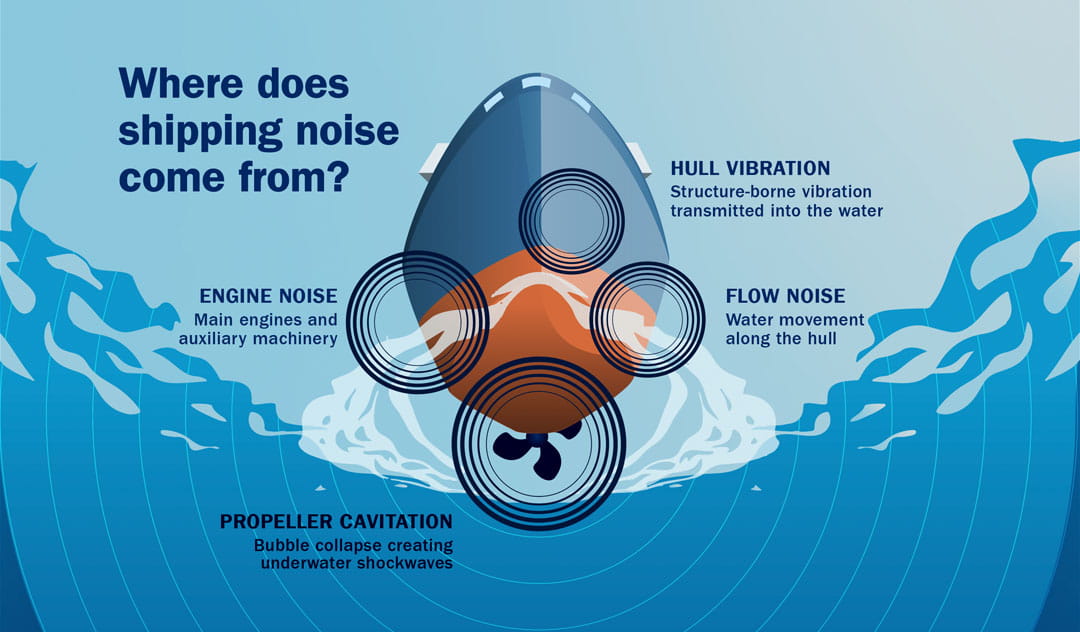
Underwater noise from both commercial and cruise vessels comes from several sources. The balance between them depends on vessel size, design, operating profile, and maintenance condition.
Hull vibration
Vibration generated by engines and machinery can travel through the vessel’s structure and radiate into the surrounding water via the hull. Poor vibration isolation or structural resonances can significantly increase noise emissions.
Engine and machinery noise
Main engines, auxiliary engines, generators, pumps, and HVAC systems all generate mechanical noise. On cruise vessels in particular, high hotel loads can mean auxiliary machinery operates continuously, contributing to elevated underwater noise levels even at low speeds.
Flow noise
As a vessel moves through the water, turbulence forms along the hull and around appendages such as bow thrusters, stabilisers, and sea chests. Flow noise increases rapidly with speed and can be a significant contributor to both fast-cruise vessels and high-powered commercial ships.
Propeller cavitation
Propeller cavitation is often the dominant source of underwater noise. As propeller blades rotate, pressure drops cause microscopic vapour bubbles to form and collapse. These collapses generate broadband noise and shockwaves that propagate efficiently through water. Cavitation is influenced by propeller design, loading, surface condition, and hull–propeller interaction.
How are marine mammals affected by ship noise?
Concern about ship noise pollution has been growing for decades. The 2003 report Ocean Noise and Marine Mammals was one of the first comprehensive scientific assessments that recognized the impact rising human-made ocean noise – including shipping – could have on marine mammals. It identified a significant research gap that needed addressing before these effects could be fully understood or managed.
Since then, research programmes such as the International Quiet Ocean Experiment (IQOE) and the Global Ocean Observing System (GOOS) have strengthened the evidence base. Their findings show that underwater noise can affect marine life –especially marine mammals – by masking communication, changing behaviour, and increasing stress or exertion.
Documented effects include:
- Narwhals showing stress responses and becoming silent even at relatively low noise levels
- Fish and shellfish experiencing stress, slower predator response, disrupted feeding, and altered social behaviour
- Beluga whales are losing pod cohesion, changing vocal behaviour, and rapidly moving away from ice-breaking and passenger vessels
- Orcas struggling to use echolocation for salmon hunting when vessel noise masks their signals
- Turtles experiencing hearing loss, affecting communication and predator avoidance
- Dolphins having calls masked by ship noise, impacting navigation and foraging and potentially increasing stranding risk
- Manatees are less able to detect approaching vessels, increasing the risk of collision
Many of these effects are linked to low-frequency, continuous noise: the same noise signature produced by large cargo ships and cruise vessels alike.
IMO guidance and what it means for shipyards
The International Maritime Organization (IMO) has recognized ship noise as an environmental issue through its Guidelines for the reduction of underwater noise from commercial shipping to address adverse impacts on marine life. While currently voluntary, these guidelines apply to all large powered vessels, including cruise ships.
For shipyards, underwater noise is becoming part of broader conversations around environmental performance, passenger comfort, vibration control, and future regulation. Cruise operators, in particular, are under growing pressure to demonstrate environmental responsibility in sensitive coastal and polar regions.
Many effective noise-reduction measures are already well established. Optimized propeller and hull design, improved hull–propeller interaction, resilient machinery mounting, regular maintenance, and speed management can all reduce underwater noise. In many cases, these measures also reduce onboard vibration, improve passenger comfort, and support better fuel efficiency.
The IMO guidelines also make specific reference to Inuit Nunaat – a unique environment where shipping noise could have a significant impact. But it isn’t just marine life that’s affected by ship noise in the Arctic region. Citizens of Alaska’s capital city, Juneau, have reported concerns around noise pollution and the impact of cruise liner tourism, resulting in a cap on ship and cruise passenger visits.
Reducing underwater noise pollution – change starts at the shipyard
While many organizations identify a need to reduce shipping noise, the impact of shipbuilding and engineering is often overlooked. In order to align with IMO guidelines, it’s important to consider the areas of the ship that cause the most underwater noise pollution.
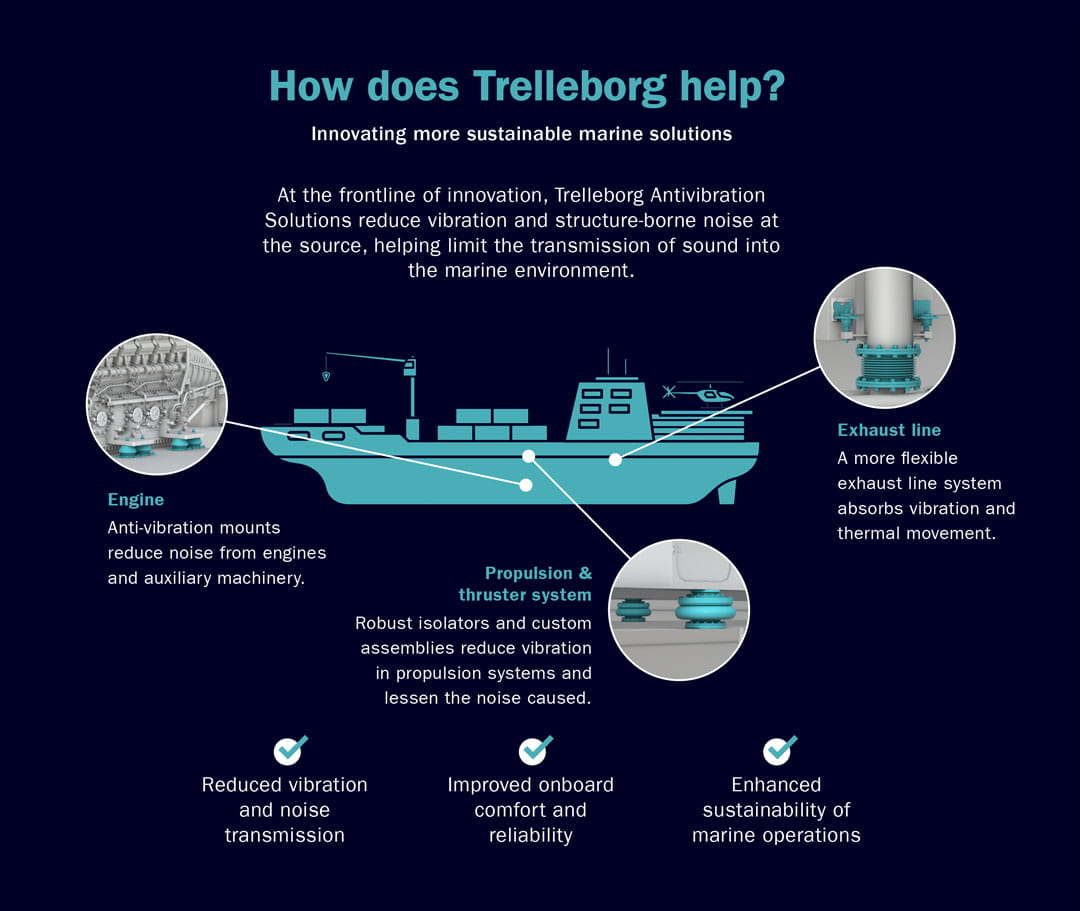
By isolating vibration across engines, propulsion systems and exhaust lines, shipbuilders can limit the transmission of noise into the hull and surrounding marine environment.
At the frontline of innovation, Trelleborg Antivibration Solutions design and deliver technologies that help reduce structure-borne noise and vibration at source.
Why Trelleborg Antivibration Solutions?
With over 70 years of marine engineering experience, we design solutions to help enhance the performance and sustainability of equipment and operations for the future-proof fleets of tomorrow.
If you’re interested in reducing underwater noise pollution and lessening your vessels’ impact on marine life, get in touch with our experts.