
Offering the Latest Technology in Coating Applications
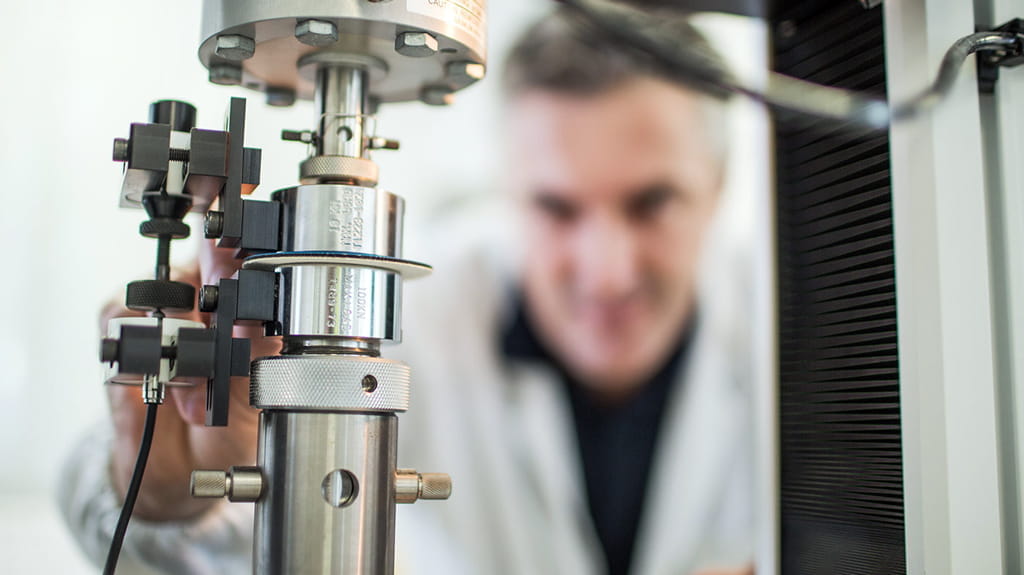
We employ the latest coating, lamination and hot melt technologies to ensure we produce the strongest materials on time and within budget.
Combining Polymers & Materials
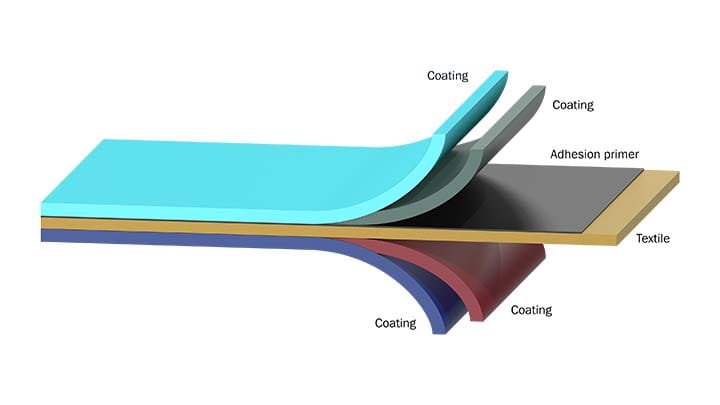
Our Engineered Coated Materials feature a multi-layered design beginning with a durable textile base. An adhesion primer enhances the bond between the textile and our advanced coatings. These coatings provide essential properties like resistance to elements and mechanical wear. The final layer adds a protective finish, ensuring our materials meet the highest standards for industrial applications.
Calendar Coating
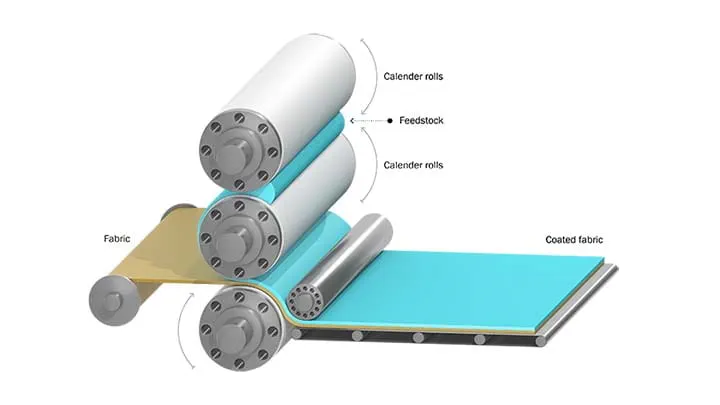
The calendar coating process fuses fabric with solid rubber, transforming them into a composite material. This is achieved by feeding the fabric and rubber through a series of calender rolls. The rollers exert controlled heat and pressure while maintaining precise speed parameters to ensure a consistent and strong bond. The result is a coated fabric with enhanced properties suitable for diverse industrial applications.
Film Lamination
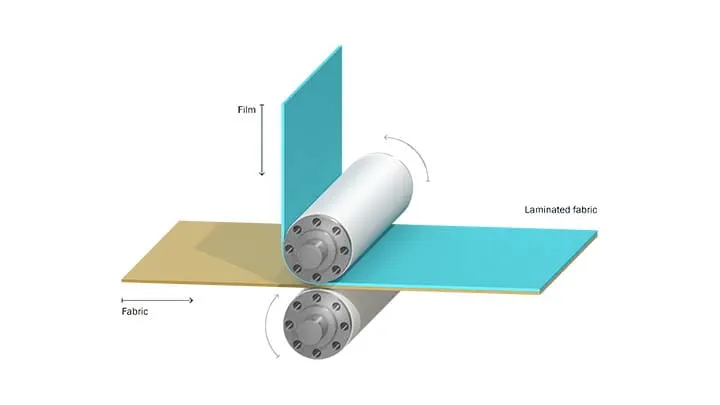
Our film lamination process meticulously combines fabric with a polymer film, creating a composite material with superior properties. The fabric and film are pressed together under precise mechanical pressure, ensuring a seamless and durable bond. Optionally, coating layers can be applied to either the fabric or film before lamination to improve adhesion, resulting in a robust, laminated fabric suitable for various applications.
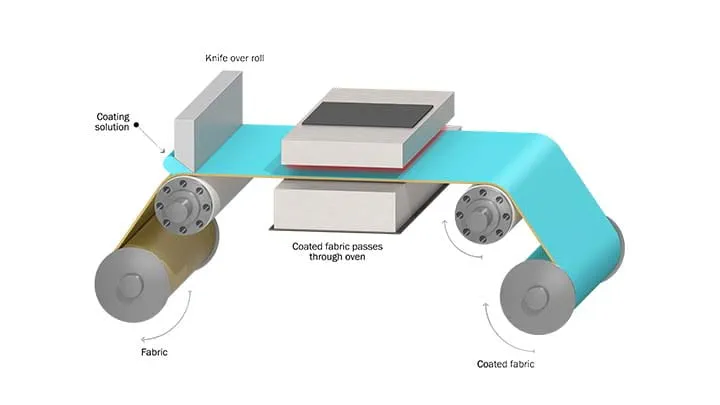
Spread Coating / Knife-Over-Roll
In the spread coating or knife-over-roll process, a precise amount of coating solution is applied onto the substrate as it moves under a knife set at a specific gap above a support roller. As the fabric and coating pass through this controlled gap, any excess coating is neatly scraped off, ensuring a uniform coat on the fabric. The coated fabric then moves through an oven where the coating is set, resulting in a consistently coated product ready for use in various applications.
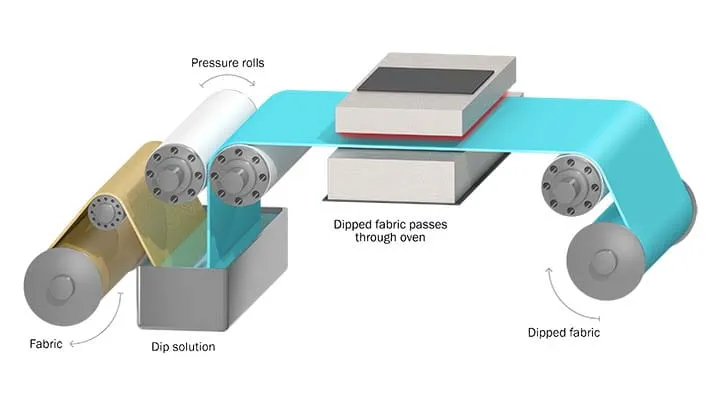
Immersion (Dip) Coating
Our immersion coating process involves submerging the substrate into a bath containing a low viscosity polymer solution. Post-dipping, the substrate passes through pressure rolls. This step ensures any excess coating is effectively removed and recirculated back into the dip solution. The result is a uniformly coated fabric, ready for further processing or application.
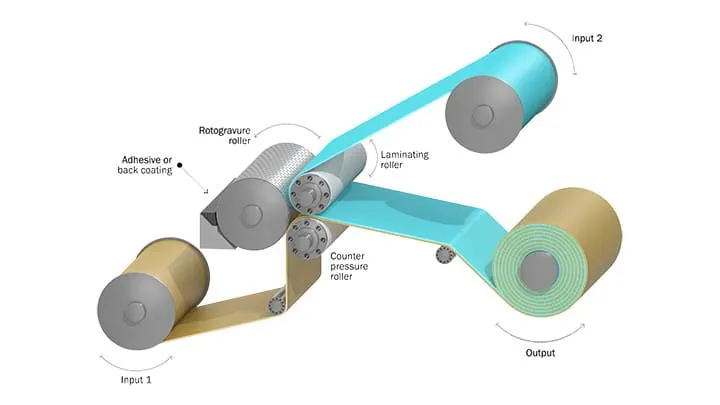
Hot Melt Coating & Lamination
Our hot melt coating and lamination process utilizes high temperatures to apply a solvent-free adhesive to the substrate, offering an eco-friendly solution without the need for drying or curing time. The amount of adhesive is meticulously controlled by an engraved rotogravure roller, ensuring consistent application. Following the coating, a second substrate can be laminated onto the first, creating a composite material with enhanced characteristics, suitable for various applications and ensuring a strong, reliable bond.
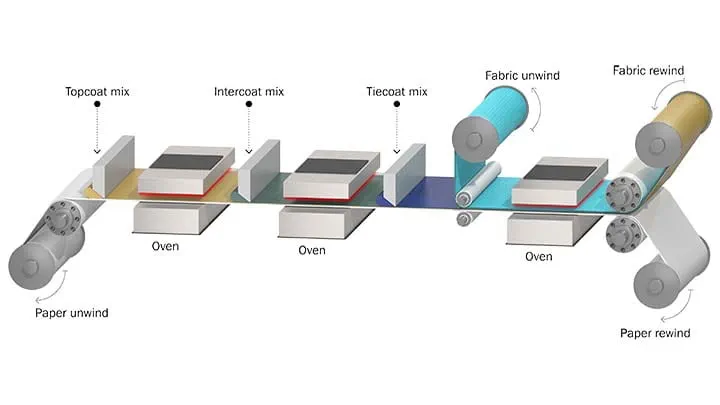
Transfer Coating
The transfer coating process is an advanced method for applying multiple layers of coatings to a substrate. Initially, a roll of casting paper is unwound and passed through stages where different polymer coatings - known as topcoat, intercoat, and tiecoat—are applied. Each coated layer is dried in an oven to ensure proper adhesion and curing. Following the application of the tiecoat, the fabric is unwound and laminated onto the coated paper. The composite then goes through another oven to bond the coatings to the fabric. The fabric is separated from the paper and rewound. Finally, the paper is rewound for reuse. This results in a fabric with a high-quality finish and handle, tailored for specific performance requirements.

Extrusion Coating
Our extrusion coating process produces a molten polymer layer—typically TPU—by extruding resin through a precision slot die as a continuous film onto substrates like textile, film, foil or paper. After exiting the die, the polymer curtain is immediately coated to the substrate under high pressure between a chilled steel roll and rubber-covered nip roll, locking in a uniform layer with exceptional adhesion. With adjustable die gaps and web speeds, we tailor coating thickness for minimal coats to heavy films. The versatility of our equipment allows us to coat various substrates, adhere multiply layers, produce cast films, and even modify the surface finish - anywhere from matte to leather. This 100% solid process eliminates solvents or drying ovens, delivering high-performance coated fabrics ideal for demanding applications—offering moisture, chemical and abrasion resistance, weldability, and functional versatility for industries including medical, aerospace, protective gear, tarpaulins, transport, and more.
Product Testing Resources
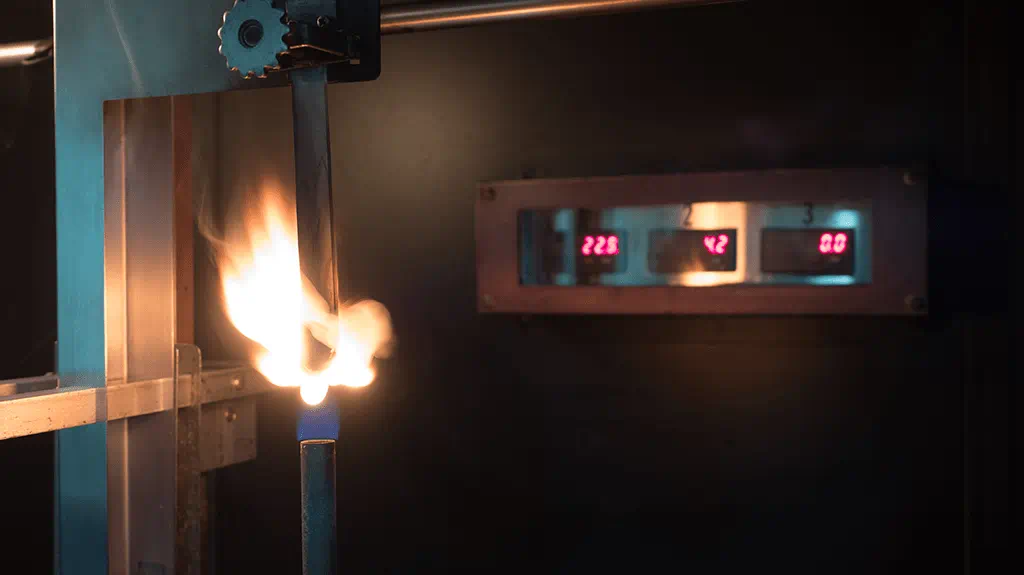
Physical Properties Testing
- Abrasion
- Accelerated Weathering
- Adhesion by multiple weld capabilities
- Aging in air and different fluids
- Coefficient of Friction
- Compression set
- Creep
- Curing behavior
- Density
- Dielectric strength
- Flame resistance
- Flex cracking
- Hardness
- Hydrostatic Head
- Low temperature resistance
- Microclimate testing
- Ozone resistance
- Relaxation
- Resistivity, surface and volume
- State of cure
- Tear strength
- Tensile stress-strain
- Viscosity
- Water Vapor Transmission
We also have analytical capabilities, including DSC (Differential Scanning Calorimeter), FT-IR, IR Spectral Reflectance, Color Evaluation and Moisture Analysis by Karl Fisher Titration.
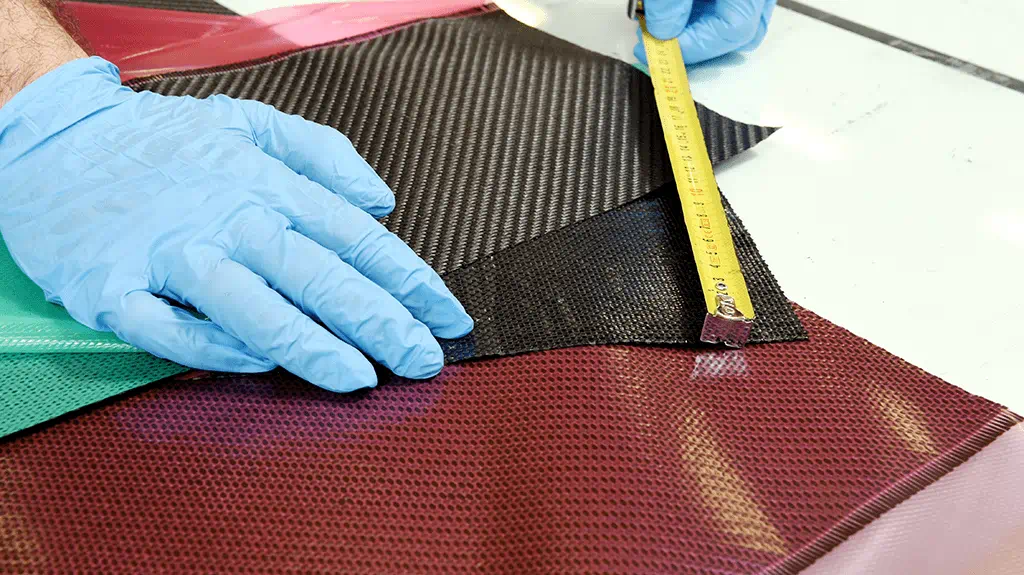
Material Preparation
Tailored options at every stage of the process mean we can deliver a truly application-specific solution. We can measure and control to thickness and weight. We also offer a variety of surface preparations for custom needs, including but not limited to:
- Biasing
- Buffing
- Cut to length
- Embossing
- Finishing
- Gums
- Powdering / Dusting
- Printing
- Single & multi-ply substrates
- Slitting
- Step jointing
- Unbalanced coatings
- Uncured
- Unsupported Gums
- Vulcanizing